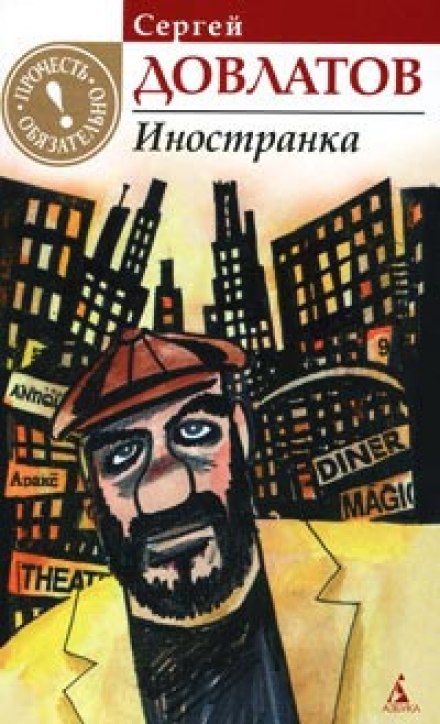
The Foreign Woman
3 hrs. 6 min.
Language
Russian
Author
Sergey Dovlatov
Author
Sergey Dovlatov
Narrator
Kirill Grebenshchikov
Narrator
Kirill Grebenshchikov
Description
"The Foreign Woman" became the first serious work that Sergei Dovlatov wrote while in emigration.
The novella is included in school and university curricula, has been staged many times in theaters as a play, translated into all the main European languages, and still remains beloved by readers.
The author dedicates this book to “lonely Russian women in America,” and tells the story of one of them. The life of the main heroine is filled with big and small troubles, funny and tragic events—out of which the author assembles the portrait of “The Foreign Woman.” And each of these elements is presented by Dovlatov on the one hand very simply, and on the other with such irony that even the moments when the characters of the novella are weeping without comfort make you laugh.
Marusya Tatarovich is a girl from a good Soviet family. Her parents were not careerists: historical circumstances of the Soviet system that destroyed the best people forced her father and mother to occupy vacant positions, and by the end of their working biographies they firmly established themselves in the mid-level nomenclature. Marusya had everything for happiness: a piano, a color TV, and a duty policeman by their house. After finishing school, she easily got into the Institute of Culture, and was surrounded by admirers appropriate to her rank. The price for family happiness struck the Tatarovichs in the face of a Jew with a hopelessly strange surname—Tsekhnovitser…
The novella is included in school and university curricula, has been staged many times in theaters as a play, translated into all the main European languages, and still remains beloved by readers.
The author dedicates this book to “lonely Russian women in America,” and tells the story of one of them. The life of the main heroine is filled with big and small troubles, funny and tragic events—out of which the author assembles the portrait of “The Foreign Woman.” And each of these elements is presented by Dovlatov on the one hand very simply, and on the other with such irony that even the moments when the characters of the novella are weeping without comfort make you laugh.
Marusya Tatarovich is a girl from a good Soviet family. Her parents were not careerists: historical circumstances of the Soviet system that destroyed the best people forced her father and mother to occupy vacant positions, and by the end of their working biographies they firmly established themselves in the mid-level nomenclature. Marusya had everything for happiness: a piano, a color TV, and a duty policeman by their house. After finishing school, she easily got into the Institute of Culture, and was surrounded by admirers appropriate to her rank. The price for family happiness struck the Tatarovichs in the face of a Jew with a hopelessly strange surname—Tsekhnovitser…
100%
03:39
01_01
03:06
01_02
03:36
01_03
04:08
01_04
01:52
01_05
03:58
01_06
02:56
01_07
02:41
01_08
03:30
02_01
03:58
02_02
03:06
02_03
04:48
02_04
02:25
02_05
02:42
02_06
02:48
02_07
02:22
02_08
03:30
02_09
02:10
02_10
04:33
03_01
02:36
03_02
03:00
03_03
02:23
03_04
02:56
03_05
04:51
03_06
01:42
03_07
04:00
04_01
03:27
04_02
03:20
04_03
02:04
05_01
03:49
05_02
03:02
05_03
03:55
05_04
04:22
06_01
02:52
06_02
03:45
06_03
03:45
06_04
04:02
07_01
03:42
07_02
02:33
07_03
02:38
07_04
02:59
07_05
02:54
07_06
03:14
08_01
02:02
08_02
03:06
08_03
02:28
08_04
03:37
08_05
03:38
08_06
02:18
08_07
02:59
09_01
04:14
09_02
02:19
09_03
04:02
09_04
03:29
10_01
03:24
10_02
03:34
10_03
03:29
11_01
01:44
12_01
