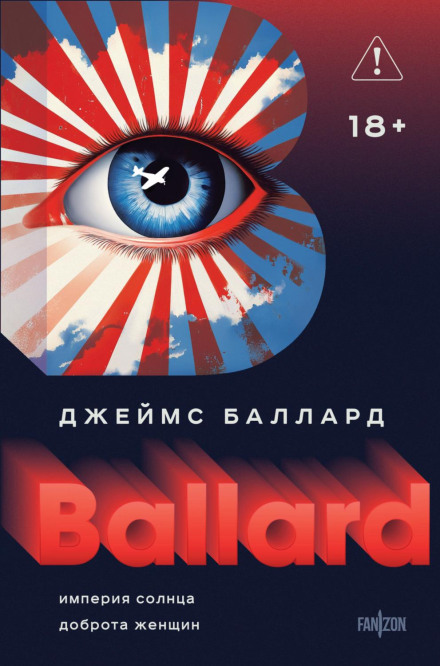
Empire of the Sun. The Kindness of Women
24 hrs. 46 min.
Language
Russian
Author
Ballard James
Author
Ballard James
Narrator
Maxim Ushakov
Narrator
Maxim Ushakov
Description
He survived the war as a child, and that became the inspiration for his unforgettable works. One of them paints a picture of ashy Shanghai and the horrors of the camps; another shows the postwar world filled with the explosive energy of the cultural revolution of the 60s. These are two novels by one author, telling of personal coming of age and an era.
In “Empire of the Sun,” the story begins with Jim, a boy who must face the terrible reality to survive.
Shanghai, 1941. Captured by the Japanese. Amid chaos and deaths, a young Briton desperately searches for his parents and tries to keep himself alive. In a concentration camp, he witnesses an atomic flash in Nagasaki—marking the end of the war and the beginning of a shattered world.
Steven Spielberg adapted the novel in 1987. The film received six Oscar nominations and three BAFTA awards. Christian Bale and John Malkovich played the leading roles.
“Empire of the Sun” continues in “The Sweetness of Women,” following Jim as he returns to postwar England and grows up.
Jim tries to leave the past behind and find inner peace. He studies medicine at Cambridge, but memories of the war bring him into the Royal Air Force, waiting for a new world war. Soon he gets swept up in the turbulent stream of the 60s’ cultural changes, trying to understand the West’s social shifts.
In “Empire of the Sun,” the story begins with Jim, a boy who must face the terrible reality to survive.
Shanghai, 1941. Captured by the Japanese. Amid chaos and deaths, a young Briton desperately searches for his parents and tries to keep himself alive. In a concentration camp, he witnesses an atomic flash in Nagasaki—marking the end of the war and the beginning of a shattered world.
Steven Spielberg adapted the novel in 1987. The film received six Oscar nominations and three BAFTA awards. Christian Bale and John Malkovich played the leading roles.
“Empire of the Sun” continues in “The Sweetness of Women,” following Jim as he returns to postwar England and grows up.
Jim tries to leave the past behind and find inner peace. He studies medicine at Cambridge, but memories of the war bring him into the Royal Air Force, waiting for a new world war. Soon he gets swept up in the turbulent stream of the 60s’ cultural changes, trying to understand the West’s social shifts.
100%
16:19
01_00
27:48
01_01
17:17
01_02
22:25
01_03
24:38
01_04
14:48
01_05
17:37
01_06
22:16
01_07
16:49
01_08
10:05
01_09
16:30
01_10
16:50
01_11
16:11
01_12
14:50
01_13
15:58
01_14
10:23
01_15
25:13
01_16
23:30
01_17
19:26
01_18
11:09
01_19
19:32
01_20
14:47
01_21
20:15
01_22
20:49
01_23
18:22
01_24
23:36
01_25
24:13
01_26
17:27
01_27
25:18
01_28
27:04
01_29
20:00
01_30
19:06
01_31
13:22
01_32
10:53
01_33
15:57
01_34
25:43
01_35
11:43
01_36
12:14
01_37
16:39
01_38
27:39
01_39
16:34
01_40
11:40
01_41
16:58
01_42
53:00
02_00
42:27
02_01
34:00
02_02
48:37
02_03
43:35
02_04
40:17
02_05
31:20
02_06
42:00
02_07
35:42
02_08
35:38
02_09
29:39
02_10
41:43
02_11
41:11
02_12
37:47
02_13
33:32
02_14
29:31
02_15
30:33
02_16
33:26
02_17
05:01
03_01
07:42
04_01
