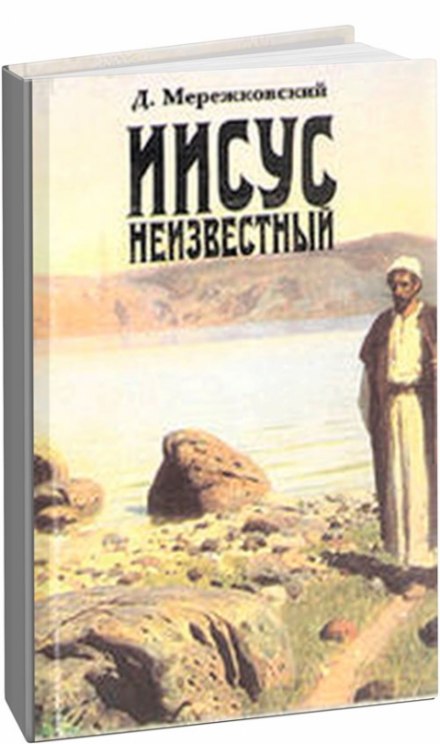
Jesus the Unknown
37 hrs. 41 min.
Language
Russian
Author
Dmitry Merezhkovsky
Author
Dmitry Merezhkovsky
Narrator
Evgeny Ternovsky
Narrator
Evgeny Ternovsky
Description
Dmitry Merezhkovsky entered literature as a poet and translator; he also tried his hand as a critic and playwright. His huge popularity was earned by his trilogy “Christ and Antichrist,” his studies “Leo Tolstoy and Dostoevsky” and “Gogol and the Devil” (1906). But all his life he was searching for that final form in which he could present his own philosophical ideas.
Merezhkovsky believed that the Gospel was not read correctly and that Jesus was not understood—that humanity is waiting for a Third Testament after the Old and the New, the Kingdom of the Spirit. In world and Russian history, in the work of Russian writers, he sought confirmation that this new Kingdom is coming—that the future is sending signs of the end and the transformation of the present. And if you look at the writer’s creative path, it becomes clear that he was entirely driven toward the book “Jesus the Unknown”—and it was destined to be its culmination, the summit toward which he had moved for a long time and persistently.
Merezhkovsky believed that the Gospel was not read correctly and that Jesus was not understood—that humanity is waiting for a Third Testament after the Old and the New, the Kingdom of the Spirit. In world and Russian history, in the work of Russian writers, he sought confirmation that this new Kingdom is coming—that the future is sending signs of the end and the transformation of the present. And if you look at the writer’s creative path, it becomes clear that he was entirely driven toward the book “Jesus the Unknown”—and it was destined to be its culmination, the summit toward which he had moved for a long time and persistently.
100%
08:24
001
26:13
002
24:54
003
20:05
004
19:53
005
23:43
006
22:11
007
18:01
008
22:51
009
24:09
010
23:27
011
16:46
012
28:08
013
39:29
014
29:49
015
19:33
016
19:07
017
21:21
018
07:07
019
26:56
020
19:13
021
25:59
022
05:37
023
26:59
024
24:42
025
19:51
026
22:55
027
25:23
028
23:15
029
37:55
030
19:16
031
26:41
032
27:39
033
24:59
034
21:45
035
22:15
036
35:17
037
23:50
038
20:58
039
28:16
040
24:52
041
23:41
042
25:54
043
24:44
044
20:15
045
25:33
046
26:58
047
21:06
048
23:33
049
21:26
050
27:23
051
23:49
052
24:15
053
29:30
054
26:01
055
23:52
056
17:09
057
20:57
058
19:04
059
22:45
060
26:46
061
26:41
062
28:28
063
24:53
064
19:00
065
21:53
066
21:19
067
28:04
068
30:00
069
26:43
070
28:28
071
19:51
072
22:41
073
19:21
074
22:49
075
22:34
076
21:48
077
22:44
078
28:34
079
24:22
080
22:22
081
28:55
082
29:20
083
29:54
084
20:41
085
27:15
086
27:55
087
26:46
088
28:06
089
29:11
090
20:25
091
20:37
092
19:00
093
19:52
094
26:34
095
