Graveyard Clay
10 hrs. 49 min.
Language
Russian
Author
Martin Ó Cadhain
Author
Martin Ó Cadhain
Narrator
Ivan Litvinov
Narrator
Ivan Litvinov
Description
This novel, published in 1949, contemporaries called “Joycean.” Translators were afraid to tackle it for more than sixty years, but now we also have the chance to get acquainted with one of the main masterpieces of Irish literature.
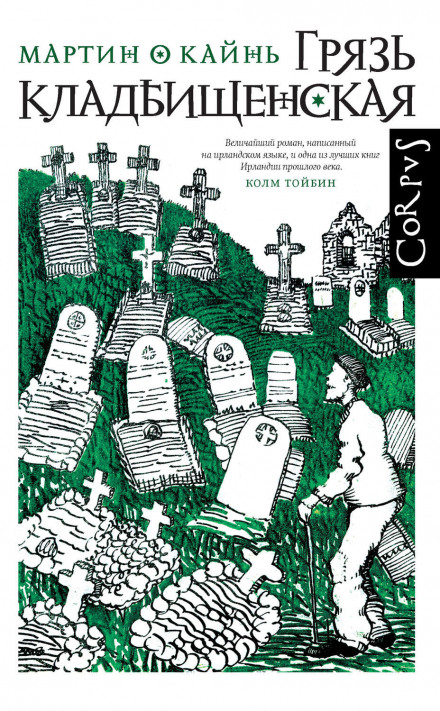
Connemara (from the Irish Conmhaicne Mara, literally “descendants of the sea”) is a region in the west of Ireland. Here, in the local cemetery, the dead lead their strange afterlife. They can see nothing except the grave where they lie; they cannot get out of the coffin; they cannot hear the voices of the living—but they can talk to each other to their heart’s content. Therefore, news about living relatives—along with all the latest news about the world “up there”—can be learned only from the newly deceased. In fact, the entire novel by Martin O’Caybe consists of these conversations: arguments, lamentations, gossip, profanity, curses, and confessions, constantly interrupting one another, layering upon one another and gradually forming a large-scale picture of human life.
This novel by the Irish modernist writer, published in 1949, contemporaries called “Joycean,” and critics compared it to the works of Flann O’Brien and Samuel Beckett. Translators were afraid to tackle it for more than sixty years, but now Russian-language readers have the opportunity to get acquainted with one of the main masterpieces of Irish literature.
The newly deceased Catherine Padiní must only guess whether she was buried as she instructed, on the plot for a pound—or saved money and was lowered into the grave for fifteen shillings. In any case, she can’t check it anymore. The dead do not rise from their graves. But they can talk to each other. The murmur of voices in Martin O’Caybe’s novel is unimaginable, even though all of its characters are dead, and the events take place in a cemetery lost among bogs in the west of Ireland. The dialogues of the dead are no different from conversations of the living, except that they are a little more sincere and bolder, since they have nothing left to be afraid of and nothing left to hide. Someone tries to expose the neighbor’s scams; someone resolves a long-standing dispute; someone rushes to scold inattentive relatives, weep about their own troubles in life—or, on the contrary, to boast about achievements. Gradually, all this cacophony of voices merges into a single long hum—an echo that sounds, in its own way, ironically, like life…
Connemara (from the Irish Conmhaicne Mara, literally “descendants of the sea”) is a region in the west of Ireland. Here, in the local cemetery, the dead lead their strange afterlife. They can see nothing except the grave where they lie; they cannot get out of the coffin; they cannot hear the voices of the living—but they can talk to each other to their heart’s content. Therefore, news about living relatives—along with all the latest news about the world “up there”—can be learned only from the newly deceased. In fact, the entire novel by Martin O’Caybe consists of these conversations: arguments, lamentations, gossip, profanity, curses, and confessions, constantly interrupting one another, layering upon one another and gradually forming a large-scale picture of human life.
This novel by the Irish modernist writer, published in 1949, contemporaries called “Joycean,” and critics compared it to the works of Flann O’Brien and Samuel Beckett. Translators were afraid to tackle it for more than sixty years, but now Russian-language readers have the opportunity to get acquainted with one of the main masterpieces of Irish literature.
The newly deceased Catherine Padiní must only guess whether she was buried as she instructed, on the plot for a pound—or saved money and was lowered into the grave for fifteen shillings. In any case, she can’t check it anymore. The dead do not rise from their graves. But they can talk to each other. The murmur of voices in Martin O’Caybe’s novel is unimaginable, even though all of its characters are dead, and the events take place in a cemetery lost among bogs in the west of Ireland. The dialogues of the dead are no different from conversations of the living, except that they are a little more sincere and bolder, since they have nothing left to be afraid of and nothing left to hide. Someone tries to expose the neighbor’s scams; someone resolves a long-standing dispute; someone rushes to scold inattentive relatives, weep about their own troubles in life—or, on the contrary, to boast about achievements. Gradually, all this cacophony of voices merges into a single long hum—an echo that sounds, in its own way, ironically, like life…
100%
32:06
01
17:08
02
34:16
03
22:35
04
32:20
05
32:54
06
31:47
07
25:09
08
30:33
09
32:02
10
27:53
11
34:07
12
27:40
13
35:16
14
27:38
15
31:33
16
38:28
17
36:07
18
26:38
19
37:49
20
35:42
21
