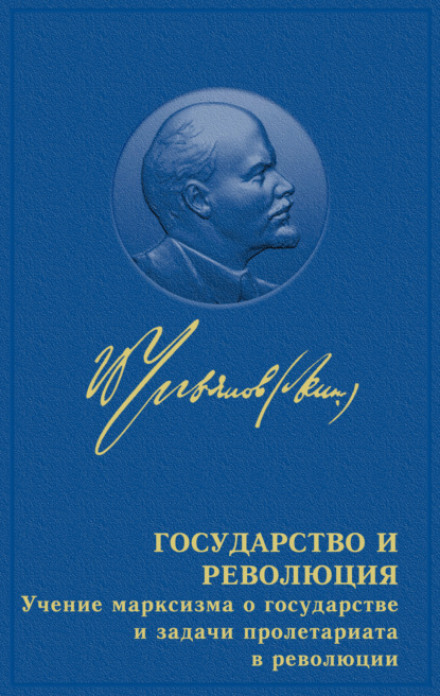
The State and Revolution
4 hrs. 30 min.
Language
Russian
Author
Vladimir Lenin
Author
Vladimir Lenin
Narrator
Vyacheslav Akhmodyarov
Narrator
Vyacheslav Akhmodyarov
Description
An economist and journalist, leader of an underground party, and founder of the first state in history of workers and peasants—few other people influenced the fate of Russia and the world in the 20th century as Vladimir Lenin did. Is Lenin’s cause alive today? That question remains open. But his books—undoubtedly. Elites can argue endlessly about what literature is and what it isn’t, what form is normative and what is marginal; but when the writer Lenin appears, all commonly accepted canon simply gets devalued and abolished. All of this once again confirms the Marxist thesis that true literature is, above all, a social practice.
This hundred-page work—apparently, the most valuable thing Lenin has for today’s Russia—serves as a kind of antidote to the fetishistic cult of the state and the vertical of power. Without yet knowing that within a few months he himself would have to build a new type of state, Lenin—with his astonishing instinct for leadership—argues that the state is a machine of violence. And since the goal of the socialist revolution is to build a classless society, the state is only a temporary phenomenon, whose purpose under an enlightened dictatorship of the proletariat is to wither away. The state will die out—and then there’s no need to fear a man with a gun.
This hundred-page work—apparently, the most valuable thing Lenin has for today’s Russia—serves as a kind of antidote to the fetishistic cult of the state and the vertical of power. Without yet knowing that within a few months he himself would have to build a new type of state, Lenin—with his astonishing instinct for leadership—argues that the state is a machine of violence. And since the goal of the socialist revolution is to build a classless society, the state is only a temporary phenomenon, whose purpose under an enlightened dictatorship of the proletariat is to wither away. The state will die out—and then there’s no need to fear a man with a gun.
100%
04:28
Государство и революция - 0 - Предисловие к первому изданию
41:26
Государство и революция - 1 - Глава I. Классовое общество и государство
30:54
Государство и революция - 2 - Глава II. Государство и революция. Опыт 1848–1851 годов
46:57
Государство и революция - 3 - Глава III Государство и революция. Опыт Парижской Коммуны 1871 года. Анализ Маркса
59:02
Государство и революция - 4 - Глава IV. Продолжение. Дополнительные пояснения Энгельса
44:57
Государство и революция - 5 - Глава V. Экономические основы отмирания государства
42:46
Государство и революция - 6 - Глава VI. Опошление марксизма оппортунистами
