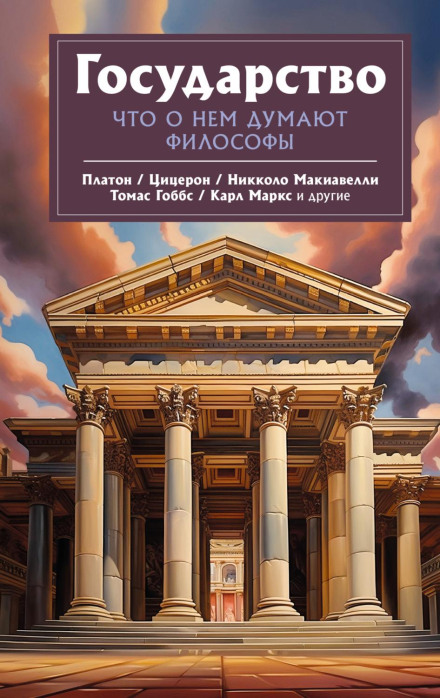
The State: What Philosophers Write About It
8 hrs. 4 min.
Language
Russian
Authors
Friedrich Nietzsche, Plato, Niccolò Machiavelli, Nikolai Berdyaev, Immanuel Kant, Dante Alighieri, Karl Marx, John Locke, Aristotle, Mikhail Bakunin, Georg Hegel, Jean-Jacques Rousseau, Hobbes Thomas, Hannah Arendt, Walter Benjamin, John Chrysostom
Author
Friedrich Nietzsche
Author
Plato
Author
Niccolò Machiavelli
Author
Nikolai Berdyaev
Author
Immanuel Kant
Author
Dante Alighieri
Author
Karl Marx
Author
John Locke
Author
Aristotle
Author
Mikhail Bakunin
Author
Georg Hegel
Author
Jean-Jacques Rousseau
Author
Hobbes Thomas
Author
Hannah Arendt
Author
Walter Benjamin
Author
John Chrysostom
Narrator
Igor Pronin
Narrator
Igor Pronin
Description
Since ancient times, the state has been a key element of society and its organization. Even in Antiquity, intellectuals thought about the nature of power. Ancient Greek thinkers such as Plato and Aristotle viewed the state as a system of norms that defines the way of life of those involved in governance, while the Roman philosopher Cicero emphasized the personal responsibility of the ruler. However, over the centuries, views on this phenomenon changed. During the Renaissance, political theorists such as Niccolò Machiavelli and Thomas Hobbes believed that the state becomes a mechanism of rewards and punishments, while power is a force that allows moral violence. Later, John Locke justified the division of powers into legislative, executive, and judicial; and Kant spoke of perpetual peace as the final goal of all states. Subsequent philosophers largely criticized power: it has enormous force capable of easily manipulating people’s minds, so it is important to set its limits and direct it toward the good. This book will help you understand how the concept of the state evolved in world philosophy and what leading thinkers put into it.
100%
13:33
00. Предисловие
13:38
01. Государство как организация власти в понимании философов. 1. Дар. Платон
25:39
02. Точка отсчета справедливости. Аристотель
30:38
03. Достоинство. Цицерон
21:35
04. Искушение. Августин, Иоанн Златоуст
13:39
05. Призвание. Данте Алигьери
19:38
06. Перспектива действия. Никколо Макиавелли
28:14
07. Порядок. Томас Гоббс
34:10
08. Система прав и государственная служба. Джон Локк
26:19
09. Власть и арбитраж в государстве. Шарль Луи де Монтескьё
23:56
10. Государственно-общественный договор. Жан-Жак Руссо
26:59
11. Ответственность. Иммануил Кант
18:51
12. Прогресс. Георг Гегель
31:13
13. Власть, государство и революция. Карл Маркс
26:27
14. Власть и победа над прежним государством. Михаил Бакунин
15:32
15. Тело суверена. Вальтер Беньямин
12:00
16. Власть и отрицание. Александр Кожев
11:51
17. Четыре модели власти. Фридрих Ницше, Мартин Хайдеггер, Мишель Фуко, Жак Деррида
34:39
18. Власть перед эпохой Духа. Николай Бердяев
21:59
19. Власть и жизнь живого ума. Ханна Арендт
17:44
20. Природа политических решений. Жак Деррида
16:14
21. Власть судит власть. Франсуа Федье
