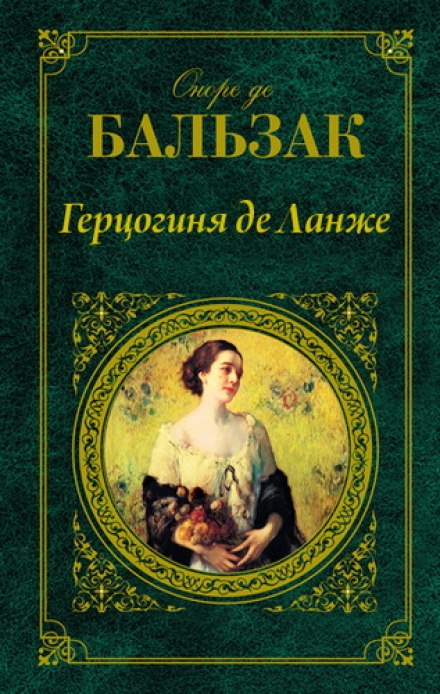
The Duchess of Langeais
6 hrs. 9 min.
Language
Russian
Author
Honoré de Balzac
Author
Honoré de Balzac
Narrator
Larisa Yurova
Narrator
Larisa Yurova
Description
In a small Spanish town, on one of the islands in the Mediterranean Sea, there is a monastery of Barefoot Carmelites—where the strict rule of the order founded by Saint Teresa, and the entire routine introduced by this remarkable woman, have been preserved in their original severity. Strange as it may seem, this is indeed so. While almost all religious houses on the Iberian Peninsula and on the mainland were shaken to the core or destroyed by the storms of the French Revolution and the Napoleonic wars, on this island—protected by the English fleet—the monastery with its peaceful inhabitants was spared the unrest of those turbulent times and from confiscations. All kinds of storms that raged during the first fifteen years of the nineteenth century invariably broke against this impregnable rock located near the shores of Andalusia. And if the name of the emperor, which thundered everywhere, did reach the island, then hardly could the pious maidens who knelt within the monastery walls understand the fantastic splendor of his triumphs and the dazzling greatness of his fate, similar to a meteor. The unyielding severity of monastery life made this place famous throughout the Catholic world. Drawn by the strict purity of the rule, grieving women gathered there from faraway places in Europe—women who had torn their ties to the earthly world and longed for this slow self-destruction within God’s embrace. Indeed, there was no monastery more conducive to that complete renunciation of worldly temptations required by monastic life.
100%
00:25
00_Gertsoginya_de_Lanzhe
10:01
01_Gertsoginya_de_Lanzhe
10:08
02_Gertsoginya_de_Lanzhe
10:08
03_Gertsoginya_de_Lanzhe
10:02
04_Gertsoginya_de_Lanzhe
10:11
05_Gertsoginya_de_Lanzhe
10:06
06_Gertsoginya_de_Lanzhe
10:02
07_Gertsoginya_de_Lanzhe
10:21
08_Gertsoginya_de_Lanzhe
10:06
09_Gertsoginya_de_Lanzhe
10:14
10_Gertsoginya_de_Lanzhe
10:06
11_Gertsoginya_de_Lanzhe
10:12
12_Gertsoginya_de_Lanzhe
10:10
13_Gertsoginya_de_Lanzhe
10:03
14_Gertsoginya_de_Lanzhe
10:05
15_Gertsoginya_de_Lanzhe
10:12
16_Gertsoginya_de_Lanzhe
10:01
17_Gertsoginya_de_Lanzhe
10:06
18_Gertsoginya_de_Lanzhe
10:07
19_Gertsoginya_de_Lanzhe
10:11
20_Gertsoginya_de_Lanzhe
10:05
21_Gertsoginya_de_Lanzhe
10:02
22_Gertsoginya_de_Lanzhe
10:02
23_Gertsoginya_de_Lanzhe
10:08
24_Gertsoginya_de_Lanzhe
10:05
25_Gertsoginya_de_Lanzhe
10:13
26_Gertsoginya_de_Lanzhe
10:04
27_Gertsoginya_de_Lanzhe
10:15
28_Gertsoginya_de_Lanzhe
10:03
29_Gertsoginya_de_Lanzhe
10:13
30_Gertsoginya_de_Lanzhe
10:02
31_Gertsoginya_de_Lanzhe
10:10
32_Gertsoginya_de_Lanzhe
10:06
33_Gertsoginya_de_Lanzhe
10:06
34_Gertsoginya_de_Lanzhe
10:06
35_Gertsoginya_de_Lanzhe
10:08
36_Gertsoginya_de_Lanzhe
04:22
37_Gertsoginya_de_Lanzhe
