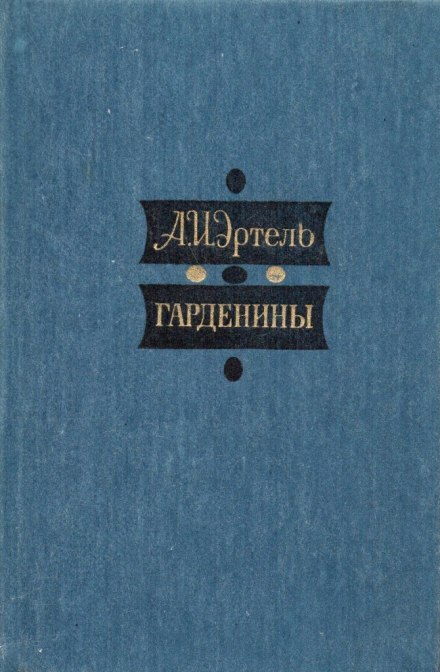
The Gardenins, Their Household, Followers and Enemies
29 hrs. 36 min.
Language
Russian
Author
Alexander Ertel
Author
Alexander Ertel
Narrator
Valeria Lebedeva
Narrator
Valeria Lebedeva
Description
So much has been written about Alexander Ivanovich Ertel (1855–1908) as a forgotten writer of words that his name ought to be known only thanks to such persistent reminders. A strange fate! A writer with a big public temperament, an original thinker, a talented prose stylist who drew close attention—today he is listed among the literary periphery.
An obvious injustice. Ertel said something distinctive about post-reform Russian reality—a word that his outstanding contemporaries G. Uspensky, V. Korolenko, A. Chekhov, I. Bunin, M. Gorky… highly valued. Leo Tolstoy called the author of “Gardenyins” the biggest artist in Russia at the turn of the 1880s and 1890s.
Critics’ assessments were more varied—ranging from somewhat dry and restrained reactions to unrestrained admiration. What “marks” didn’t get placed on the writer in different decades! Today, when passions surrounding his work have cooled somewhat, it became clear that Ertel’s talent is broader than the narrow ideological frameworks pleasing to one era or another.
Least of all was written about the artistic method and poetics of his prose, limiting everything to a straightforwardly understood ideological meaning “removed” from the worldview of the heroes—meaning that often differed quite a lot from the worldview of their creator. Notably, he “didn’t get along” with almost any of his main characters, and he more than once warned against seeing in them the embodiment of an “ideal.” “I’m afraid of explicit tendencies and tendencies that obscure (emphasized by the author. — V. K.) the images, like fire,” Ertel confessed in June 1881 to the well-known historian of Russian literature A. N. Pypin, and added: “Although I am increasingly convinced that my calling is political fiction.” This public drive, as the writer put it—“grabbing reality by the heart”—is the central nerve of his work.
“The impression is that G. Ertel pleased no one decisively,” wrote the critic N. K. Mikhaylovsky. He didn’t please either the Narodniks, or the ‘Tolstoyans,’ or representatives of other teachings. More accurately, he can be called a realist writer with a democratic and educational orientation—contradictory because of his being “restless,” yet always honest and sincere in his search.
In 1909, a seven-volume collected works of Ertel was published; around the same time, a collection of his letters appeared again, stirring renewed interest in the artist.
His peak book is the novel “Gardenyins, their servants, supporters and enemies,” which was one of the last major literary events at the end of the 19th century. As A. A. Fadeev put it, in this work “almost all post-reform Russia is given in cross-section.” To better grasp the ideological and aesthetic significance and the uniqueness of this large artistic canvas, let’s briefly acquaint ourselves with the writer’s biography and the main milestones of his creative path.
An obvious injustice. Ertel said something distinctive about post-reform Russian reality—a word that his outstanding contemporaries G. Uspensky, V. Korolenko, A. Chekhov, I. Bunin, M. Gorky… highly valued. Leo Tolstoy called the author of “Gardenyins” the biggest artist in Russia at the turn of the 1880s and 1890s.
Critics’ assessments were more varied—ranging from somewhat dry and restrained reactions to unrestrained admiration. What “marks” didn’t get placed on the writer in different decades! Today, when passions surrounding his work have cooled somewhat, it became clear that Ertel’s talent is broader than the narrow ideological frameworks pleasing to one era or another.
Least of all was written about the artistic method and poetics of his prose, limiting everything to a straightforwardly understood ideological meaning “removed” from the worldview of the heroes—meaning that often differed quite a lot from the worldview of their creator. Notably, he “didn’t get along” with almost any of his main characters, and he more than once warned against seeing in them the embodiment of an “ideal.” “I’m afraid of explicit tendencies and tendencies that obscure (emphasized by the author. — V. K.) the images, like fire,” Ertel confessed in June 1881 to the well-known historian of Russian literature A. N. Pypin, and added: “Although I am increasingly convinced that my calling is political fiction.” This public drive, as the writer put it—“grabbing reality by the heart”—is the central nerve of his work.
“The impression is that G. Ertel pleased no one decisively,” wrote the critic N. K. Mikhaylovsky. He didn’t please either the Narodniks, or the ‘Tolstoyans,’ or representatives of other teachings. More accurately, he can be called a realist writer with a democratic and educational orientation—contradictory because of his being “restless,” yet always honest and sincere in his search.
In 1909, a seven-volume collected works of Ertel was published; around the same time, a collection of his letters appeared again, stirring renewed interest in the artist.
His peak book is the novel “Gardenyins, their servants, supporters and enemies,” which was one of the last major literary events at the end of the 19th century. As A. A. Fadeev put it, in this work “almost all post-reform Russia is given in cross-section.” To better grasp the ideological and aesthetic significance and the uniqueness of this large artistic canvas, let’s briefly acquaint ourselves with the writer’s biography and the main milestones of his creative path.
100%
00:51
00-00-ertel-a-gardeniny-ih-dvornya-priverzhentsy-i-vragi-lebedeva-v
22:26
00-01-vstupitelnaya-statya-borisa-bessonova
07:41
00-02-vstupitelnaya-statya-borisa-bessonova
16:58
00-03-01-vstupitelnaya-statya-borisa-bessonova
20:46
00-03-02-vstupitelnaya-statya-borisa-bessonova
27:10
00-03-03-vstupitelnaya-statya-borisa-bessonova
30:06
01-01-01-gardeniny
29:40
01-01-02-gardeniny
27:46
01-01-03-gardeniny
20:13
01-02-01-gardeniny
18:05
01-02-02-gardeniny
20:27
01-02-03-gardeniny
22:12
01-03-01-gardeniny
16:44
01-03-02-gardeniny
29:50
01-03-03-gardeniny
27:16
01-04-01-gardeniny
19:23
01-04-02-gardeniny
29:04
01-04-03-gardeniny
19:24
01-05-01-gardeniny
23:15
01-05-02-gardeniny
27:48
01-05-03-gardeniny
24:03
01-06-01-gardeniny
24:17
01-06-02-gardeniny
29:51
01-07-01-gardeniny
24:45
01-07-02-gardeniny
24:01
01-08-01-gardeniny
22:56
01-08-02-gardeniny
24:13
01-08-03-gardeniny
29:41
01-09-01-gardeniny
25:59
01-09-02-gardeniny
24:57
01-10-01-gardeniny
16:16
01-10-02-gardeniny
21:45
01-10-03-gardeniny
17:06
01-11-01-gardeniny
25:53
01-11-02-gardeniny
16:39
01-11-03-gardeniny
23:29
01-11-04-gardeniny
23:56
01-12-01-gardeniny
25:54
01-12-02-gardeniny
19:11
01-12-03-gardeniny
17:17
01-12-04-gardeniny
21:26
01-12-05-gardeniny
21:43
02-01-01-gardeniny
29:48
02-01-02-gardeniny
21:48
02-01-03-gardeniny
23:22
02-02-01-gardeniny
23:23
02-02-02-gardeniny
22:25
02-02-03-gardeniny
22:39
02-03-01-gardeniny
28:23
02-03-02-gardeniny
26:31
02-04-01-gardeniny
21:58
02-04-02-gardeniny
21:42
02-05-01-gardeniny
22:42
02-05-02-gardeniny
17:59
02-05-03-gardeniny
29:27
02-06-01-gardeniny
22:28
02-06-02-gardeniny
18:11
02-06-03-gardeniny
27:32
02-07-01-gardeniny
27:46
02-07-02-gardeniny
16:09
02-08-01-gardeniny
29:57
02-08-02-gardeniny
22:08
02-08-03-gardeniny
25:31
02-09-01-gardeniny
24:42
02-09-02-gardeniny
20:53
02-10-01-gardeniny
22:06
02-10-02-gardeniny
25:27
02-11-01-gardeniny
27:27
02-11-02-gardeniny
27:19
02-12-01-gardeniny
28:58
02-12-02-gardeniny
26:14
02-13-01-gardeniny
20:55
02-13-02-gardeniny
17:42
02-13-03-gardeniny
19:35
02-14-01-gardeniny
26:34
02-14-02-gardeniny
24:45
02-14-03-gardeniny
