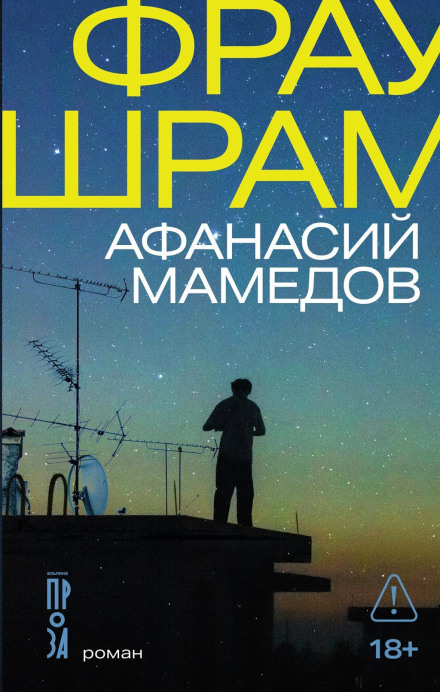
Frau Shram
10 hrs. 36 min.
Language
Russian
Author
Afanasy Mamedov
Author
Afanasy Mamedov
Narrator
Alexey Denisov
Narrator
Alexey Denisov
Description
Moscow, the 1990s. An Ilya, a student at the Literary Institute, leaves the capital for his native Baku—to see his mother and try to understand where to go next. Against a backdrop of political turbulence, social shifts, and his own inner bewilderment, he experiences a romance that becomes a boundary for him—after which his previous life is no longer possible. “Frau Schram” is a story about the collision of past and present, about love and responsibility, and about the bittersweet romance of “vacations” in a country where the intonations of the vanished empire are still audible, and at the same time new forms of self-determination are taking shape. The text sounds distinctly masculine, harsh, and candid, but the hero is sensitive to changes and constantly reflects on them—comparing dynamic, forward-looking Moscow with Baku, which he perceives as a space of memory. The motif of social strata, freedom, and choice turns into an image of how people live and change in an era of turning point.
100%
00:18
Фрау Шрам 01
3:32:31
Фрау Шрам 02
4:40:38
Фрау Шрам 03
2:23:10
Фрау Шрам 04
