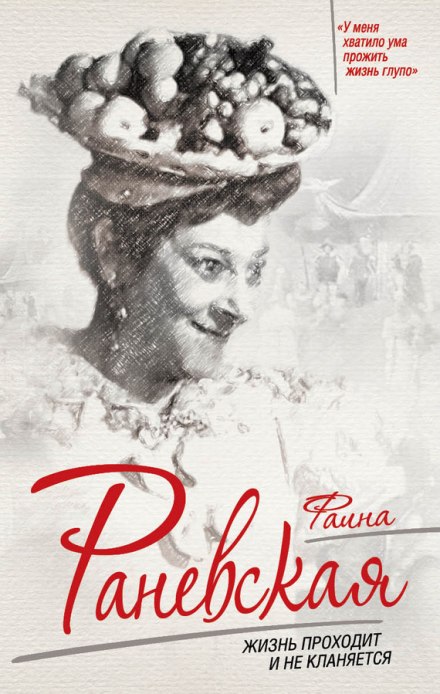
Faina Ranevskaya: Life Passes and Doesn't Bow
4 hrs. 31 min.
Language
Russian
Author
Sofia Benois
Author
Sofia Benois
Narrator
Natalya Kaznacheeva
Narrator
Natalya Kaznacheeva
Description
What a paradox: her theatrical and screen work can be counted on one’s fingers, yet, according to the British encyclopedia “Who’s Who” (“Кто есть кто”), she is among the ten most outstanding actresses of the twentieth century! So what makes Faina Georgievna Ranevskaya unique—the plain-looking girl from a “poor oil industrialist” family who became a charismatic actress (“Cinderella,” “The Foundling,” “Bombo,” “Easy Life,” and others)? The author insists that Ranevskaya remains compelling thanks to her one-of-a-kind ironic view of life: the actress was never shy about her choice of words, and if she joked, she would make people laugh until tears.
Yet it was not sarcasm that helped her—an Honored Artist of the USSR, as she put it, to receive her “funeral trappings”: the Order of Lenin and the Order of the Red Banner of Labour, and also three Stalin Prizes! And it wasn’t her witticisms and uncensored expressions that strengthened her friendship with the most famous people of that era: Anna Akhmatova, Lyubov Orlova, Rostislav Plyatt, Olga Aroseva, and many others. It seems that among all Soviet celebrities, only she could afford to be sincere.
At the moment when children surrounded her with happy shouts of “Mulia! Mulia!,” she answered dismissively: “Pioneers, go to hell.”
And it’s hard to imagine that inside this extraordinary person there lived a terrifyingly lonely, delicate, and vulnerable soul… Despite dozens of books written about Ranevskaya, her phenomenon still has not been fully revealed… and only now the reader gets the chance to look at the contradictory fate of this original actress in a new way.
Yet it was not sarcasm that helped her—an Honored Artist of the USSR, as she put it, to receive her “funeral trappings”: the Order of Lenin and the Order of the Red Banner of Labour, and also three Stalin Prizes! And it wasn’t her witticisms and uncensored expressions that strengthened her friendship with the most famous people of that era: Anna Akhmatova, Lyubov Orlova, Rostislav Plyatt, Olga Aroseva, and many others. It seems that among all Soviet celebrities, only she could afford to be sincere.
At the moment when children surrounded her with happy shouts of “Mulia! Mulia!,” she answered dismissively: “Pioneers, go to hell.”
And it’s hard to imagine that inside this extraordinary person there lived a terrifyingly lonely, delicate, and vulnerable soul… Despite dozens of books written about Ranevskaya, her phenomenon still has not been fully revealed… and only now the reader gets the chance to look at the contradictory fate of this original actress in a new way.
100%
05:38
01-01-detstvo-fainy-nauka-odinochestva
06:50
01-02-detstvo-fainy-nauka-odinochestva
06:35
01-03-detstvo-fainy-nauka-odinochestva
07:06
01-04-detstvo-fainy-nauka-odinochestva
07:22
01-05-detstvo-fainy-nauka-odinochestva
04:53
01-06-detstvo-fainy-nauka-odinochestva
04:09
02-01-teatralnyy-start
04:45
02-02-teatralnyy-start
04:44
02-03-teatralnyy-start
04:43
02-04-teatralnyy-start
06:01
02-05-teatralnyy-start
05:22
02-06-teatralnyy-start
04:11
02-07-teatralnyy-start
05:50
03-01-krymskaya-shkola
05:09
03-02-krymskaya-shkola
06:41
03-03-krymskaya-shkola
06:55
03-04-krymskaya-shkola
02:02
03-05-krymskaya-shkola
03:45
04-01-dolgie-gastroli
04:45
04-02-dolgie-gastroli
06:44
04-03-dolgie-gastroli
05:09
04-04-dolgie-gastroli
05:17
04-05-dolgie-gastroli
03:30
05-01-zdravstvuy-kinematograf
04:37
05-02-zdravstvuy-kinematograf
07:14
05-03-zdravstvuy-kinematograf
05:48
05-04-zdravstvuy-kinematograf
04:55
05-05-zdravstvuy-kinematograf
06:56
06-01-druzhba-s-ahmatovoy
07:09
06-02-druzhba-s-ahmatovoy
06:52
06-03-druzhba-s-ahmatovoy
04:31
06-04-druzhba-s-ahmatovoy
05:42
07-01-zhizn-nad-hlebom-i-zrelischami
05:13
07-02-zhizn-nad-hlebom-i-zrelischami
04:11
07-03-zhizn-nad-hlebom-i-zrelischami
06:23
07-04-zhizn-nad-hlebom-i-zrelischami
07:16
07-05-zhizn-nad-hlebom-i-zrelischami
05:06
07-06-zhizn-nad-hlebom-i-zrelischami
04:52
07-07-zhizn-nad-hlebom-i-zrelischami
06:34
07-08-zhizn-nad-hlebom-i-zrelischami
03:35
07-09-zhizn-nad-hlebom-i-zrelischami
06:19
08-01-rodnye-steny-i-lyudi
05:31
08-02-rodnye-steny-i-lyudi
07:01
08-03-rodnye-steny-i-lyudi
04:43
08-04-rodnye-steny-i-lyudi
04:20
08-05-rodnye-steny-i-lyudi
05:57
08-06-rodnye-steny-i-lyudi
05:53
09-01-govorit-fufa-velikolepnaya
06:31
09-02-govorit-fufa-velikolepnaya
