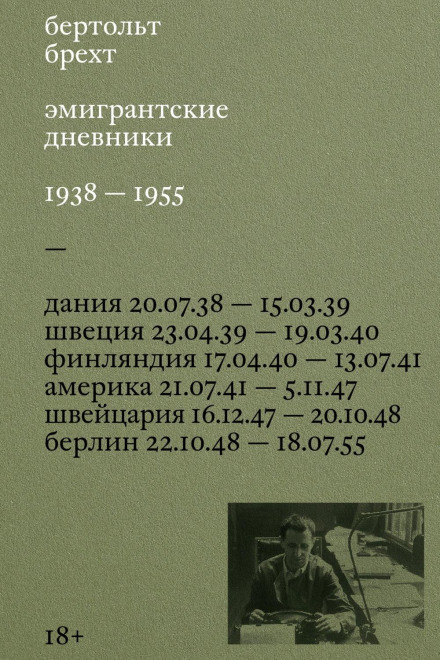
Journals in Exile. 1938–1955
20 hrs. 41 min.
Language
Russian
Author
Bertolt Brecht
Author
Bertolt Brecht
Narrator
Egor Serov
Narrator
Egor Serov
Description
"The Working Journal"—as Bertolt Brecht’s diaries were titled—was kept by the greatest dramatist of the 20th century from 1938 to 1955, during his exile from Germany and after his return. A defining note for these entries was the searing honesty with which he responded to events as they unfolded. He applied the standard of political and artistic integrity not only to what surrounded him—whether productions, texts, ideas, or people—but also in the way he judged them. Changing countries, losing close people, taking part in ideological disputes, and working on plays, Brecht pasted into his diary clippings from newspapers—first, a chronicle of the collapse of the world, and then, a chronicle of the new reality.
Reflections on the theory of "epic theatre" in these pages sit alongside notes about constant relocations, about a home dog, about his hatred of Hollywood, about arguments with Thomas Mann and Theodor Adorno, and about Leon Feuchtwanger’s unwavering belief in the victory of the USSR. Sketches, doubts, self-censorship, anger, irony: all the layers are visible, like in a storyboard. This is a rare account of how the creative laboratory of a genius and intellectual was arranged—one who lived in the era of totalitarianism and war, when it seemed that thinking about literature was almost indecent.
Published in Russian for the first time.
Reflections on the theory of "epic theatre" in these pages sit alongside notes about constant relocations, about a home dog, about his hatred of Hollywood, about arguments with Thomas Mann and Theodor Adorno, and about Leon Feuchtwanger’s unwavering belief in the victory of the USSR. Sketches, doubts, self-censorship, anger, irony: all the layers are visible, like in a storyboard. This is a rare account of how the creative laboratory of a genius and intellectual was arranged—one who lived in the era of totalitarianism and war, when it seemed that thinking about literature was almost indecent.
Published in Russian for the first time.
100%
33:30
00
1:17:53
01
1:09:07
02
3:59:11
03
9:25:46
04
1:02:39
05
3:13:38
06
