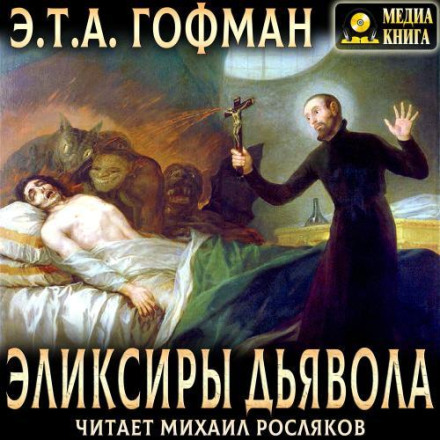
The Devil's Elixirs
17 hrs. 31 min.
Language
Russian
Author
E.T.A. Hoffmann
Author
E.T.A. Hoffmann
Narrator
Mikhail Roslyakov
Narrator
Mikhail Roslyakov
Description
«The Devil’s Elixirs» is not just a gothic nightmare, but a true anatomy of the Fall, where the mystical devil turns into an inner underground man, and monastery walls cannot save one from the abyss of one’s own soul.
The main character is Father Medard, a young, vain Capuchin who fervently believes in his own holiness and eloquence. But behind an outward show of righteousness lies the “underground”—pride, a thirst for power over the crowd, and suppressed, tormenting lust.
All it takes is a sip of mysterious wine to throw open the locks of this dungeon. Medard crosses the line. Fleeing the monastery, he plunges into a hopeless, feverish run through the circles of his personal hell, committing crime after crime: debauchery, deceit, sacrilege, and murder. But the most terrible punishment catches him not from the law, but from his own shattered consciousness.
He is set upon by the Double—a vile, deranged creature that mirrors all his vices. Who is this double? A real person, a diabolical illusion, or a conscience of Medard himself that has materialized and is mocking his attempts to justify himself? Through painful delirium, hallucinations, and the horror of unmasking, Hoffmann’s hero seeks only one thing—whether mercy, atonement, and resurrection are possible for a soul that has consciously let the devil in.
