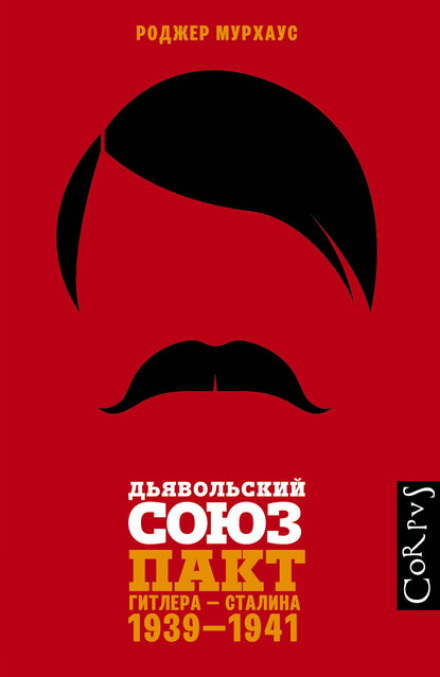
The Devil's Alliance: Hitler's Pact with Stalin, 1939–1941
14 hrs. 4 min.
Language
Russian
Author
Roger Moorhouse
Author
Roger Moorhouse
Narrator
Konstantin Korolkov
Narrator
Konstantin Korolkov
Description
They promised each other peace. And soon they began a war.
A global and comprehensive study of the document that fundamentally changed world history in the 20th century.
On August 23, 1939, the Soviet Union and Nazi Germany signed the Non-Aggression Pact, known as the Molotov–Ribbentrop Pact. The secret additional protocol to this agreement—effectively outlining the “territorial and political rearrangement” of the Baltic states and Poland—predetermined the further development of history in the 20th century. Eight days after the pact was signed, Germany’s armed forces crossed into Poland; a few days later, England, France, Australia, and New Zealand declared war on Germany; and on September 17, 1939, Soviet troops entered Polish territory. British historian Roger Moorhouse analyzes the causes and consequences of this “devilish alliance” and tries to answer the question: did Hitler and Stalin truly believe in the possibility of coexisting together between the two European powers that had divided Europe—or was it from the very beginning only a tactical ploy meant to buy time before the inevitable military blow?
Additional information:
They promised each other peace. And soon they began a war.
A global and comprehensive study of the document that fundamentally changed world history in the 20th century.
On the eve of World War II, the whole world was literally feverish. Some countries pursued an aggressive policy and ran active propaganda campaigns; others tried to appease the aggressor; a third group dreamed of taking part in the division of someone else’s lands; the fourth just wanted to wait it out. England and France, the USA and Canada, Japan and Poland, the USSR and Germany—each country had its own tactics, its own game, its own stakes and miscalculations. The outcome of all these complex political intrigues was the beginning of one of the most monstrous, cruel, and blood-soaked wars in human history. Could it have been avoided? And did the great powers want to avoid it?
The point of no return was reached when the non-aggression agreement between the USSR and Germany was signed—the so-called Molotov–Ribbentrop Pact. This document—and especially the additional protocol to it—became the detonator of an explosion unprecedented in scale. By analyzing an incredible number of memoirs and secret reports, newspaper articles, personal letters, and archival documents, Moorhouse not only reconstructs every minute detail of the events surrounding the signing of this document, but also examines in depth each political figure who took part in this “Devilish Alliance.”
Moorhouse reveals the essence of this catastrophic deal
A global and comprehensive study of the document that fundamentally changed world history in the 20th century.
On August 23, 1939, the Soviet Union and Nazi Germany signed the Non-Aggression Pact, known as the Molotov–Ribbentrop Pact. The secret additional protocol to this agreement—effectively outlining the “territorial and political rearrangement” of the Baltic states and Poland—predetermined the further development of history in the 20th century. Eight days after the pact was signed, Germany’s armed forces crossed into Poland; a few days later, England, France, Australia, and New Zealand declared war on Germany; and on September 17, 1939, Soviet troops entered Polish territory. British historian Roger Moorhouse analyzes the causes and consequences of this “devilish alliance” and tries to answer the question: did Hitler and Stalin truly believe in the possibility of coexisting together between the two European powers that had divided Europe—or was it from the very beginning only a tactical ploy meant to buy time before the inevitable military blow?
Additional information:
They promised each other peace. And soon they began a war.
A global and comprehensive study of the document that fundamentally changed world history in the 20th century.
On the eve of World War II, the whole world was literally feverish. Some countries pursued an aggressive policy and ran active propaganda campaigns; others tried to appease the aggressor; a third group dreamed of taking part in the division of someone else’s lands; the fourth just wanted to wait it out. England and France, the USA and Canada, Japan and Poland, the USSR and Germany—each country had its own tactics, its own game, its own stakes and miscalculations. The outcome of all these complex political intrigues was the beginning of one of the most monstrous, cruel, and blood-soaked wars in human history. Could it have been avoided? And did the great powers want to avoid it?
The point of no return was reached when the non-aggression agreement between the USSR and Germany was signed—the so-called Molotov–Ribbentrop Pact. This document—and especially the additional protocol to it—became the detonator of an explosion unprecedented in scale. By analyzing an incredible number of memoirs and secret reports, newspaper articles, personal letters, and archival documents, Moorhouse not only reconstructs every minute detail of the events surrounding the signing of this document, but also examines in depth each political figure who took part in this “Devilish Alliance.”
Moorhouse reveals the essence of this catastrophic deal
100%
31:07
Дьявольский союз. Пакт Гитлера – Сталина, 1939–1941 - 0 - Введение
2:43:28
Дьявольский союз. Пакт Гитлера – Сталина, 1939–1941 - 1 - Глава 1. Дьявольское зелье (ч. 1)
1:34:15
Дьявольский союз. Пакт Гитлера – Сталина, 1939–1941 - 2 - Глава 3. Дележ добычи (ч. 1)
1:29:04
Дьявольский союз. Пакт Гитлера – Сталина, 1939–1941 - 3 - Глава 4. Идейная акробатика (ч. 1)
1:12:57
Дьявольский союз. Пакт Гитлера – Сталина, 1939–1941 - 4 - Глава 5. Грубые, неловкие заигрывания (ч. 1)
1:29:48
Дьявольский союз. Пакт Гитлера – Сталина, 1939–1941 - 5 - Глава 6. Смазывание колес войны (ч. 1)
59:37
Дьявольский союз. Пакт Гитлера – Сталина, 1939–1941 - 6 - Глава 7. Товарищ Каменная Задница в логове фашистского зверя (ч. 1)
1:43:02
Дьявольский союз. Пакт Гитлера – Сталина, 1939–1941 - 7 - Глава 8. Верхом на нацистском тигре (ч. 1)
1:39:06
Дьявольский союз. Пакт Гитлера – Сталина, 1939–1941 - 8 - Глава 9. Воры не знают чести (ч. 1)
31:42
Дьявольский союз. Пакт Гитлера – Сталина, 1939–1941 - 9 - Эпилог_ Жизнь после смерти
04:32
Дьявольский союз. Пакт Гитлера – Сталина, 1939–1941 - 10 - Приложение_ Текст нацистско-советского пакта
06:00
Дьявольский союз. Пакт Гитлера – Сталина, 1939–1941 - 11 - Хронология
