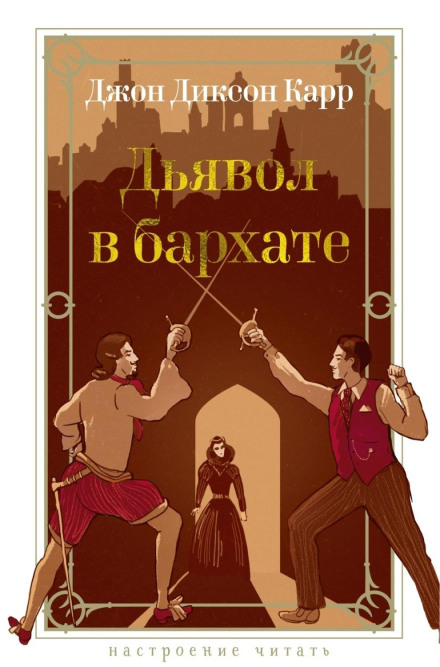
The Devil in Velvet
15 hrs. 42 min.
Language
Russian
Author
John Carr
Author
John Carr
Narrator
Stanislav Fedorchuk
Narrator
Stanislav Fedorchuk
Description
The golden age of detective fiction produced many star names—A. Christie, G. K. Chesterton, G. Mitchell, and others. In this bright constellation, John Dixon Carr (1906–1977) occupies the most honorable place. Murder “in a locked room,” where there’s no room for wild chases and shootouts, with the circle of suspects kept to the absolute minimum—this is the author’s favorite technique. Carr draws the reader into a web of cleverly set traps, deceptive turns, and subtle hints, inviting them to take part in solving an intricate puzzle.
“ The Devil in Velvet” (1951), recognized as one of Carr’s best novels, reveals new facets of the writer’s work and goes far beyond the classic detective story. An exhilarating journey through time, a bargain with the devil, and a romantic love story are combined with an investigation into a mysterious crime that happened several centuries earlier, in the late Restoration era. For the most inquisitive readers, who will want to delve deeper into the hectic age of England’s King Charles II, the author added at the end of the book several comments about the most vivid and colorful details of that time.
“ The Devil in Velvet” (1951), recognized as one of Carr’s best novels, reveals new facets of the writer’s work and goes far beyond the classic detective story. An exhilarating journey through time, a bargain with the devil, and a romantic love story are combined with an investigation into a mysterious crime that happened several centuries earlier, in the late Restoration era. For the most inquisitive readers, who will want to delve deeper into the hectic age of England’s King Charles II, the author added at the end of the book several comments about the most vivid and colorful details of that time.
