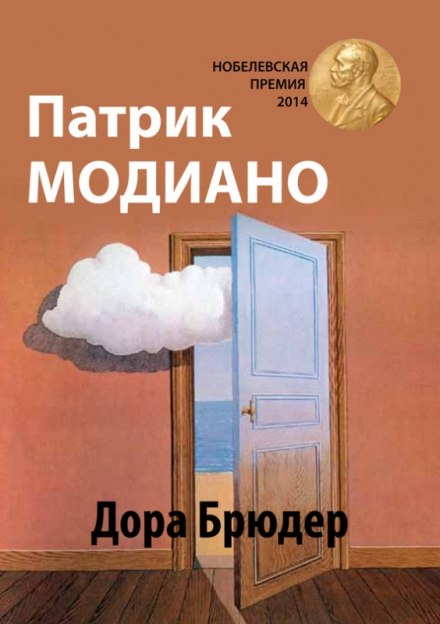
Dora Bruder
3 hrs. 16 min.
Language
Russian
Author
Patrick Modiano
Author
Patrick Modiano
Narrator
Nadezhda Vinokurova
Narrator
Nadezhda Vinokurova
Description
Trying to determine the fate of a fifteen-year-old Jewish girl who disappeared in the winter of 1941, the author reveals one of the most harrowing pages in the history of Paris. He tells about the deportation of Jews that took place with the involvement of French authorities during the fascist occupation.
About the author:
When you read Patrick Modiano’s books, it seems his hero could be met on any street in today’s Paris—a thoughtful, unremarkable person who doesn’t rush anywhere among bustling Parisians and carefully studies building walls, streets, trees, as if searching for something. “Here, once, there was a house, and now it’s gone… And in this house lived people I’ve heard about—they’re gone too, long ago… And I lived here or visited here once. I didn’t know these people, but I have to tell about them. Otherwise who will remind people of them? And why, then, am I living?”
It was said that Patrick Modiano was a prisoner of time that existed before his birth (the writer was born on July 30, 1945). In 1968, when political passions were running high in France and his peers took to the streets with slogans, the twenty-three-year-old Modiano wrote his first novel “Star Square”—about the day before yesterday, about “the troubling and shameful time of the occupation.” Later he said: “I was only twenty then, but my memory is older than I am. This time is in my blood, and I can’t shake the feeling that it’s as if I were born from this nightmare. I keep returning to it the way people return to their native places—and I can’t do otherwise.”
Thirty years have passed since then—three eventful decades. Modiano, already at the end of the 1970s, recognized by critics as “the most remarkable, the most unusual, and unquestionably the most talented of young French writers,” published around twenty books—each one consistently accompanied by success. And all this time, the writer and his heroes have lived—and still live—in a “world overturned back into the past,” trying to draw its secrets “from the depths of oblivion” (that’s the name of one of Modiano’s recent novels).
Today, on the threshold of a new millennium, Patrick Modiano is one of France’s most popular writers and a laureate of the most prestigious literary awards. Yet it feels as though fame never interested him: he writes because he cannot not write. “Dora Bruder” is a documentary novel that is also confessional and deeply personal; in it he admits that he writes as though fulfilling a duty to the past—to those “who were no longer there in the year I was born,” to those “who, if I hadn’t written these lines, would have been entered—alive or dead—into the category of unidentified persons.”
In life, Patrick Modiano is a reserved, quiet, and very shy man. He avoids public gatherings and appearances, even though with each new book the number of people wanting to interview him, invite him to press conferences, or to television programs keeps growing. Of course he has something to say to readers, but he prefers to speak from the pages of books. The writer resembles the hero of his novels: a thoughtful passerby slowly walking along Paris streets—a keeper of the memory of those who lived before him. It isn’t easy to carry such a burden for thirty years.
It was said that Patrick Modiano was a prisoner of time that existed before his birth (the writer was born on July 30, 1945). In 1968, when political passions were running high in France and his peers took to the streets with slogans, the twenty-three-year-old Modiano wrote his first novel “Star Square”—about the day before yesterday, about “the troubling and shameful time of the occupation.” Later he said: “I was only twenty then, but my memory is older than I am. This time is in my blood, and I can’t shake the feeling that it’s as if I were born from this nightmare. I keep returning to it the way people return to their native places—and I can’t do otherwise.”
Thirty years have passed since then—three eventful decades. Modiano, already at the end of the 1970s, recognized by critics as “the most remarkable, the most unusual, and unquestionably the most talented of young French writers,” published around twenty books—each one consistently accompanied by success. And all this time, the writer and his heroes have lived—and still live—in a “world overturned back into the past,” trying to draw its secrets “from the depths of oblivion” (that’s the name of one of Modiano’s recent novels).
Today, on the threshold of a new millennium, Patrick Modiano is one of France’s most popular writers and a laureate of the most prestigious literary awards. Yet it feels as though fame never interested him: he writes because he cannot not write. “Dora Bruder” is a documentary novel that is also confessional and deeply personal; in it he admits that he writes as though fulfilling a duty to the past—to those “who were no longer there in the year I was born,” to those “who, if I hadn’t written these lines, would have been entered—alive or dead—into the category of unidentified persons.”
In life, Patrick Modiano is a reserved, quiet, and very shy man. He avoids public gatherings and appearances, even though with each new book the number of people wanting to interview him, invite him to press conferences, or to television programs keeps growing. Of course he has something to say to readers, but he prefers to speak from the pages of books. The writer resembles the hero of his novels: a thoughtful passerby slowly walking along Paris streets—a keeper of the memory of those who lived before him. It isn’t easy to carry such a burden for thirty years.
100%
00:24
00-dora-bryudermp3
23:58
01-dora-bryudermp3
25:34
02-dora-bryudermp3
27:29
03-dora-bryudermp3
22:36
04-dora-bryudermp3
23:19
05-dora-bryudermp3
23:43
06-dora-bryudermp3
22:36
07-dora-bryudermp3
21:52
08-dora-bryudermp3
04:39
09-dora-bryudermp3
