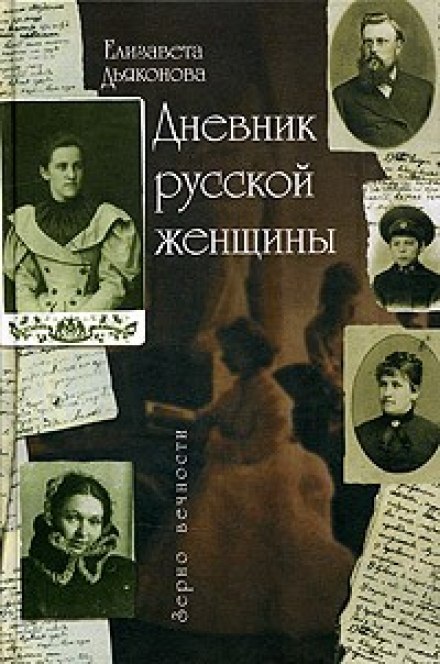
Diary of a Russian Woman
21 hrs. 28 min.
Language
Russian
Author
Elizaveta Dyakonova
Author
Elizaveta Dyakonova
Narrator
Evgenia Ionkina
Narrator
Evgenia Ionkina
Description
Elizaveta Dyakonova was born into a not-wealthy merchant family in the town of Nerekhte in Kostroma Governorate. After graduating from the Bestuzhev Women’s Courses in 1899, the girl decided to devote herself to law. To obtain a full legal education, in December 1900 Elizaveta went to France and enrolled in the law faculty of the Sorbonne.
But life abroad proved too difficult: undernourishment, poor lodging conditions, a worsening illness, and on top of it an unrequited love. The doctors advised her to return to her homeland. On the way back to Russia, in the mountains of Austrian Tyrol on 29 July (11 August) 1902, her life was cut short. The contents of her last entries from the “Diary” led some readers to think she had committed suicide, but her brother categorically denied it.
From the age of 11 until the end of her life, Elizaveta Dyakonova kept a diary. Soon after her death, her brother collected all the notes, letters, poems, and articles, and published them under one cover in 1905. The book received many favorable reviews and, before the revolution, was reissued three times (the last time in 1912). Vasily Rozanov called the diary “a deeply national, Russian phenomenon,” “one of the freshest Russian books of the late 19th century.”
The diary reflects the author’s inner life and also provides insight into the life of young people and students in the 1890s. In addition, it is a significant document of the women’s movement in Russia and a vivid literary work. Critics and readers often contrasted it with the diary of the artist Maria Bashkirtseva, where the heroine’s focus is not public life, but art and psychological experiences.
But life abroad proved too difficult: undernourishment, poor lodging conditions, a worsening illness, and on top of it an unrequited love. The doctors advised her to return to her homeland. On the way back to Russia, in the mountains of Austrian Tyrol on 29 July (11 August) 1902, her life was cut short. The contents of her last entries from the “Diary” led some readers to think she had committed suicide, but her brother categorically denied it.
From the age of 11 until the end of her life, Elizaveta Dyakonova kept a diary. Soon after her death, her brother collected all the notes, letters, poems, and articles, and published them under one cover in 1905. The book received many favorable reviews and, before the revolution, was reissued three times (the last time in 1912). Vasily Rozanov called the diary “a deeply national, Russian phenomenon,” “one of the freshest Russian books of the late 19th century.”
The diary reflects the author’s inner life and also provides insight into the life of young people and students in the 1890s. In addition, it is a significant document of the women’s movement in Russia and a vivid literary work. Critics and readers often contrasted it with the diary of the artist Maria Bashkirtseva, where the heroine’s focus is not public life, but art and psychological experiences.
