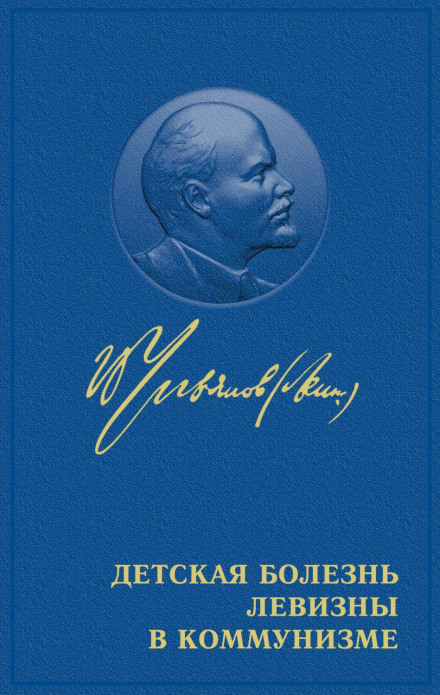
"Left-Wing" Communism: An Infantile Disorder
3 hrs. 59 min.
Language
Russian
Author
Vladimir Lenin
Author
Vladimir Lenin
Narrator
Konstantin Korolkov
Narrator
Konstantin Korolkov
Description
An economist and journalist, leader of an underground party, and founder of the first state in history of workers and peasants—few other people influenced the fate of Russia and the world in the 20th century as Vladimir Lenin did. Is Lenin’s cause alive today? That question remains open. But his books—undoubtedly. Elites can argue endlessly about what literature is and what it isn’t, what form is normative and what is marginal; but when the writer Lenin appears, all commonly accepted canon simply gets devalued and abolished. All of this once again confirms the Marxist thesis that true literature is, above all, a social practice.
“Probably now almost everyone can see that the Bolsheviks would not have lasted in power—not just for two and a half years, but even for two and a half months—without the strictest, truly iron discipline in our party, without the fullest and most selfless support of the entire working-class masses…” The book of the leader of the world proletariat was met with a resounding success—it went through 106 editions in 22 languages. And no wonder: essentially, it is a manual for revolutionaries, designed to help the young fraternal communist parties find the right path of revolutionary struggle, to warn against the mistakes of their first steps, and to arm them with the experience of Soviet Bolsheviks.
“Probably now almost everyone can see that the Bolsheviks would not have lasted in power—not just for two and a half years, but even for two and a half months—without the strictest, truly iron discipline in our party, without the fullest and most selfless support of the entire working-class masses…” The book of the leader of the world proletariat was met with a resounding success—it went through 106 editions in 22 languages. And no wonder: essentially, it is a manual for revolutionaries, designed to help the young fraternal communist parties find the right path of revolutionary struggle, to warn against the mistakes of their first steps, and to arm them with the experience of Soviet Bolsheviks.
100%
05:43
Детская болезнь «левизны» в коммунизме - 0 - I. В каком смысле можно говорить о международном значении русской революции_
06:14
Детская болезнь «левизны» в коммунизме - 1 - II. Одно из основных условий успеха большевиков
14:41
Детская болезнь «левизны» в коммунизме - 2 - III. Главные этапы в истории большевизма
18:45
Детская болезнь «левизны» в коммунизме - 3 - IV. В борьбе с какими врагами внутри рабочего движения вырос, окреп и закалился большевизм_
18:34
Детская болезнь «левизны» в коммунизме - 4 - V. «Левый» коммунизм в Германии. Вожди -- партия -- класс -- масса
26:05
Детская болезнь «левизны» в коммунизме - 5 - VI. Следует ли революционерам работать в реакционных профсоюзах_
28:46
Детская болезнь «левизны» в коммунизме - 6 - VII. Участвовать ли в буржуазных парламентах_
29:45
Детская болезнь «левизны» в коммунизме - 7 - VIII. «Никаких компромиссов»_
31:49
Детская болезнь «левизны» в коммунизме - 8 - IX. «Левый» коммунизм в Англии
34:12
Детская болезнь «левизны» в коммунизме - 9 - X. Некоторые выводы
25:12
Детская болезнь «левизны» в коммунизме - 10 - Добавление
