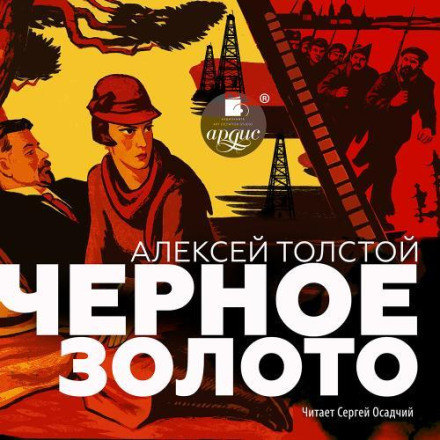
Black Gold
13 hrs. 56 min.
Language
Russian
Author
Alexey Nikolayevich Tolstoy
Author
Alexey Nikolayevich Tolstoy
Narrator
Sergey Osadchy
Narrator
Sergey Osadchy
Description
Aleksey Tolstoy’s novel “Black Gold” is a work with a complicated fate, reflecting the turbulent events of the early 20th century and the writer’s view of European politics after World War I.
At the heart of the plot is the fate of a Russian émigré in postwar Paris, where the world of high salons coexists with the poverty of refugees, and political intrigue is intertwined with personal dramas. Through the characters’ destinies, Tolstoy shows how money, power, and ambition shape a new reality in Europe, and “black gold” (oil) becomes a symbol of the struggle for influence and resources. With irony and sarcasm, the author lays bare the hypocrisy of European politics, the moral degradation of “high society,” and the mechanisms of propaganda.
Written in 1931, the novel was received sharply: it was called “a boulevard adventure” (L. Averbakh) and “a libel” (I. Bunin). Critics noted that the title “Black Gold” did not reflect the essence of the story: at its center are the fates of émigrés, not oil-related schemes.
In the late 1930s, Tolstoy radically revised the text: he changed the title to “Emigrants,” reworked the composition, added new scenes, and shifted the focus from oil intrigues to the drama of Russian émigrés—“leaves torn from a tree by the storm.” From 1940 onward, the new edition of the novel was published under that title.
At the heart of the plot is the fate of a Russian émigré in postwar Paris, where the world of high salons coexists with the poverty of refugees, and political intrigue is intertwined with personal dramas. Through the characters’ destinies, Tolstoy shows how money, power, and ambition shape a new reality in Europe, and “black gold” (oil) becomes a symbol of the struggle for influence and resources. With irony and sarcasm, the author lays bare the hypocrisy of European politics, the moral degradation of “high society,” and the mechanisms of propaganda.
Written in 1931, the novel was received sharply: it was called “a boulevard adventure” (L. Averbakh) and “a libel” (I. Bunin). Critics noted that the title “Black Gold” did not reflect the essence of the story: at its center are the fates of émigrés, not oil-related schemes.
In the late 1930s, Tolstoy radically revised the text: he changed the title to “Emigrants,” reworked the composition, added new scenes, and shifted the focus from oil intrigues to the drama of Russian émigrés—“leaves torn from a tree by the storm.” From 1940 onward, the new edition of the novel was published under that title.
100%
21:06
01
04:13
02
05:44
03
06:11
04
05:43
05
06:21
06
17:47
07
05:48
08
06:13
09
09:44
10
05:52
11
06:44
12
14:11
13
06:56
14
04:04
15
03:56
16
12:01
17
10:14
18
19:47
19
15:51
20
07:45
21
07:28
22
10:01
23
13:05
24
21:50
25
05:55
26
14:23
27
13:29
28
13:06
29
08:25
30
31:16
31
24:01
32
26:17
33
41:15
34
22:10
35
45:14
36
16:55
37
18:55
38
15:33
39
20:54
40
52:03
41
54:49
42
1:08:01
43
1:35:08
44
