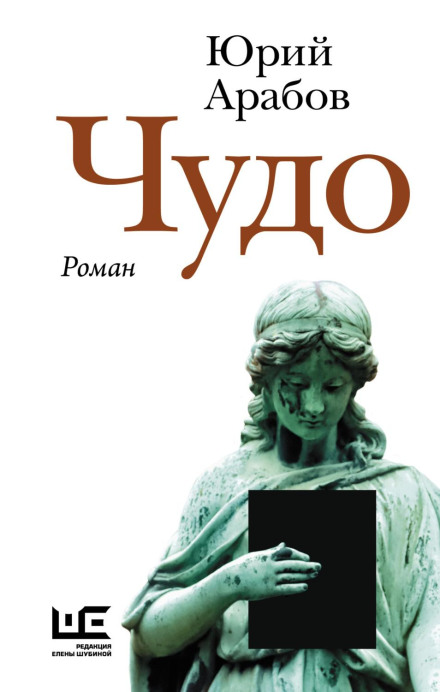
The Miracle
5 hrs. 17 min.
Language
Russian
Author
Yury Arabov
Author
Yury Arabov
Narrator
Ivan Litvinov
Narrator
Ivan Litvinov
Description
Yuri Arabov’s fantastic novel is inspired by the Orthodox legend of a miraculous event known as “Zoya’s Standing,” supposedly occurring in Samara in 1956. A young woman named Zoya Karnaukhova, unable to find a dance partner, turned to an icon of St. Nicholas the Wonderworker—and freezes in place for 128 days. Neither medical specialists nor clergy, and even Khrushchev, were able to solve the mystery of this phenomenon.
Yuri Arabov, the famous screenwriter who brought the world the scripts for the film adaptation of “The Aviator” by Evgeny Vodolazkin with Konstantin Khabensky and the film “The Monk and the …,” is renowned for his refined prose, where religious themes acquire a light tone through subtle humor.
Born in 1954 and passing away in 2023, Yuri Arabov was not only a prose writer, but also a screenwriter and a poet. He worked on scripts for such iconic films by Alexander Sokurov as “Days of Eclipse,” “Taurus,” and “Moloch,” and he wrote novels “Big Beat,” which received the Apollon Grigoriev Prize, and “Flagellants,” which made the shortlist for the Russian Booker Prize. The film “Miracle,” made based on his novel by Alexander Proshkin, received the Silver George at the Moscow International Film Festival.
At the center of the book is the Orthodox legend of “Zoya’s Standing.” Arabov himself describes his work as a philosophical novel exploring the denial of miracles in the modern world.
In a small town called Grechaneske, an incredible event happens. A girl named Tatyana, who organizes a dance evening, can’t find a partner and invites the icon of Nicholas the Good Helper to dance with her. The moment she touches the icon, the girl turns into an immobile statue. Neither doctors nor priests, and not even Khrushchev who happened to be in town, can help her.
Arabov wanted to create a metaphor for the events of the twentieth century, when society turned away from God and was punished for it—but still hope remains for recovery.
Yuri Arabov, the famous screenwriter who brought the world the scripts for the film adaptation of “The Aviator” by Evgeny Vodolazkin with Konstantin Khabensky and the film “The Monk and the …,” is renowned for his refined prose, where religious themes acquire a light tone through subtle humor.
Born in 1954 and passing away in 2023, Yuri Arabov was not only a prose writer, but also a screenwriter and a poet. He worked on scripts for such iconic films by Alexander Sokurov as “Days of Eclipse,” “Taurus,” and “Moloch,” and he wrote novels “Big Beat,” which received the Apollon Grigoriev Prize, and “Flagellants,” which made the shortlist for the Russian Booker Prize. The film “Miracle,” made based on his novel by Alexander Proshkin, received the Silver George at the Moscow International Film Festival.
At the center of the book is the Orthodox legend of “Zoya’s Standing.” Arabov himself describes his work as a philosophical novel exploring the denial of miracles in the modern world.
In a small town called Grechaneske, an incredible event happens. A girl named Tatyana, who organizes a dance evening, can’t find a partner and invites the icon of Nicholas the Good Helper to dance with her. The moment she touches the icon, the girl turns into an immobile statue. Neither doctors nor priests, and not even Khrushchev who happened to be in town, can help her.
Arabov wanted to create a metaphor for the events of the twentieth century, when society turned away from God and was punished for it—but still hope remains for recovery.
