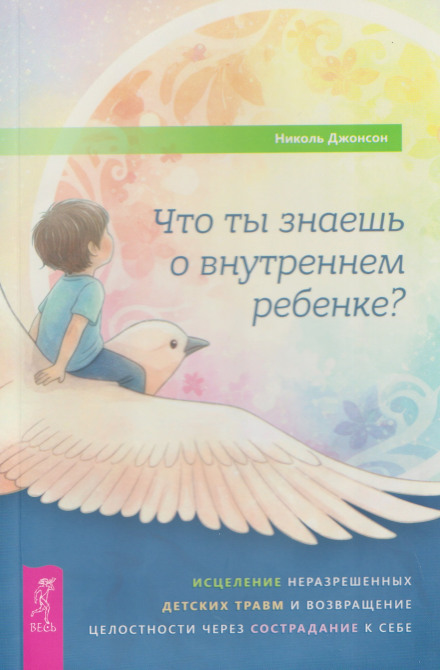
What Do You Know About Your Inner Child? Healing Unresolved Childhood Trauma and Returning to Wholeness Through Self-Compassion
4 hrs. 43 min.
Language
Russian
Author
Nikol Johnson
Author
Nikol Johnson
Narrator
Olga Poymanova
Narrator
Olga Poymanova
Description
We’ve gotten used to living as if we must always be strong and composed, effortlessly handling chores at home and tasks at work. Even when fatigue, anxiety, or pain builds up inside us, we often keep “pushing through” without asking why certain situations suddenly bring a heavy wave of emotions.
With her extensive experience, psychologist Nicole Johnson is convinced: outbursts of powerful feelings are often connected to experiences from childhood. Trauma doesn’t dissolve on its own—it leaves an imprint in the body, emotions, and our familiar ways of reacting to the world. The author explains how traumatic experiences shape internal automatic responses and why self-criticism and shame over time become the “norm.”
This book invites you to pause and listen to yourself more carefully. It’s about the inner child—the part of your personality that, at one point, didn’t receive enough care, safety, acceptance, and love. By building a connection with this part of yourself, you open up a powerful resource for a calmer, more whole life—without exhausting criticism, perfectionism, and constant anxiety.
As Nicole Johnson herself says: “If you want to become a better parent, start by becoming a parent to yourself. Yes, it’s not easy, but it’s something you will never regret. If you’re young or you don’t have children—now is the best time to start. The sooner you prioritize your healing, the faster you’ll get your strength back. Past trauma, abuse, and pain have already stolen enough of your time. Don’t let them steal a second more.”
What the book is about
This book explores how childhood trauma shapes your sense of self and shows up in emotions, reactions, and decisions in adult life. The author breaks down in detail what trauma and abuse are, how the psyche and the body experience an unsafe experience, and why symptoms that appear years later are not a sign of weakness, but the logical consequences of the past.
A special emphasis is placed on practice: step by step, readers learn how to build supportive relationships with themselves and master the principles of self-help. The final chapters focus on emotional maturation—how to experience setbacks, intense feelings, and anger without self-blame and shame.
Why you should read this book
Thanks to this book, readers will:
– learn to recognize the voice of the inner child and respond to it with care;
– gain tools for self-support and gradual healing of long-standing emotional wounds;
– strengthen personal boundaries and improve relationships with yourself and others;
– feel more wholeness, inner steadiness, and trust in themselves.
Who this book is for
This book will be helpful for those who:
– feel as if they’re living “on autopilot,” disconnected from themselves and their feelings;
– experienced trauma, abuse, emotional neglect in childhood, or grew up in an unsafe environment;
– notice that the past still affects relationships, self-esteem, boundaries, and the ability to enjoy life;
– want to understand where recurring reactions, fears, and anxiety come from;
– are looking to gently heal old wounds without pressure or violence toward themselves;
– are seeking ways to help themselves, including when it isn’t possible to work regularly with a specialist.
Why we decided to publish it
We chose this book because it speaks honestly and compassionately about something difficult—childhood trauma and its long impact on adult life. This is a clear, practical guide based on the author’s many years of work with people who were able to recover after traumatic experiences.
Inside, you’ll find clear tools to help you restore your inner steadiness, set boundaries, and improve relationships with yourself and others.
About the author
Nicole Johnson is a psychologist and consultant who helps people cope with trauma, abuse, and difficult childhood experiences. She has two master’s degrees—in pedagogy and psychological counseling—and a bachelor’s degree in political science.
In social media, she’s known by a slightly ironic name: The Ginger Shrink (“Red-haired psychotherapist”). In simple, human language, she talks about complex things—pain, shame, fear—and, most importantly, the path to recovery and inner wholeness.
Key concepts
inner child, childhood trauma, trauma healing, self-compassion, psychological recovery, working with the inner child, re-parenting, emotional trauma, traumatic childhood experience, self-care, emotional regulation, self-acceptance, psychological self-help, restoring wholeness, personal boundaries, inner dialogue, self-support, the path back to yourself, trauma psychology, inner steadiness
With her extensive experience, psychologist Nicole Johnson is convinced: outbursts of powerful feelings are often connected to experiences from childhood. Trauma doesn’t dissolve on its own—it leaves an imprint in the body, emotions, and our familiar ways of reacting to the world. The author explains how traumatic experiences shape internal automatic responses and why self-criticism and shame over time become the “norm.”
This book invites you to pause and listen to yourself more carefully. It’s about the inner child—the part of your personality that, at one point, didn’t receive enough care, safety, acceptance, and love. By building a connection with this part of yourself, you open up a powerful resource for a calmer, more whole life—without exhausting criticism, perfectionism, and constant anxiety.
As Nicole Johnson herself says: “If you want to become a better parent, start by becoming a parent to yourself. Yes, it’s not easy, but it’s something you will never regret. If you’re young or you don’t have children—now is the best time to start. The sooner you prioritize your healing, the faster you’ll get your strength back. Past trauma, abuse, and pain have already stolen enough of your time. Don’t let them steal a second more.”
What the book is about
This book explores how childhood trauma shapes your sense of self and shows up in emotions, reactions, and decisions in adult life. The author breaks down in detail what trauma and abuse are, how the psyche and the body experience an unsafe experience, and why symptoms that appear years later are not a sign of weakness, but the logical consequences of the past.
A special emphasis is placed on practice: step by step, readers learn how to build supportive relationships with themselves and master the principles of self-help. The final chapters focus on emotional maturation—how to experience setbacks, intense feelings, and anger without self-blame and shame.
Why you should read this book
Thanks to this book, readers will:
– learn to recognize the voice of the inner child and respond to it with care;
– gain tools for self-support and gradual healing of long-standing emotional wounds;
– strengthen personal boundaries and improve relationships with yourself and others;
– feel more wholeness, inner steadiness, and trust in themselves.
Who this book is for
This book will be helpful for those who:
– feel as if they’re living “on autopilot,” disconnected from themselves and their feelings;
– experienced trauma, abuse, emotional neglect in childhood, or grew up in an unsafe environment;
– notice that the past still affects relationships, self-esteem, boundaries, and the ability to enjoy life;
– want to understand where recurring reactions, fears, and anxiety come from;
– are looking to gently heal old wounds without pressure or violence toward themselves;
– are seeking ways to help themselves, including when it isn’t possible to work regularly with a specialist.
Why we decided to publish it
We chose this book because it speaks honestly and compassionately about something difficult—childhood trauma and its long impact on adult life. This is a clear, practical guide based on the author’s many years of work with people who were able to recover after traumatic experiences.
Inside, you’ll find clear tools to help you restore your inner steadiness, set boundaries, and improve relationships with yourself and others.
About the author
Nicole Johnson is a psychologist and consultant who helps people cope with trauma, abuse, and difficult childhood experiences. She has two master’s degrees—in pedagogy and psychological counseling—and a bachelor’s degree in political science.
In social media, she’s known by a slightly ironic name: The Ginger Shrink (“Red-haired psychotherapist”). In simple, human language, she talks about complex things—pain, shame, fear—and, most importantly, the path to recovery and inner wholeness.
Key concepts
inner child, childhood trauma, trauma healing, self-compassion, psychological recovery, working with the inner child, re-parenting, emotional trauma, traumatic childhood experience, self-care, emotional regulation, self-acceptance, psychological self-help, restoring wholeness, personal boundaries, inner dialogue, self-support, the path back to yourself, trauma psychology, inner steadiness
100%
13:09
Что ты знаешь о внутреннем ребенке? Исцеление неразрешенных детских травм и возвращение целостности через сострадание к себе 01
17:00
Что ты знаешь о внутреннем ребенке? Исцеление неразрешенных детских травм и возвращение целостности через сострадание к себе 02
16:44
Что ты знаешь о внутреннем ребенке? Исцеление неразрешенных детских травм и возвращение целостности через сострадание к себе 03
25:28
Что ты знаешь о внутреннем ребенке? Исцеление неразрешенных детских травм и возвращение целостности через сострадание к себе 04
30:54
Что ты знаешь о внутреннем ребенке? Исцеление неразрешенных детских травм и возвращение целостности через сострадание к себе 05
17:47
Что ты знаешь о внутреннем ребенке? Исцеление неразрешенных детских травм и возвращение целостности через сострадание к себе 06
19:33
Что ты знаешь о внутреннем ребенке? Исцеление неразрешенных детских травм и возвращение целостности через сострадание к себе 07
15:39
Что ты знаешь о внутреннем ребенке? Исцеление неразрешенных детских травм и возвращение целостности через сострадание к себе 08
19:18
Что ты знаешь о внутреннем ребенке? Исцеление неразрешенных детских травм и возвращение целостности через сострадание к себе 09
19:15
Что ты знаешь о внутреннем ребенке? Исцеление неразрешенных детских травм и возвращение целостности через сострадание к себе 10
15:51
Что ты знаешь о внутреннем ребенке? Исцеление неразрешенных детских травм и возвращение целостности через сострадание к себе 11
23:11
Что ты знаешь о внутреннем ребенке? Исцеление неразрешенных детских травм и возвращение целостности через сострадание к себе 12
14:12
Что ты знаешь о внутреннем ребенке? Исцеление неразрешенных детских травм и возвращение целостности через сострадание к себе 13
18:12
Что ты знаешь о внутреннем ребенке? Исцеление неразрешенных детских травм и возвращение целостности через сострадание к себе 14
15:42
Что ты знаешь о внутреннем ребенке? Исцеление неразрешенных детских травм и возвращение целостности через сострадание к себе 15
02:02
Что ты знаешь о внутреннем ребенке? Исцеление неразрешенных детских травм и возвращение целостности через сострадание к себе 16
