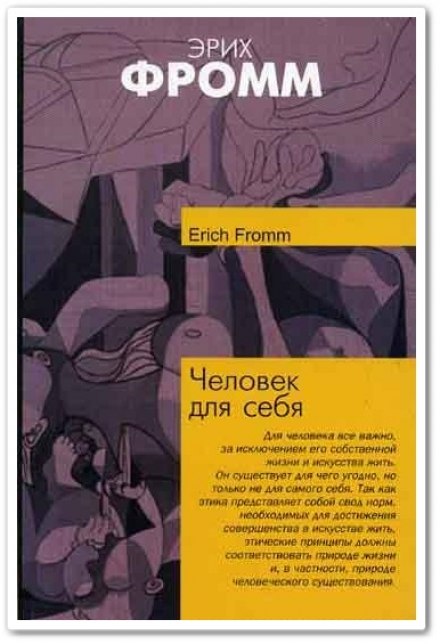
Man for Himself
11 hrs. 20 min.
Language
Russian
Author
Erich Fromm
Author
Erich Fromm
Narrator
Ilya Prudovsky
Narrator
Ilya Prudovsky
Description
The book “A Human Being for Himself” examines ethical and psychological problems of a person’s self-realization. Fromm believes that psychology cannot be separated from the philosophy of ethics and sociology, because the motives behind human behavior are largely determined by value judgments, and their validity underpins mental health and well-being. Fromm analyzes different character orientations in the process of assimilation and socialization and shows the social foundation of their emergence—how they are connected to the type of society and prevailing cultural standards. The ideal of humanistic ethics, according to Fromm, is a productive orientation. This is a way of relating to the world where a person is guided by their own reason, applies their strengths, is capable of freedom, and doesn’t depend on anyone.
100%
03:01
0_1_01
02:56
0_1_02
03:15
0_1_03
02:52
0_1_04
03:22
1_1_01
04:04
1_1_02
02:36
1_1_03
03:10
1_1_04
02:27
2_1_01
03:05
2_1_02
04:55
2_1_03
02:55
2_1_04
04:05
2_1_05
03:07
2_2_01
03:18
2_2_02
03:37
2_2_03
04:15
2_2_04
03:22
2_2_05
03:58
2_3_01
05:05
2_3_02
03:56
2_3_03
04:19
2_4_01
03:40
2_4_02
04:05
2_4_03
03:28
2_4_04
04:07
2_5_01
03:07
2_5_02
03:49
2_5_03
04:06
2_5_04
02:40
2_5_05
04:44
3_1_01
04:37
3_1_02
04:57
3_1_03
04:31
3_1_04
03:47
3_1_05
04:28
3_1_06
03:50
3_1_07
04:34
3_1_08
01:46
3_2_01
03:47
3_2_02
03:26
3_2_03
01:55
3_2_04
03:03
3_2_05
02:29
3_2_06
02:48
3_2_07
03:50
3_2_08
03:38
3_2_09
04:32
3_2_10
04:55
3_2_11
03:55
3_2_12
03:10
3_2_13
02:28
3_2_14
04:04
3_2_15
02:45
3_2_16
03:20
3_2_17
03:01
3_2_18
02:30
3_2_19
04:29
3_2_20
03:58
3_2_21
03:51
3_2_22
03:40
3_2_23
04:23
3_2_24
03:43
3_2_25
03:02
3_2_26
03:10
3_2_27
03:38
3_2_28
03:34
3_2_29
03:01
3_2_30
04:06
3_2_31
04:23
3_2_32
02:57
3_2_33
04:01
3_2_34
04:04
3_2_35
04:17
3_2_36
03:55
3_2_37
03:51
3_2_38
04:44
3_2_39
03:44
3_2_40
03:25
3_2_41
02:59
3_2_42
03:19
3_2_43
04:18
3_2_44
03:49
3_2_45
03:02
3_2_46
02:41
3_2_47
05:07
3_2_48
03:12
3_2_49
03:23
3_2_50
02:09
4_1_01
03:38
4_1_02
03:59
4_1_03
03:28
4_1_04
03:51
4_1_05
03:30
4_1_06
03:14
4_1_07
03:47
4_1_08
03:50
4_1_09
03:23
4_1_10
04:25
4_1_11
04:06
4_1_12
02:39
4_1_13
03:56
4_1_14
04:12
4_1_15
03:00
4_1_16
03:46
4_1_17
03:52
4_2_01
03:45
4_2_02
02:43
4_2_03
03:35
4_2_04
03:55
4_2_05
05:03
4_2_06
03:45
4_2_07
03:56
4_2_08
04:05
4_2_09
04:48
4_2_10
03:54
4_2_11
03:23
4_2_12
03:20
4_2_13
04:04
4_2_14
03:10
4_2_15
04:35
4_2_16
04:01
4_2_17
03:32
4_2_18
02:51
4_2_19
04:35
4_2_20
04:35
4_2_21
03:18
4_2_22
03:51
4_3_01
03:27
4_3_02
03:40
4_3_03
04:50
4_3_04
04:46
4_3_05
03:29
4_3_06
04:57
4_3_07
03:23
4_3_08
03:33
4_3_09
03:26
4_3_10
03:42
4_3_11
04:16
4_3_12
03:15
4_3_13
04:30
4_3_14
04:54
4_3_15
04:35
4_3_16
02:54
4_3_17
03:02
4_3_18
03:42
4_4_01
03:00
4_4_02
03:26
4_4_03
03:45
4_4_04
04:33
4_4_05
04:20
4_4_06
04:25
4_4_07
03:56
4_4_08
04:21
4_4_09
04:38
4_5_01
03:40
4_5_02
05:10
4_5_03
04:31
4_5_04
03:35
4_5_05
05:02
4_5_06
02:57
4_5_07
03:14
4_5_08
03:54
4_5_09
02:23
4_5_10
04:50
4_5_11
03:32
4_5_12
03:45
4_5_13
03:37
4_5_14
03:11
4_5_15
03:46
4_5_16
05:02
4_5_17
04:40
4_5_18
04:06
4_5_19
04:38
4_6_01
04:27
4_6_02
04:43
4_6_03
04:50
4_6_04
03:07
5_1_01
03:59
5_1_02
04:34
5_1_03
03:38
5_1_04
