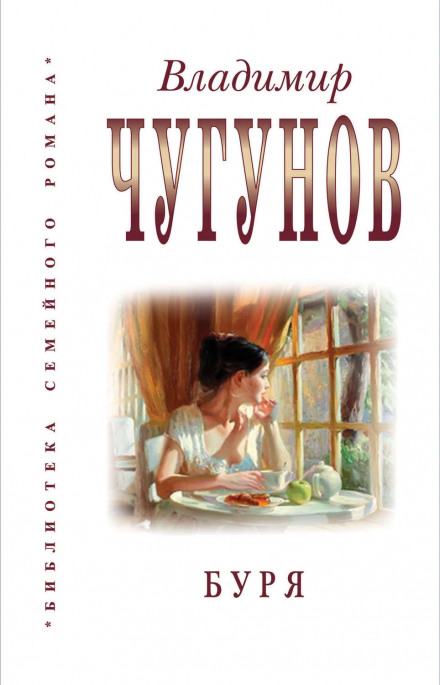
The Storm
4 hrs. 2 min.
Language
Russian
Author
Vladimir Chugunov
Author
Vladimir Chugunov
Narrator
Andrey Leonov
Narrator
Andrey Leonov
Description
In any person’s biography, youth is the epicenter of a special psychological intensity. It is a period when the child’s contemplative gaze starts to intuitively feel the mystery of the world, and as it approaches the riddles of existence, it catastrophically restructures itself. The inevitability of this approach is dictated by the mutual pull: the secret calls to the young man, while the young man seeks the secret. A picture of such a psychological explosion is the central plot of the novel “The Dreamer.”
The story “The Thunderstorm” is also about love, but a different, adult love—one that comes to the main character as a result of an unexpected family drama, overturning not only his life but the lives of his entire family, and also the family of his only and passionately loved daughter. Thus, both works tell of the same storm of feelings—caught and carried into the unknown in different years and in completely different ways—which alone defines our fate.
God, I’m eighteen—I’m already an adult! It seemed like only yesterday I was running through our forest with a wooden gun, playing chatka, lapta, hide-and-seek, and chase-and-catch, yelling “Clang,” playing “Banner,” and as if possessed, charging over rough ground, stuffing eights on my bicycle, and even doing exercises from a book of sambo. Instead of a training dummy, I threw it in the sand—on the other side of the lake—Mitya. But when I dislocated his arm, my mom strictly forbid me to take him with me. And without a training dummy, what kind of wrestling is that? Besides, Mom dreamed that Mitya would become famous like Robertino Loretti, and in all her free time she drilled him either “Ave Maria” or “Jamaica.” I secretly laughed at their nonsense: “Jamaica—where are my underpants and T-shirt?” Mitya threatened to complain to my mother, but a fist pushed in front of his face stopped him from taking a doomed step.
Source: Audio Book Lovers Club
The story “The Thunderstorm” is also about love, but a different, adult love—one that comes to the main character as a result of an unexpected family drama, overturning not only his life but the lives of his entire family, and also the family of his only and passionately loved daughter. Thus, both works tell of the same storm of feelings—caught and carried into the unknown in different years and in completely different ways—which alone defines our fate.
God, I’m eighteen—I’m already an adult! It seemed like only yesterday I was running through our forest with a wooden gun, playing chatka, lapta, hide-and-seek, and chase-and-catch, yelling “Clang,” playing “Banner,” and as if possessed, charging over rough ground, stuffing eights on my bicycle, and even doing exercises from a book of sambo. Instead of a training dummy, I threw it in the sand—on the other side of the lake—Mitya. But when I dislocated his arm, my mom strictly forbid me to take him with me. And without a training dummy, what kind of wrestling is that? Besides, Mom dreamed that Mitya would become famous like Robertino Loretti, and in all her free time she drilled him either “Ave Maria” or “Jamaica.” I secretly laughed at their nonsense: “Jamaica—where are my underpants and T-shirt?” Mitya threatened to complain to my mother, but a fist pushed in front of his face stopped him from taking a doomed step.
Source: Audio Book Lovers Club
100%
38:34
01_Burya
14:32
02_Burya
16:17
03_Burya
29:14
04_Burya
17:06
05_Burya
12:37
06_Burya
09:50
07_Burya
19:29
08_Burya
13:39
09_Burya
12:37
10_Burya
30:23
11_Burya
28:37
12_Burya
