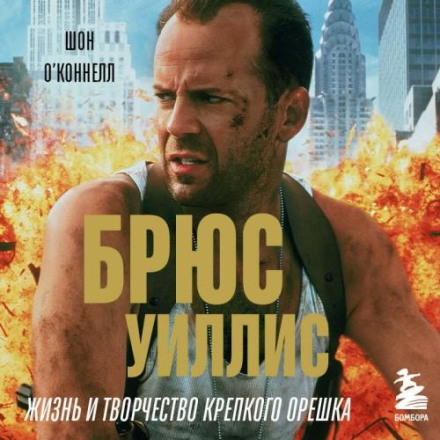
Bruce Willis: The Life and Career of the Die Hard
11 hrs. 4 min.
Language
Russian
Author
Sean O'Connell
Author
Sean O'Connell
Narrator
Roman Volkov
Narrator
Roman Volkov
Description
He entered film history barefoot on broken glass and forever changed the action genre.
From doubts and auditions in New York to the status of a living legend.
From roles he was refused to roles written for him.
Bruce Willis is not just an actor—he’s a phenomenon. He says one thing, but his eyes show another: behind the smirk is fatigue, behind the coolness is pain, and behind the silence is a whole storm. It’s this layered quality that allowed him to work in any genre.
— Why did comedies (“Die Hard”/“Death Becomes Her”?) come out even better for Willis than action films?
— How did an actor move from blockbusters to auteur cinema (“The Kingdom of Full Moon,” “The Sixth Sense”)?
— By what criterion did Bruce Willis choose roles?
— Why won’t science fiction be the same after Bruce Willis (“The Fifth Element,” “12 Monkeys”)?
— How did Willis’s hero (“Die Hard”) outshine Schwarzenegger’s (“Commando”) and Stallone’s (“Rambo”) heroes?
Bruce Willis took the hero archetype, stripped it of muscle, put on a wrinkled T-shirt, and made him limp, joke, and feel pain. He proved that the hero can be a tired, ironic, stubborn person with personal problems and debts. He made the hero accessible—and that is his greatest contribution not only to cinema, but to mass culture as well.
From doubts and auditions in New York to the status of a living legend.
From roles he was refused to roles written for him.
Bruce Willis is not just an actor—he’s a phenomenon. He says one thing, but his eyes show another: behind the smirk is fatigue, behind the coolness is pain, and behind the silence is a whole storm. It’s this layered quality that allowed him to work in any genre.
— Why did comedies (“Die Hard”/“Death Becomes Her”?) come out even better for Willis than action films?
— How did an actor move from blockbusters to auteur cinema (“The Kingdom of Full Moon,” “The Sixth Sense”)?
— By what criterion did Bruce Willis choose roles?
— Why won’t science fiction be the same after Bruce Willis (“The Fifth Element,” “12 Monkeys”)?
— How did Willis’s hero (“Die Hard”) outshine Schwarzenegger’s (“Commando”) and Stallone’s (“Rambo”) heroes?
Bruce Willis took the hero archetype, stripped it of muscle, put on a wrinkled T-shirt, and made him limp, joke, and feel pain. He proved that the hero can be a tired, ironic, stubborn person with personal problems and debts. He made the hero accessible—and that is his greatest contribution not only to cinema, but to mass culture as well.
