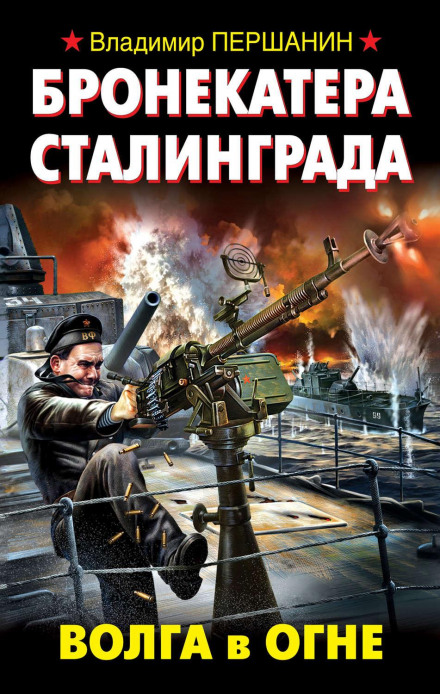
Armored Boats of Stalingrad. The Volga in Flames
8 hrs. 33 min.
Language
Russian
Author
Vladimir Pershanin
Author
Vladimir Pershanin
Narrator
Dmitry Kosmin
Narrator
Dmitry Kosmin
Description
“Beyond the Volga, there are no lands for us!” the defenders of Stalingrad swore. And the Germans dubbed the great river the “Russian Styx.” In the autumn of 1942, the Volga separated the world of the living from the world of the dead. The Volga blazed from bank to bank, boiled with ruptures, and flowed with blood. The Volga became the second line of the front—through it reinforcements and ammunition were delivered to the besieged city. And the river war was no less fierce than the fighting amid the ruins of Stalingrad: crossings were constantly shelled by artillery and aircraft, ships burned, people drowned—but despite monstrous losses, the river men kept doing their job… And every night, Soviet armored motorboats with tank turrets and anti-aircraft machine guns would go out to cover the crossings, becoming the backbone of the Stalingrad flotilla. They sacrificed themselves in unequal battles against German bombers and coastal batteries. They carried out the most dangerous missions and suffered the heaviest losses. Breaking through the November ice, they continued fighting when all other vessels had already stopped—and died bravely without yet knowing that our troops had moved on to the decisive counteroffensive that would break the backbone of the Wehrmacht, that we had already won…
100%
39:52
Бронекатера Сталинграда. Волга в огне - 0 - Глава 1. Ночные переправы
51:29
Бронекатера Сталинграда. Волга в огне - 1 - Глава 2. Путь на Сталинград
1:28:23
Бронекатера Сталинграда. Волга в огне - 2 - Глава 3. Огненная река
54:18
Бронекатера Сталинграда. Волга в огне - 3 - Глава 4. Осень, девушки, война…
51:07
Бронекатера Сталинграда. Волга в огне - 4 - Глава 5. Тяжелый октябрь
45:08
Бронекатера Сталинграда. Волга в огне - 5 - Глава 6. Ночной десант
41:04
Бронекатера Сталинграда. Волга в огне - 6 - Глава 7. Подступает зима
49:31
Бронекатера Сталинграда. Волга в огне - 7 - Глава 8. На переломе
1:01:54
Бронекатера Сталинграда. Волга в огне - 8 - Глава 9. Война среди льдов
28:52
Бронекатера Сталинграда. Волга в огне - 9 - Глава 10. Последний бой
02:03
Бронекатера Сталинграда. Волга в огне - 10 - Эпилог
