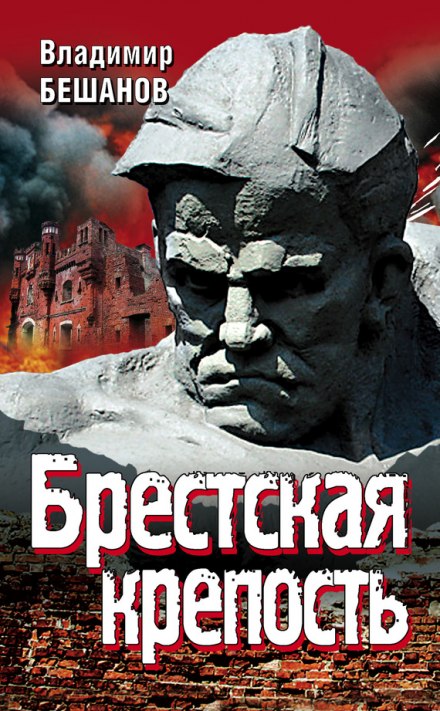
The Brest Fortress
9 hrs. 51 min.
Language
Russian
Author
Vladimir Beshanov
Author
Vladimir Beshanov
Narrator
Larisa Yurova
Narrator
Larisa Yurova
Description
This feat was forgotten for a long twenty years—the country learned about the heroes of the Brest Fortress only in the early 1960s. This defense became a symbol of the Soviet soldier’s steadfastness and self-sacrifice. It was here that the blitzkrieg suffered its first major failure: according to the German command’s plans, the capture of the Brest Fortress was allocated only a few hours, but the garrison held out for more than two weeks, and the last defenders continued fighting until late autumn of 1941.
Now these facts are widely known—yet in the history of the Brest Fortress there are still many controversial moments and “white spots,” and there are far more questions than answers. Why did the German attack catch its defenders off guard? Why was practically the entire garrison withdrawn from the fortress on the eve of the war? What was the balance of forces and the losses on both sides? And why was the truth about the “immortal garrison” erased from public memory for two decades?
In the new book by a popular historian, answers are provided to the most pressing and “inconvenient” questions. It is the first complete chronicle of the Brest Fortress, shedding light not only on the events of 1941, but on its entire one-and-a-half-century history.
Now these facts are widely known—yet in the history of the Brest Fortress there are still many controversial moments and “white spots,” and there are far more questions than answers. Why did the German attack catch its defenders off guard? Why was practically the entire garrison withdrawn from the fortress on the eve of the war? What was the balance of forces and the losses on both sides? And why was the truth about the “immortal garrison” erased from public memory for two decades?
In the new book by a popular historian, answers are provided to the most pressing and “inconvenient” questions. It is the first complete chronicle of the Brest Fortress, shedding light not only on the events of 1941, but on its entire one-and-a-half-century history.
