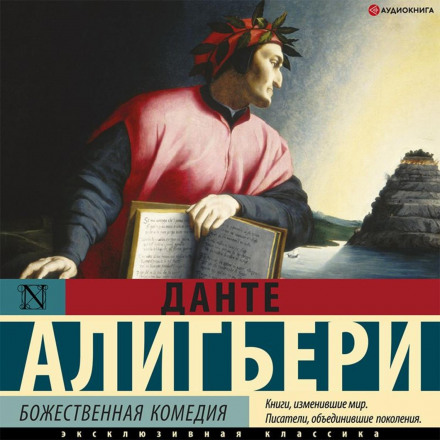
The Divine Comedy
20 hrs. 58 min.
Language
Russian
Author
Dante Alighieri
Author
Dante Alighieri
Narrator
Mikhail Lukashov
Narrator
Mikhail Lukashov
Description
“Once, in the hour of matured years,
I entered a deep forest and got lost…”
— that’s how “The Divine Comedy” begins, the immortal poetic trilogy in which Dante boldly reimagined the medieval tradition of journeys through the afterlife and religious “visions,” creating a truly unique work where mysticism blends with philosophy, and allegory with a rather venomous political pamphlet.
Centuries have passed. The topical political urgency of “The Divine Comedy” long ago vanished, but the immortal beauty of Dante’s language remains, along with the force of his literary talent and the power of philosophical thought that anticipated the spiritual and moral quests of the Renaissance’s humanist geniuses.
I entered a deep forest and got lost…”
— that’s how “The Divine Comedy” begins, the immortal poetic trilogy in which Dante boldly reimagined the medieval tradition of journeys through the afterlife and religious “visions,” creating a truly unique work where mysticism blends with philosophy, and allegory with a rather venomous political pamphlet.
Centuries have passed. The topical political urgency of “The Divine Comedy” long ago vanished, but the immortal beauty of Dante’s language remains, along with the force of his literary talent and the power of philosophical thought that anticipated the spiritual and moral quests of the Renaissance’s humanist geniuses.
100%
11:46
01_01
10:10
01_02
10:53
01_03
11:07
01_04
11:18
01_05
09:47
01_06
10:00
01_07
10:38
01_08
09:55
01_09
11:12
01_10
09:44
01_11
12:31
01_12
14:58
01_13
12:01
01_14
10:46
01_15
10:27
01_16
10:55
01_17
09:09
01_18
11:20
01_19
09:35
01_20
12:34
01_21
12:01
01_22
13:24
01_23
13:09
01_24
10:31
01_25
12:05
01_26
12:14
01_27
13:20
01_28
12:30
01_29
13:34
01_30
13:32
01_31
13:06
01_32
14:15
01_33
11:48
01_34
13:00
02_01
13:41
02_02
13:58
02_03
14:26
02_04
13:54
02_05
14:56
02_06
12:17
02_07
13:56
02_08
15:31
02_09
14:33
02_10
13:43
02_11
12:39
02_12
13:31
02_13
13:07
02_14
12:15
02_15
15:39
02_16
11:56
02_17
16:14
02_18
16:26
02_19
15:02
02_20
15:09
02_21
16:46
02_22
13:48
02_23
16:00
02_24
12:34
02_25
14:04
02_26
13:52
02_27
14:35
02_28
13:57
02_29
13:30
02_30
21:36
02_31
09:12
02_32
14:06
02_33
10:42
03_01
10:35
03_02
11:23
03_03
12:24
03_04
11:45
03_05
11:08
03_06
11:15
03_07
12:55
03_08
10:55
03_09
12:06
03_10
11:19
03_11
11:51
03_12
12:37
03_13
11:44
03_14
11:33
03_15
14:08
03_16
12:50
03_17
13:02
03_18
14:27
03_19
15:05
03_20
13:16
03_21
11:44
03_22
10:21
03_23
11:51
03_24
11:46
03_25
11:48
03_26
10:31
03_27
10:04
03_28
11:34
03_29
11:31
03_30
10:33
03_31
12:28
03_32
10:55
03_33
