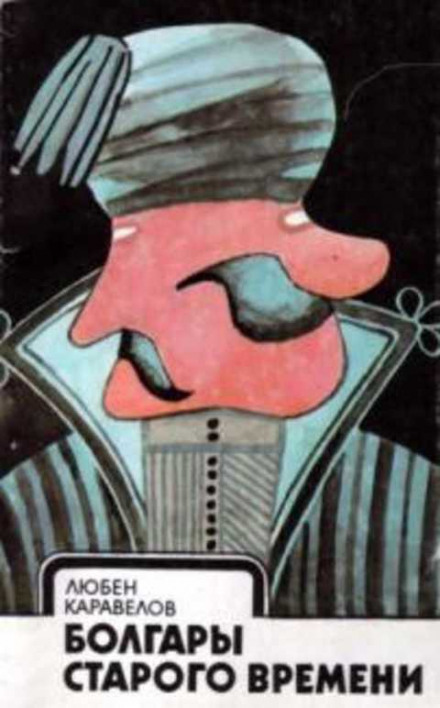
Bulgarians of Old Times
4 hrs. 24 min.
Language
Russian
Author
Lyuben Karavelov
Author
Lyuben Karavelov
Narrator
Georgy Popov
Narrator
Georgy Popov
Description
Bulgarian literature is one of the oldest Slavic literatures. However, its formation as national fiction happens rather late—only in the past century. This is explained by the fact that even in the early stage of the public and cultural life of the Bulgarian people, its natural development was interrupted by foreign subjugation. In the XI–XII centuries it was Byzantine rule lasting more than a century and a half, and then, from the late XIV century, the Ottoman yoke, which continued for nearly five centuries. Throughout all this time, when Bulgaria’s people were completely powerless both nationally and socially, when many monuments of the history and culture of the Bulgarian people were destroyed, when even the threat of the disappearance of the native language arose, the Bulgarian people never lost the desire to fight for freedom and national independence. The struggle for freedom and independence intensified especially at the end of the XVIII century, when Bulgarian national self-awareness began to form, when the mighty national liberation movement grew and spread, awakening the leading forces of the people into life. The process of forming the Bulgarian nation was underway.
In the history of Bulgaria, the period from the late XVIII century up to the Russo-Turkish War of 1877–1878—which brought liberation to the Bulgarian people—is known as the National Revival. It was then that social thought, Bulgarian education, literature, and art developed. With this time is connected the activity of such outstanding sons of the Bulgarian people as G. Rakovski, V. Levski, L. Karavelov, and H. Botev, who not only led the national liberation movement, but also did a great deal for the development of native literature and culture as a whole.
In the history of Bulgaria, the period from the late XVIII century up to the Russo-Turkish War of 1877–1878—which brought liberation to the Bulgarian people—is known as the National Revival. It was then that social thought, Bulgarian education, literature, and art developed. With this time is connected the activity of such outstanding sons of the Bulgarian people as G. Rakovski, V. Levski, L. Karavelov, and H. Botev, who not only led the national liberation movement, but also did a great deal for the development of native literature and culture as a whole.
100%
00:34
00_00_Karavelov_Lyuben_Bolgary_starogo_vremeni_Popov_G
23:40
00_01_Lyuben Karavelov Bolgary starogo vremeni
51:06
01_Hadzhi Gencho
58:01
02_Druzhba Hadzhi Gencho s dedushkoy Libenom
23:27
03_Svatovstvo
41:24
04_Koprivshtitskie kumushki
27:15
05_Pomolvka
14:57
06_Razryv
16:53
07_I vyrosshie v rabstve proyavlyayut energiyu
07:04
08_Zaklyuchenie
