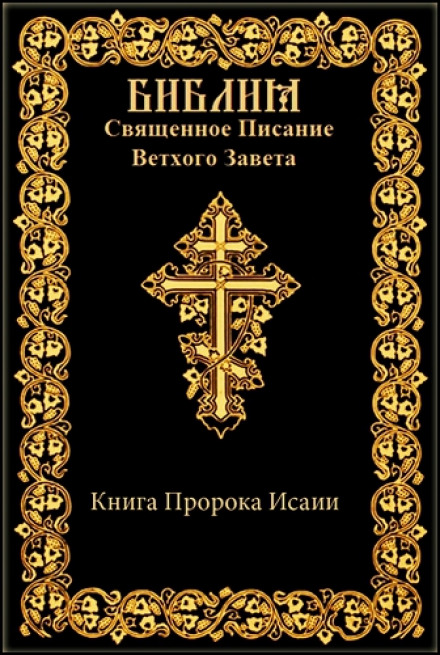
The Bible. Old Testament. The Book of the Prophet Isaiah
4 hrs. 18 min.
Description
The author’s name in this book is often written in two forms: the prophet Isaiah and the prophet Isaiya. But the correct form can be considered the first one, since it is precisely in this form that the name has been translated into Russian in the commonly accepted Russian Synodal Bible translation.
The Book of the Prophet Isaiah is one of the most popular in the Bible, and among the prophetic books it is perhaps the most studied and most frequently cited. Here are a few of his verses that theologians particularly know well: 1:18; 7:14; 9:6–7; 26:8; 40:3,31; and the entire chapter 53.
The book is written in a wonderful expressive language of Eastern poetry, breathing with epic power. The images and pictures created by Isaiah are majestic and grand. The value of his book, besides everything else, is also determined by extensive factual material concerning the life of Jewish society in the second half of the 8th and the beginning of the 7th century BC. The personality and preaching of Isaiah are inseparable from the city of Jerusalem, because that is where he grew up, where he was called to service, and where he taught for many decades.
Isaiah’s passionate sermons were directed against the hypocritical piety of his fellow citizens, who were increasingly falling away from the Holy Israel. All of this God would bring to judgment, Isaiah proclaimed, calling sinners to repentance. Yet when announcing the coming judgments, he invariably reminded people of God’s “remnant”—those who remain faithful to the Lord and through whom He continues to act on earth.
More than any other prophet, Isaiah spoke of the coming great Kingdom, into which Israel would enter thanks to the Servant of the Lord, the Lamb of God, who would appear in the flesh. According to the blessed Jerome, Isaiah “so vividly set out all the mysteries of Christ… as if he were writing about what had already happened.” That is why he is called the evangelist of the Old Testament.
Many spiritual mysteries were indeed revealed to Isaiah. An unquestionable bearer of the highest knowledge, he was at the same time an active public figure of his time—striving with all his might to encourage people to live in accordance with spiritual ideals.
The Book of the Prophet Isaiah is one of the most popular in the Bible, and among the prophetic books it is perhaps the most studied and most frequently cited. Here are a few of his verses that theologians particularly know well: 1:18; 7:14; 9:6–7; 26:8; 40:3,31; and the entire chapter 53.
The book is written in a wonderful expressive language of Eastern poetry, breathing with epic power. The images and pictures created by Isaiah are majestic and grand. The value of his book, besides everything else, is also determined by extensive factual material concerning the life of Jewish society in the second half of the 8th and the beginning of the 7th century BC. The personality and preaching of Isaiah are inseparable from the city of Jerusalem, because that is where he grew up, where he was called to service, and where he taught for many decades.
Isaiah’s passionate sermons were directed against the hypocritical piety of his fellow citizens, who were increasingly falling away from the Holy Israel. All of this God would bring to judgment, Isaiah proclaimed, calling sinners to repentance. Yet when announcing the coming judgments, he invariably reminded people of God’s “remnant”—those who remain faithful to the Lord and through whom He continues to act on earth.
More than any other prophet, Isaiah spoke of the coming great Kingdom, into which Israel would enter thanks to the Servant of the Lord, the Lamb of God, who would appear in the flesh. According to the blessed Jerome, Isaiah “so vividly set out all the mysteries of Christ… as if he were writing about what had already happened.” That is why he is called the evangelist of the Old Testament.
Many spiritual mysteries were indeed revealed to Isaiah. An unquestionable bearer of the highest knowledge, he was at the same time an active public figure of his time—striving with all his might to encourage people to live in accordance with spiritual ideals.
100%
05:32
01. Глава 1
03:38
02. Глава 2
03:56
03. Глава 3
01:23
04. Глава 4
05:56
05. Глава 5
02:57
06. Глава 6
04:35
07. Глава 7
04:09
08. Глава 8
04:05
09. Глава 9
06:17
10. Глава 10
03:18
11. Глава 11
01:08
12. Глава 12
03:42
13. Глава 13
05:42
14. Глава 14
01:56
15. Глава 15
03:05
16. Глава 16
02:54
17. Глава 17
01:50
18. Глава 18
04:53
19. Глава 19
01:25
20. Глава 20
03:03
21. Глава 21
04:27
22. Глава 22
03:26
23. Глава 23
03:56
24. Глава 24
02:44
25. Глава 25
03:51
26. Глава 26
02:56
27. Глава 27
05:50
28. Глава 28
04:57
29. Глава 29
06:54
30. Глава 30
02:17
31. Глава 31
03:07
32. Глава 32
04:28
33. Глава 33
03:32
34. Глава 34
02:08
35. Глава 35
04:46
36. Глава 36
07:49
37. Глава 37
03:59
38. Глава 38
02:03
39. Глава 39
05:28
40. Глава 40
05:26
41. Глава 41
04:42
42. Глава 42
04:54
43. Глава 43
06:20
44. Глава 44
05:12
45. Глава 45
02:30
46. Глава 46
03:22
47. Глава 47
04:37
48. Глава 48
05:39
49. Глава 49
02:44
50. Глава 50
05:01
51. Глава 51
02:59
52. Глава 52
02:54
53. Глава 53
03:34
54. Глава 54
02:49
55. Глава 55
02:37
56. Глава 56
04:15
57. Глава 57
03:44
58. Глава 58
04:16
59. Глава 59
04:37
60. Глава 60
02:36
61. Глава 61
02:36
62. Глава 62
03:54
63. Глава 63
02:22
64. Глава 64
05:15
65. Глава 65
05:48
66. Глава 66
