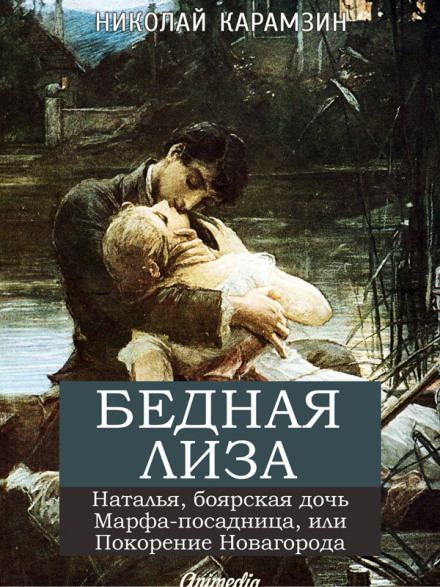
Poor Liza; Natalia, the Boyar's Daughter
3 hrs. 3 min.
Language
Russian
Author
Nikolai Karamzin
Author
Nikolai Karamzin
Narrator
Stanislav Ivanov
Narrator
Stanislav Ivanov
Description
The eternal theme of love—no matter how often writers describe it—never grows old and never stops touching the hearts of literature’s admirers. Whether it’s the most beautiful story of happy, devoted love that Nikolai Mikhailovich Karamzin set out in the novella “Natalya, the Boyar’s Daughter” or the no less beautiful narrative of first love—though unhappy—in “Poor Liza.” Along with touching love stories, the listener will truly enjoy the mastery of the classic writer, who weaves words into an exquisite pattern and reveals all the splendor of the Russian language of the 18th–19th centuries.
Read on...
“Poor Liza” and “Natalya, the Boyar’s Daughter” were written by Karamzin at the same time, but the plots are connected only by sentimentalism: the superiority of feelings over reason that Karamzin proclaimed in every one of his works. The novella’s heroes—Natalya and Liza—possess individual abilities to empathize and respond to what happens around them through their feelings. Yet their inner response can be triggered not only by a significant event, but also by the rising of the sun, the fluttering of flowers, or the blowing of the wind.
Natalya is the only daughter of the boyar Matvey, who grew up in exceptional conditions of full love from a worthy, kind father, innocence, and joy. At seventeen, she became a real beauty with no equal across all “stone-white” Moscow. At the same time, she preserved an astonishing chastity of mind and actions, had a good nature and a responsive heart. She knew no entertainment other than conversations with girlfriends and visits to church.
Love in a young heart arose even before Natalya herself understood what kind of feeling it was. More precisely, it wasn’t love that arose, but a need for it. Perhaps it was due to her age—but maybe her heart sensed that the person destined by fate for her had appeared. A wonderful young man appears suddenly and, at first glance, captivates Natalya’s heart.
Love demands sacrifices for its pleasures. It has always been so, and that fate is also inevitable for Natalya. But, as the author himself—Nikolai Mikhailovich Karamzin—put it: “Those who are faithful in their hearts will be rewarded.” Can a young girl make a choice between her father’s love and her lover’s love—the voice of whom she hears for only a few minutes? Can Natalya accept the fateful decision—and what will her heart’s voice lead her to?
The novella “Natalya, the Boyar’s Daughter” is offered for listening to everyone who feels a tremor of emotion at beautiful love stories, who is captivated by the courage, devotion, and other virtues of the human soul.
The sentimental novella “Poor Liza” is not so much a story about love as a sad tale about an innocent girl who opened her soul and heart to a man who is far weaker than her in the strength of love.
Liza is a peasant girl who lived rather modestly with her elderly mother. Forced to support her sick mother, Liza worked tirelessly to provide food and minimal comforts for her little family. In summer, she sold flowers and berries; in winter, she wove lace, stockings, and managed the household. Despite the simplicity of her life, Liza had a unique ability to rejoice in every day— in the huge dome of the sky, the thick carpet of grass, and the calming song of the river.
Everything changed when, in the city, Liza met a young gentleman who immediately made her lower her eyes because of new feelings she had never known before. The young man, Erast, is kind but something of a weak-willed rake. His first feelings for Liza were as pure and innocent as Liza herself. But cruel fate did not allow happiness to last.
Both novellas are told in Karamzin’s own voice, retelling stories heard from other people. The narrator, Stanislav Ivanov, thanks to his professionalism and talent, created an effect of presence—so that you can feel Nikolai Mikhailovich standing beside you and telling the love story precisely to you. At the same time, the entire range of feelings and emotions is conveyed by the narrator to the maximum degree.
Natalya is the only daughter of the boyar Matvey, who grew up in exceptional conditions of full love from a worthy, kind father, innocence, and joy. At seventeen, she became a real beauty with no equal across all “stone-white” Moscow. At the same time, she preserved an astonishing chastity of mind and actions, had a good nature and a responsive heart. She knew no entertainment other than conversations with girlfriends and visits to church.
Love in a young heart arose even before Natalya herself understood what kind of feeling it was. More precisely, it wasn’t love that arose, but a need for it. Perhaps it was due to her age—but maybe her heart sensed that the person destined by fate for her had appeared. A wonderful young man appears suddenly and, at first glance, captivates Natalya’s heart.
Love demands sacrifices for its pleasures. It has always been so, and that fate is also inevitable for Natalya. But, as the author himself—Nikolai Mikhailovich Karamzin—put it: “Those who are faithful in their hearts will be rewarded.” Can a young girl make a choice between her father’s love and her lover’s love—the voice of whom she hears for only a few minutes? Can Natalya accept the fateful decision—and what will her heart’s voice lead her to?
The novella “Natalya, the Boyar’s Daughter” is offered for listening to everyone who feels a tremor of emotion at beautiful love stories, who is captivated by the courage, devotion, and other virtues of the human soul.
The sentimental novella “Poor Liza” is not so much a story about love as a sad tale about an innocent girl who opened her soul and heart to a man who is far weaker than her in the strength of love.
Liza is a peasant girl who lived rather modestly with her elderly mother. Forced to support her sick mother, Liza worked tirelessly to provide food and minimal comforts for her little family. In summer, she sold flowers and berries; in winter, she wove lace, stockings, and managed the household. Despite the simplicity of her life, Liza had a unique ability to rejoice in every day— in the huge dome of the sky, the thick carpet of grass, and the calming song of the river.
Everything changed when, in the city, Liza met a young gentleman who immediately made her lower her eyes because of new feelings she had never known before. The young man, Erast, is kind but something of a weak-willed rake. His first feelings for Liza were as pure and innocent as Liza herself. But cruel fate did not allow happiness to last.
Both novellas are told in Karamzin’s own voice, retelling stories heard from other people. The narrator, Stanislav Ivanov, thanks to his professionalism and talent, created an effect of presence—so that you can feel Nikolai Mikhailovich standing beside you and telling the love story precisely to you. At the same time, the entire range of feelings and emotions is conveyed by the narrator to the maximum degree.
100%
55:11
Bednaya Liza - Bibe.ru
1:07:17
Natalya, boyarskaya doch 01 - Bibe.ru
1:00:48
Natalya, boyarskaya doch 02 - Bibe.ru
