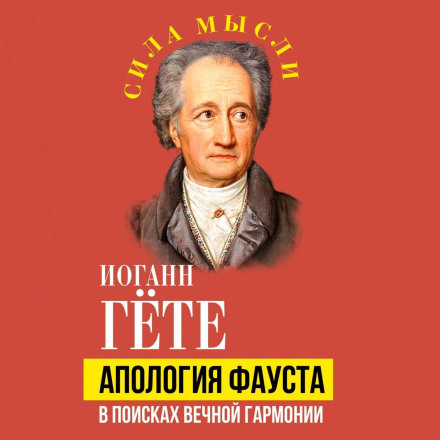
Apology of Faust: In Search of Eternal Harmony
6 hrs. 13 min.
Language
Russian
Author
Johann Wolfgang von Goethe
Author
Johann Wolfgang von Goethe
Narrator
Ekaterina Rakipova
Narrator
Ekaterina Rakipova
Description
Johann Wolfgang von Goethe (1749–1832) is one of the classics of world literature, and at the same time a major thinker. The peak of Goethe’s work is considered the philosophical tragedy “Faust.”
Sometimes Goethe’s brilliant tragedy is interpreted as an expression of the tragic nature and hopelessness of a person—and of humanity—as its desperate struggle against evil. Some researchers see in “Faust” Nietzschean ideas of irrational will and the immanent striving for “action” of the so-called supermen. However, the true meaning of Goethe’s work lies in the fact that it calls for a fight against everything backward, against the infection and miasmas of the “rotten swamp”—and Mephistopheles’ “nothing” proves powerless in the face of life-affirming Faustian beginning.
The book presents Goethe’s reflections on the human being, society, nature, and the world, as well as some philosophical poems and sayings (“Maxims”).
Sometimes Goethe’s brilliant tragedy is interpreted as an expression of the tragic nature and hopelessness of a person—and of humanity—as its desperate struggle against evil. Some researchers see in “Faust” Nietzschean ideas of irrational will and the immanent striving for “action” of the so-called supermen. However, the true meaning of Goethe’s work lies in the fact that it calls for a fight against everything backward, against the infection and miasmas of the “rotten swamp”—and Mephistopheles’ “nothing” proves powerless in the face of life-affirming Faustian beginning.
The book presents Goethe’s reflections on the human being, society, nature, and the world, as well as some philosophical poems and sayings (“Maxims”).
100%
08:58
Апология Фауста. В поисках вечной гармонии 01
10:28
Апология Фауста. В поисках вечной гармонии 02
09:26
Апология Фауста. В поисках вечной гармонии 03
06:36
Апология Фауста. В поисках вечной гармонии 04
08:45
Апология Фауста. В поисках вечной гармонии 05
08:26
Апология Фауста. В поисках вечной гармонии 06
07:26
Апология Фауста. В поисках вечной гармонии 07
28:54
Апология Фауста. В поисках вечной гармонии 08
05:12
Апология Фауста. В поисках вечной гармонии 09
04:48
Апология Фауста. В поисках вечной гармонии 10
04:20
Апология Фауста. В поисках вечной гармонии 11
04:21
Апология Фауста. В поисках вечной гармонии 12
52:22
Апология Фауста. В поисках вечной гармонии 13
09:34
Апология Фауста. В поисках вечной гармонии 14
08:20
Апология Фауста. В поисках вечной гармонии 15
02:55
Апология Фауста. В поисках вечной гармонии 16
18:32
Апология Фауста. В поисках вечной гармонии 17
11:06
Апология Фауста. В поисках вечной гармонии 18
07:41
Апология Фауста. В поисках вечной гармонии 19
11:33
Апология Фауста. В поисках вечной гармонии 20
12:02
Апология Фауста. В поисках вечной гармонии 21
50:25
Апология Фауста. В поисках вечной гармонии 22
35:26
Апология Фауста. В поисках вечной гармонии 23
46:03
Апология Фауста. В поисках вечной гармонии 24
