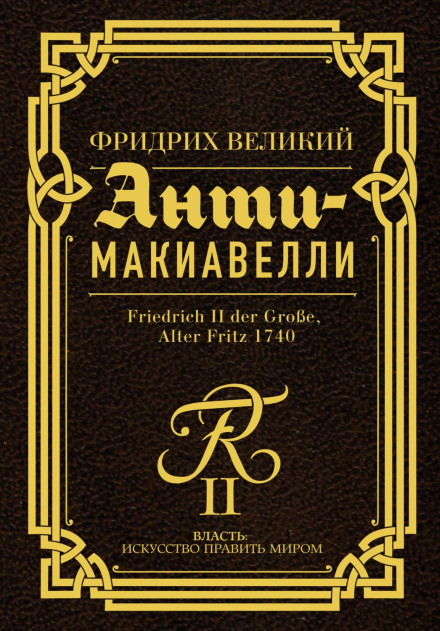
Anti-Machiavel
4 hrs. 39 min.
Language
Russian
Author
Frederick the Great
Author
Frederick the Great
Narrator
Konstantin Korolkov
Narrator
Konstantin Korolkov
Description
King of Prussia Charles Frederick II (1712–1786), remembered in history as Frederick the Great, ruled Prussia from 1740 until the end of his life. In the people’s eyes, this outstanding representative of the House of Hohenzollern was nicknamed Old Fritz. The nickname blended both the Germans’ affection for their king and recognition of his political wisdom.
One of Frederick the Great’s most brilliant works is the political treatise “Anti-Machiavel” written in 1739–1740, when the king was only 28 years old. In it he debates Niccolò Machiavelli and his famous book “The Prince.” The treatise became one of the most widely read works in enlightened Europe, where it was said that the main purpose of a monarch is to maintain the well-being and prosperity of his subjects. Its relevance has not been lost to this day—in fact, it has become extremely in demand as the only correct path for ruling the state.
The edition also includes Frederick the Great’s work “Instructions on the Art of War to His Generals”—a study devoted to the tactics and strategy of conducting war.
One of Frederick the Great’s most brilliant works is the political treatise “Anti-Machiavel” written in 1739–1740, when the king was only 28 years old. In it he debates Niccolò Machiavelli and his famous book “The Prince.” The treatise became one of the most widely read works in enlightened Europe, where it was said that the main purpose of a monarch is to maintain the well-being and prosperity of his subjects. Its relevance has not been lost to this day—in fact, it has become extremely in demand as the only correct path for ruling the state.
The edition also includes Frederick the Great’s work “Instructions on the Art of War to His Generals”—a study devoted to the tactics and strategy of conducting war.
