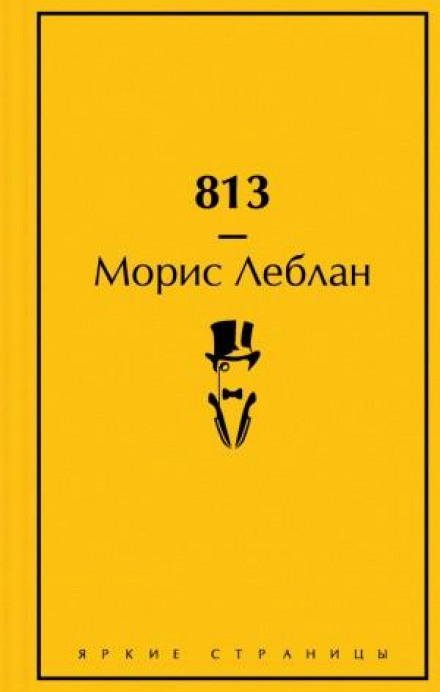
813
13 hrs. 10 min.
Language
Russian
Author
Maurice Leblanc
Author
Maurice Leblanc
Narrator
Andrey Kuznetsov
Narrator
Andrey Kuznetsov
Description
Maurice Leblanc (1864—1941), a master of the detective-adventure genre, dreamed of being a writer since childhood, but first he had to work at a factory making textile equipment, then study law, engage in journalism, and only afterward enter the chosen circle of writers. Leblanc became famous after the publication of the story “The Arrest of Arsène Lupin,” written on the order of a Paris publisher. The prototype of the hero was an anarchist Marius Jacob—“the noble thief,” who stole only from “social parasites”—the clergy, judges, and bankers—and used very witty tricks.
Arsène Lupin is a noble, charming thief. Lupin brilliantly unravels tangled crimes, skillfully steals jewels, leaving the police fooled, and even competes with the famous detective from Baker Street.
In “813” we meet an unfamiliar Lupin—dark, almost frightening. Confronted with a Machiavellian and invisible antagonist, “L. M.,” he will have to clear his name of vile accusations of crimes. And to do so, he must find a packet of letters with explosive political content and decode the meaning of the mysterious numbers “813”—the solution of which may lead to dire consequences for all of Europe.
Arsène Lupin is a noble, charming thief. Lupin brilliantly unravels tangled crimes, skillfully steals jewels, leaving the police fooled, and even competes with the famous detective from Baker Street.
In “813” we meet an unfamiliar Lupin—dark, almost frightening. Confronted with a Machiavellian and invisible antagonist, “L. M.,” he will have to clear his name of vile accusations of crimes. And to do so, he must find a packet of letters with explosive political content and decode the meaning of the mysterious numbers “813”—the solution of which may lead to dire consequences for all of Europe.
