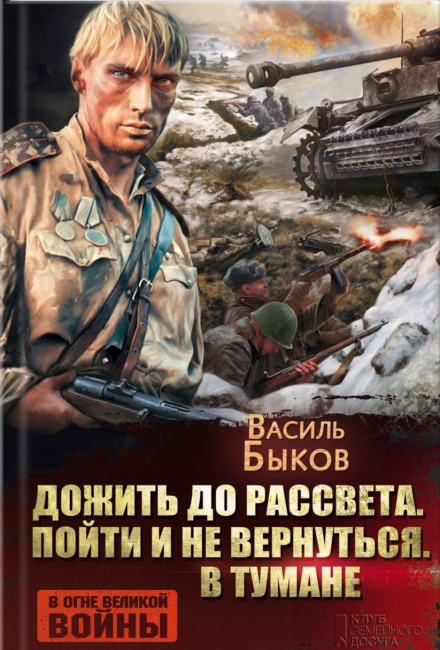
In the Fog
5 hrs. 18 min.
Language
Russian
Author
Vasil Bykov
Author
Vasil Bykov
Narrator
Vladimir Sushkov
Narrator
Vladimir Sushkov
Description
On a cold, sleety day in late autumn in the second year of the war, partisan scout Burov was riding to the Mostishche station to shoot a traitor—a local peasant named Sushchenya. This Sushchenya had worked on the railroad since before the war and had been considered a decent man, but a month earlier, arrested by the police for sabotage near the Vyspyansky bridge, he bought his life by betraying his accomplices, his fellow track workers, with whom he had been unscrewing the rails. The track workers were hanged in the township, and Sushchenya was released; for the second week now he had been lying low beside the garrison, in his hut on the outskirts of the station, warm and well-fed, probably thinking that the partisans would never get to him. That they would forgive him. But such things are not forgiven; for that he had to be punished. The commanders in the detachment, after conferring, made their decision and the previous night sent Burov to do what could not but be done. To assist him they gave the partisan Voytik, and the two of them, riding on horseback and covering some thirty kilometers of forest road, emerged from the woods by evening that same day onto the edge of the forest a kilometer from Mostishche.
100%
15:22
01-v-tumane
23:04
02-v-tumane
18:08
03-v-tumane
21:30
04-v-tumane
18:36
05-v-tumane
19:39
06-v-tumane
21:18
07-v-tumane
20:16
08-v-tumane
16:46
09-v-tumane
21:37
10-v-tumane
24:40
11-v-tumane
15:51
12-v-tumane
18:24
13-v-tumane
15:23
14-v-tumane
23:27
15-v-tumane
24:14
16-v-tumane
