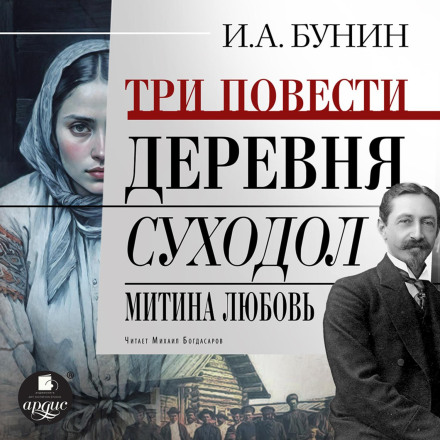
Три повести: Деревня, Суходол, Митина любовь
11 ч. 30 мин.
Описание
Иван Бунин (1870 – 1953) – первый русский лауреат Нобелевской премии (1933), выдающийся мастер слова, безупречный стилист. Писателю свойственно понимание любви как роковой силы, любви-страсти. Лишь мгновения есть у влюбленных. Подлинное чувство для И. Бунина – всегда недостижимая вершина, к которой стремится человек, но никогда не обретает навсегда, до конца своих дней. В этом и заключена для писателя трагичность человеческого существования, обреченного не воплотить свое главное предназначение – любить.
«Деревня» Ивана Бунина – это повесть 1910 года, изображающая унылую жизнь русской крестьянской деревни на стыке XIX–XX веков, ее нищету и патриархальные устои. Бунин стремился показать "душу русского человека" и главные слои русского народа – крестьянство и мещанство – в преддверии революционных перемен
Неоромантическая тенденция для Бунина, вообще-то далёкого от мистики, — повод для исследования ностальгии. Бывшая крепостная Наталья, воспитавшая рассказчика и его сестру, с тоской вспоминает об окружённом легендами поместье Суходол. Повзрослев, рассказчик и его сестра попадают в Суходол и узнают о множестве мрачных и в то же время романтичных событий из истории поместья: убийства, юродивые, страшные видения, пожар; ушедшая в прошлое жизнь дореформенной России воспринимается как страшная и захватывающая сказка. В классической русской прозе «Суходол» ближе всего стоит к западному жанру историй о «доме с привидениями», главная из которых — «Поворот винта» Генри Джеймса — написана четырнадцатью годами ранее.
Повесть Бунина многими мотивами вторит «Дьяволу» Толстого, но выверенность толстовской моралистики здесь отвергнута в пользу метафизики любовного томления: Бунин описывает чувство, пугающее своей огромностью, чувство, с которым главный герой повести, студент Митя, не способен справиться. Бунин не разделяет романтическую любовь и телесную страсть (упрёк героини повести Кати: «Ты любишь только моё тело, а не душу!» — абсолютно несправедлив), демонстрирует, что эта связь может быть гибельной, но, в отличие от Толстого, не ужасается ей, а упивается. Написанная уже в эмиграции «Митина любовь», как и «Тёмные аллеи», лежит далеко в стороне от того, что происходит с темой пола в современной Бунину советской литературе, — законсервировав свой стиль, он всё глубже проникает в волнующую его проблематику связи эротики со смертью.
«Деревня» Ивана Бунина – это повесть 1910 года, изображающая унылую жизнь русской крестьянской деревни на стыке XIX–XX веков, ее нищету и патриархальные устои. Бунин стремился показать "душу русского человека" и главные слои русского народа – крестьянство и мещанство – в преддверии революционных перемен
Неоромантическая тенденция для Бунина, вообще-то далёкого от мистики, — повод для исследования ностальгии. Бывшая крепостная Наталья, воспитавшая рассказчика и его сестру, с тоской вспоминает об окружённом легендами поместье Суходол. Повзрослев, рассказчик и его сестра попадают в Суходол и узнают о множестве мрачных и в то же время романтичных событий из истории поместья: убийства, юродивые, страшные видения, пожар; ушедшая в прошлое жизнь дореформенной России воспринимается как страшная и захватывающая сказка. В классической русской прозе «Суходол» ближе всего стоит к западному жанру историй о «доме с привидениями», главная из которых — «Поворот винта» Генри Джеймса — написана четырнадцатью годами ранее.
Повесть Бунина многими мотивами вторит «Дьяволу» Толстого, но выверенность толстовской моралистики здесь отвергнута в пользу метафизики любовного томления: Бунин описывает чувство, пугающее своей огромностью, чувство, с которым главный герой повести, студент Митя, не способен справиться. Бунин не разделяет романтическую любовь и телесную страсть (упрёк героини повести Кати: «Ты любишь только моё тело, а не душу!» — абсолютно несправедлив), демонстрирует, что эта связь может быть гибельной, но, в отличие от Толстого, не ужасается ей, а упивается. Написанная уже в эмиграции «Митина любовь», как и «Тёмные аллеи», лежит далеко в стороне от того, что происходит с темой пола в современной Бунину советской литературе, — законсервировав свой стиль, он всё глубже проникает в волнующую его проблематику связи эротики со смертью.
100%
2:39:21
01. Деревня
1:23:57
02. Деревня
2:03:54
03. Деревня
15:13
04. Суходол
08:10
05. Суходол
13:12
06. Суходол
15:07
07. Суходол
21:15
08. Суходол
19:19
09. Суходол
21:26
10. Суходол
19:24
11. Суходол
17:31
12. Суходол
09:53
13. Суходол
06:12
14. Митина любовь
08:03
15. Митина любовь
05:44
16. Митина любовь
02:05
17. Митина любовь
08:29
18. Митина любовь
04:29
19. Митина любовь
05:24
20. Митина любовь
03:43
21. Митина любовь
06:18
22. Митина любовь
06:23
23. Митина любовь
03:44
24. Митина любовь
01:59
25. Митина любовь
05:39
26. Митина любовь
12:11
27. Митина любовь
05:59
28. Митина любовь
07:15
29. Митина любовь
02:10
30. Митина любовь
06:47
31. Митина любовь
06:33
32. Митина любовь
10:23
33. Митина любовь
03:37
34. Митина любовь
02:40
35. Митина любовь
04:28
36. Митина любовь
05:42
37. Митина любовь
03:00
38. Митина любовь
03:47
39. Митина любовь
07:45
40. Митина любовь
08:22
41. Митина любовь
03:42
42. Митина любовь
