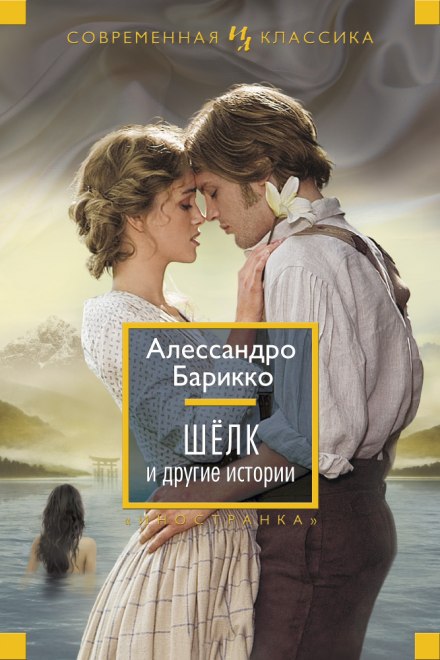
Silk
2 hrs. 19 min.
Language
Russian
Author
Alessandro Baricco
Author
Alessandro Baricco
Narrator
Sergey Shakurov
Narrator
Sergey Shakurov
Description
Italian writer Alessandro Baricco is today one of the most interesting novelists in Europe. His refined books, simultaneously reminiscent of parables, thrillers, and prose poems, have already been translated into dozens of languages and adapted for the stage and screen. Music, philosophy, architecture, painting, history, literature — these are the sources from which he draws his endless subjects, and where his heroes are born: geniuses and eccentrics, dreamers and extravagant inventors; all of his heroes are remembered for a long time: Hervé Joncour from "Silk", Bartleboom and Plasson from "Ocean Sea", Danny Boodmann from "Novecento" — a brilliant musician playing piano in the middle of the ocean, as well as the eccentric writer Mr. Gwyn, who flatly refuses to write books.
The novel has been translated into 16 languages, including Japanese. This last circumstance is explained, apparently, by the fact that the setting of the novel is Japan. The time of action is the end of the 19th century. So no airplanes, washing machines, or psychoanalysis, the author warns us. That will be for another time. But for now — the story of an irresistible passion that took hold of Hervé Joncour, a silkworm merchant from a quiet French province. A mysterious passion that drove the persistent Frenchman to the ends of the earth, to the Land of the Rising Sun — then forbidden to foreigners — toward a woman-phantom, as intangible as silk. And as if woven from a silken thread, the story of this tender passion returns the hero to the true source of genuine love — his faithful wife, who in her thoughts had not been separated from her beloved for a single moment.
The novel has been translated into 16 languages, including Japanese. This last circumstance is explained, apparently, by the fact that the setting of the novel is Japan. The time of action is the end of the 19th century. So no airplanes, washing machines, or psychoanalysis, the author warns us. That will be for another time. But for now — the story of an irresistible passion that took hold of Hervé Joncour, a silkworm merchant from a quiet French province. A mysterious passion that drove the persistent Frenchman to the ends of the earth, to the Land of the Rising Sun — then forbidden to foreigners — toward a woman-phantom, as intangible as silk. And as if woven from a silken thread, the story of this tender passion returns the hero to the true source of genuine love — his faithful wife, who in her thoughts had not been separated from her beloved for a single moment.
100%
02:59
00001
00:50
00002
01:09
00003
01:02
00004
01:59
00005
02:57
00006
01:53
00007
01:59
00008
02:34
00009
01:15
00010
02:26
00011
02:04
00012
02:35
00013
01:57
00014
02:09
00015
01:22
00016
02:00
00017
03:51
00018
02:24
00019
02:36
00020
01:54
00021
02:50
00022
01:43
00023
01:50
00024
00:39
00025
02:40
00026
00:17
00027
01:21
00028
02:04
00029
01:34
00030
01:26
00031
03:04
00032
02:48
00033
00:36
00034
01:14
00035
02:01
00036
02:31
00037
02:40
00038
03:01
00039
03:43
00040
01:13
00041
02:46
00042
02:45
00043
01:35
00044
01:56
00045
00:31
00046
04:02
00047
01:06
00048
02:53
00049
01:00
00050
02:27
00051
02:14
00052
00:47
00053
00:52
00054
01:24
00055
00:32
00056
01:37
00057
03:35
00058
03:52
00059
03:23
00060
02:19
00061
02:52
00062
01:14
00063
00:47
00064
03:13
00065
02:31
00066
04:05
00067
