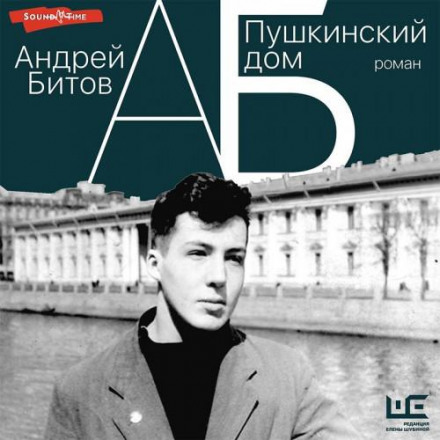
Pushkin House
13 hrs. 7 min.
Language
Russian
Author
Andrey Bitov
Author
Andrey Bitov
Narrator
Evgeniy Shokin
Narrator
Evgeniy Shokin
Description
Psychological realism that helps you reflect and find new meanings in allusions to great works of the 19th–20th centuries.
Andrey Bitov’s “Pushkin House” was called a classic of postmodernism, the first Russian philological novel, a museum novel, an epoch-making work… Written in 1964 as the first anti-textbook on literature, it spent a long time “circulating in lists” and was first published in the USA in 1978. It quickly became a cult book of a generation and was translated into many languages.
The novel’s main character, Lev Odoevtsev—a hereditary philologist, heir to a glorious surname—sees himself and others through the lens of Russian classics. But times and morals have changed greatly, and no one explained to Lev how to live in mid-20th-century Petersburg. Meanwhile, his family, friends, and women demand actions and decisions from him…
“Russian literature, and Petersburg (Leningrad), and Russia—everything is, in one way or another, the PUSHKIN HOUSE without its curly-haired tenant” (Andrey Bitov).
Andrey Bitov’s “Pushkin House” was called a classic of postmodernism, the first Russian philological novel, a museum novel, an epoch-making work… Written in 1964 as the first anti-textbook on literature, it spent a long time “circulating in lists” and was first published in the USA in 1978. It quickly became a cult book of a generation and was translated into many languages.
The novel’s main character, Lev Odoevtsev—a hereditary philologist, heir to a glorious surname—sees himself and others through the lens of Russian classics. But times and morals have changed greatly, and no one explained to Lev how to live in mid-20th-century Petersburg. Meanwhile, his family, friends, and women demand actions and decisions from him…
“Russian literature, and Petersburg (Leningrad), and Russia—everything is, in one way or another, the PUSHKIN HOUSE without its curly-haired tenant” (Andrey Bitov).
100%
10:22
00
13:02
01
38:25
02
26:15
03
28:00
04
06:55
05
10:38
06
38:41
07
08:35
08
33:19
09
22:13
10
14:26
11
05:24
12
51:39
13
39:59
14
31:45
15
10:13
16
16:06
17
17:51
18
27:21
19
39:25
20
1:07:39
21
1:32:28
22
1:15:55
23
1:01:23
24
