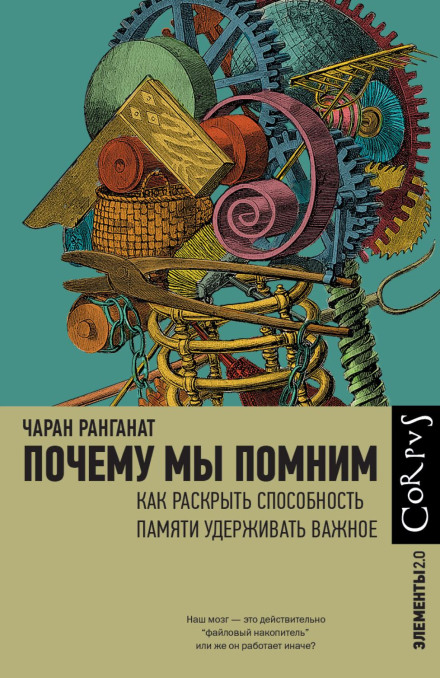
Почему мы помним. Как раскрыть способность памяти удерживать важное
6 ч. 51 мин.
Представьте себе память как бесконечный холст, где каждый момент жизни оставляет свои отметки. Эти штрихи составляют вашу личную историю. Но что если этот холст не постоянен?
Чаран Ранганат, нейробиолог, детально изучает, как функционирует человеческая память, в своей книге. Он исследует основные механизмы памяти, используя знания нейронауки, психологии и биологии. Автор рассматривает важные аспекты: как укрепляются воспоминания, почему мы забываем, как сон влияет на память, роль эмоций и нейронные основы автобиографической памяти. Также он уделяет внимание практическим вопросам: как формируется долговременная память, как она связана с решениями, как технологии влияют на когнитивные способности и как улучшить память в повседневной жизни.
Содержание книги:
Введение. Понимание вашего "помнящего я"
Часть первая. Основные принципы памяти
1. Где мой разум? Механизмы запоминания и забывания
Формирование связей
Роль внимания и намерения
Центральный исполнитель
Уход за префронтальной корой
Осознанные воспоминания
2. Путешествия во времени и пространстве
Мысленные путешествия
Люди и машины
Коды памяти
Присутствие в моменте
Машина времени
Максимальное использование воспоминаний
3. Как помнить больше, запоминая меньше
Организация информации
Структура
Созерцание
Назад в будущее
4. Связь памяти с воображением
Возможные события
Реконструкции
Заполнение пробелов
Реальность или фантазия?
Творческая искра
Часть вторая. Невидимые силы
5. Взаимосвязь памяти и эмоций
Эмоциональные воспоминания
Роль амигдалы
Влияние дофамина
Управление памятью
6. Обучение без запоминания
Эффект дежавю
Запоминание и обучение
7. Ориентировка на новое
Любопытство и память
Часть третья. Последствия
8. Изменение памяти через воспоминания
Изменчивость воспоминаний
Влияние воспоминаний на восприятие
9. Обучение через ошибки
Процесс обучения
Преобразование памяти в мудрость
10. Социальные аспекты памяти
Формирование воспоминаний через взаимодействие
Заключение. Динамика воспоминаний
Чаран Ранганат, нейробиолог, детально изучает, как функционирует человеческая память, в своей книге. Он исследует основные механизмы памяти, используя знания нейронауки, психологии и биологии. Автор рассматривает важные аспекты: как укрепляются воспоминания, почему мы забываем, как сон влияет на память, роль эмоций и нейронные основы автобиографической памяти. Также он уделяет внимание практическим вопросам: как формируется долговременная память, как она связана с решениями, как технологии влияют на когнитивные способности и как улучшить память в повседневной жизни.
Содержание книги:
Введение. Понимание вашего "помнящего я"
Часть первая. Основные принципы памяти
1. Где мой разум? Механизмы запоминания и забывания
Формирование связей
Роль внимания и намерения
Центральный исполнитель
Уход за префронтальной корой
Осознанные воспоминания
2. Путешествия во времени и пространстве
Мысленные путешествия
Люди и машины
Коды памяти
Присутствие в моменте
Машина времени
Максимальное использование воспоминаний
3. Как помнить больше, запоминая меньше
Организация информации
Структура
Созерцание
Назад в будущее
4. Связь памяти с воображением
Возможные события
Реконструкции
Заполнение пробелов
Реальность или фантазия?
Творческая искра
Часть вторая. Невидимые силы
5. Взаимосвязь памяти и эмоций
Эмоциональные воспоминания
Роль амигдалы
Влияние дофамина
Управление памятью
6. Обучение без запоминания
Эффект дежавю
Запоминание и обучение
7. Ориентировка на новое
Любопытство и память
Часть третья. Последствия
8. Изменение памяти через воспоминания
Изменчивость воспоминаний
Влияние воспоминаний на восприятие
9. Обучение через ошибки
Процесс обучения
Преобразование памяти в мудрость
10. Социальные аспекты памяти
Формирование воспоминаний через взаимодействие
Заключение. Динамика воспоминаний
Искусство большего. Как математика создала цивилизацию
(в исполнении
Игоря Гмызы)
Парадокс добродетели
(в исполнении
Ильи Усачева)
Почему мы помним. Как раскрыть способность памяти удерживать важное
Тончайшее несовершенство, что порождает всё. Долгий путь к частице Бога и Новая физика, которая изменит мир
(в исполнении
Вадима Прохорова)
0.
Четыре способа мыслить. Статистический, интерактивный, хаотический и сложный
(в исполнении
Максима Суслова)
0.
Истинный творец всего. Как человеческий мозг сформировал вселенную в том виде, в котором мы ее воспринимаем
(в исполнении
Игоря Гмызы)
0.
Песнь клетки. Медицинские исследования и новый человек
(в исполнении
Ильи Дементьева)
0.
Простое начало. Как четыре закона физики формируют живой мир
(в исполнении
Игоря Гмызы)
0.
Странный порядок вещей
(в исполнении
Андрея Финагина)
100%
11:17
00
44:43
01
41:50
02
36:32
03
36:09
04
39:08
05
34:43
06
42:04
07
40:25
08
39:40
09
37:27
10
07:56
11
