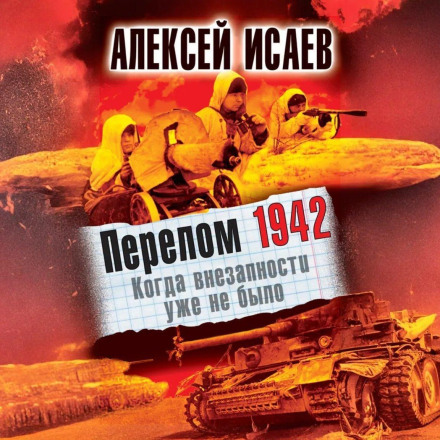
Перелом 1942. Когда внезапности уже не было
15 ч. 49 мин.
Описание
После победы под Москвой, эйфория от успехов оказалась недолгой для Советского Союза, и последствия были тяжелыми: весной и летом 1942 года Красная Армия столкнулась с рядом серьезных поражений, сравнимых с началом войны, но уже не объяснимых внезапностью нападения. Почему 1942 год не стал годом полного разгрома немецких войск, как провозглашал Сталин? Кто виноват в том, что вместо непрерывного наступления Красная Армия оказалась на грани отступления до Волги и Кавказа? Как удалось избежать полного краха и вернуть контроль за ситуацией? В каком месте действительно решалась исход войны – в Сталинграде или на другом фронте? От катастрофы под Харьковом до победы под Сталинградом, от тяжелых боев под Ржевом до прорыва блокады Ленинграда – эта книга предлагает свежий взгляд на ключевые военные события, раскрывая их причины и реконструируя истинные события переломного года Великой Отечественной войны.
100%
14:43
Перелом 1942. Когда внезапности уже не было 01
14:27
Перелом 1942. Когда внезапности уже не было 02
1:15:28
Перелом 1942. Когда внезапности уже не было 03
1:12:52
Перелом 1942. Когда внезапности уже не было 04
38:55
Перелом 1942. Когда внезапности уже не было 05
35:33
Перелом 1942. Когда внезапности уже не было 06
22:17
Перелом 1942. Когда внезапности уже не было 07
57:07
Перелом 1942. Когда внезапности уже не было 08
1:38:05
Перелом 1942. Когда внезапности уже не было 09
2:15:15
Перелом 1942. Когда внезапности уже не было 10
35:35
Перелом 1942. Когда внезапности уже не было 11
25:37
Перелом 1942. Когда внезапности уже не было 12
38:17
Перелом 1942. Когда внезапности уже не было 13
1:12:29
Перелом 1942. Когда внезапности уже не было 14
2:29:02
Перелом 1942. Когда внезапности уже не было 15
1:03:38
Перелом 1942. Когда внезапности уже не было 16
