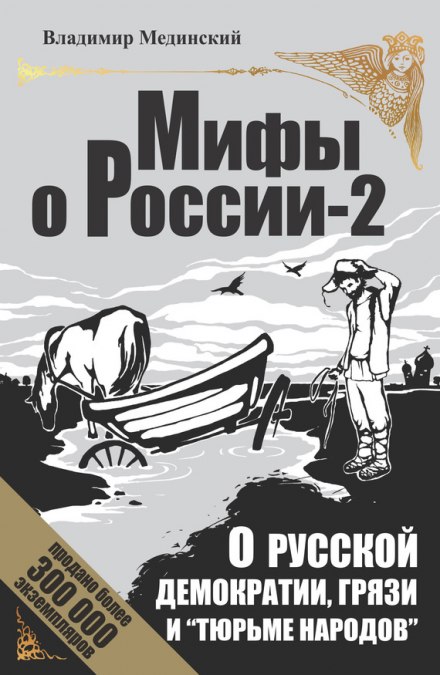
On Russian Democracy, Filth, and the “Prison of Nations”
20 hrs. 17 min.
Language
Russian
Author
Vladimir Medinsky
Author
Vladimir Medinsky
Narrator
Natalya Karpunina
Narrator
Natalya Karpunina
Description
Russia has never had a democratic tradition and therefore cannot exist without a “strong hand.” Its entire history—from Prince Svyatoslav to Suvorov and Zhukov, from the shield over the gates of Tsargrad to the Cossacks in Paris, Soviet tanks in Vienna, and missiles in Cuba—is a history of uninterrupted military expansion by a military-bureaucratic state. Novgorod and Kazan were burned and slaughtered, Crimea was stolen from the Tatars, Poland was partitioned and beheaded, the freedom-loving peoples of the Caucasus were enslaved, and the independent khanates of Central Asia were conquered by tsarist colonial troops. Everywhere the Empire imposed its own order, its one true “Orthodox” faith, its bureaucratic apparatus. Thus tiny monoethnic Muscovy turned into a gigantic “prison of nations” covering almost 1/5 of the land surface. At the same time, the absence of a European culture of everyday life gave rise in this peasant country to that horrifying lack of sanitation, slovenliness, and age-old filth that Russia has been unable to get rid of to this day… Well then, according to the author, everything said above is a lie. In this book, the second in the “Myths About Russia” series, he proves the exact opposite. Read. Think. Argue.
Contents:
Part V. The Myth of Russian Filth
Chapter 1 Where Did the Myth Come From?
The Peculiarities of the National Water Supply
Without Running Water
Chapter 2 Ancient Traditions About Lifestyle and Hygiene
The Bathhouse Is Not Just Cleanliness
The Russian Bathhouse
The Slavic Bathhouse Spirit Bannik
The Feast of Ivan Kupala
A Word to the Arabs
The “Corruption of Morals” in Europe
Chapter 3 Everyday Life in Western Europe and Russia
European Cities of Death
Inevitable Consequences
Cities of the 16th–18th Centuries
Magical and Delightful Versailles
Kings Among Heaps of Garbage and Filth
Cities of Rus'
On the Charm of Perfumery
Chapter 4 Physical Health, and Not Only
On Epidemics
Population Growth Dynamics
On Ideals of Beauty
The Extermination of Beautiful Women
Chapter 5 On Cleanliness in the Modern World
Cities of Modern Europe
Hygiene in Modern Europe
Who Has Better Genetics?
What Sustains the Stereotype?
Part VI. The Myth of Tsarist Russia as a “Prison of Nations,” or A Little About the “National Question”
Chapter 1 The Origins of the Myth
First There Was the Thesis About the Prison…
The Genie Escaped from the Bottle
Classics of Marxism on the Colonial Order
Chapter 2 Western Colonial Empires
Rulers of the World
A Little About the Slave Trade
Cleansing the Land
And in the Russian Empire?
In All Civilized Countries
Shamil and Napoleon
A Nice Trait of All Empires
Continental Empires
Revolutionary Colonizers
In Continental Empires
Chapter 3 The Russian Empire: Features of Territorial Expansion
The Tatar Question
The Multinational Muscovite State
The Multinational Tatar Khanates
On the Conquest of Siberia, Kazan, and Astrakhan
Was the Muscovite Tsardom an Empire?
Was the Russian Empire an Empire?
The Problem of Self-Government
A Paradoxical Analogy
Under Soviet Rule
Chapter 4 Empire in Reverse, or Russian National Policy
Escape to the “Prison”
Those Who Came to the Empire
Brothers Buryats
Kalmyks-Oirats
Khakasses—Tributaries of the Kyrgyz
Uyghurs: From China to Russia
Armenians—in Turkey and in Russia
Russian Koreans
Russian Chinese
Those Who Left the Empire
Adyghe
Chechens
Jews
Poles
Historical Realities and Propaganda
Conclusions
Part VII. The Myth of the Russian Threat
Chapter 1 Ancient Rus'—A Victim of Invasions?
Ancient Rus'—A Complete Absence of Myth
Rus'—The Eternal Victim of Invasions
The Most “Beloved” Neighbors from the South
The “Beloved” Neighbors from the West
An Important Pattern of Russian History
An Even More Important Pattern of History
The Pattern of Historiography
Chapter 2 The Birth of the Myth
“Orsha Propaganda”
The Livonian War
Romanov Muscovy—Together with the Rest of Europe
New Steps in a New Myth
The Seven Years’ War
Half-Forgotten Glory
The Partitions of Poland
Chapter 3 The Mythology of Napoleon Bonaparte
Napoleon’s Political Demagoguery
Napoleon and the Church
Propaganda in Action
On Equal Terms
How Bonaparte Gave Birth to the Myth of the Russian Threat
Myths and the Reality of the War of 1812
Napoleon’s Anti-Russian Propaganda
The Results of Propaganda in Action
Were the Russians Bonapartists?
Missed Opportunities
The Russian Army in the Very Heart of Europe
Chapter 4 The Polish Card, or the Russophobic Campaign of the 1830s
A Little About the “Polish Card”
An Uprising or a War?
Chapter 5 Features of the Russian Empire
The Birth of New Russia
The Problem of the North Caucasus
The Beginning of the Caucasian War
In the West and North
In the East
Empire Against Empires
Chapter 6 The Worst Empire
The Age of Colonialism
England, Russia, Propaganda, and Colonialism
The Cause—Rivalry
The Caucasus
Central Asia
Clashes in Central Asia
The Crimean War
Course of Events
Reasons for Defeat
Consequences
The Failure of the “Palmerston Plan”
The Baltics and the North
Clashes in the Pacific Ocean
Myths About the Crimean War
The Russo-Turkish War of 1877–78
Chapter 7 The Myth of “Russian Aggression” and Political Realities. Conclusions
Part VIII. The Myth of Russian Slavery (More Precisely, of Russia’s Historical Inclination Away from a Democratic Form of Government)
Chapter 1 What Is Democracy, After All?
Out of the Darkness of Ages
Sparta and the Spartans
From Democracy to Emperors
Or Still a Monarchy? (A Modern Digression)
Direct Democracy in Cities
Magdeburg City Law
Estate-Representative Democracy
The Estates-General
Parliament
The Sun of Absolutism and the Irony of Elites
Democracy or Plutocracy?
The Beacon of Great Democracy
“Florida”
Democracy. From $1 Billion
So What Is Democracy, After All?!
Chapter 2 Was There Democracy in Ancient Rus'?
The Original State of Affairs
Princely Power and the Druzhina
Not the First Heir, but the Clan!
The Formula of the Congress of Liubech
A Necessary Digression
Yaroslav’s Charters
A Turn in Favor of the Veche
The Last Century and a Half
Lord Novgorod the Great
On Democracy in Novgorod
Everyday Administration
Pskov—A Special City
Lord Pskov the Great
The Rule of Law
The Charter—Mass and Democratic
A Discovery
What Did the Novgorodians Write About?
Mass Literacy
Book Learning
Education and Democracy
The Punished Autocrat
When Did the Veche System End?
Chapter 3 Was There Democracy in Muscovite Rus'?
The Vastness of a Great Country
Local Democracy. The Commune and the Bolshaks
Local Democracy. The Gubnye Tselovalniki
Free Peasants of Muscovy
Serf Peasants of Muscovy
Townspeople
Tax-Exempt Population
Bureaucracy
The Aristocratic Principle, or the “Career Elevator” in the Muscovite State
Zemsky Sobors—Our Estates-General
Social Mobility
Zemsky Sobors: From the Civic Chamber to the Congress of People’s Deputies, or How the Romanovs Were Elected
Let Us Sum Up
Chapter 4 Democracy in the Russian Empire
A Terrible Blow to Russian Democracy
In the Kingdom of Chaos
And Yet Democracy!
An Attempt at a Noble Constitution
Bribing the Nobility
A Project of Emancipation
Corporate Democracy of the Nobility
Urban Self-Government
Catherine II’s Estates-General
“Five Minutes” from a Constitution
Nicholas I “Palkin” and His “Vertical of Power”
Zemstvo Democracy
The October 17 Manifesto
The State Duma
The Provisional Government
The Constituent Assembly
Conclusions
Chapter 5 Democracy in the USSR
Is It Possible?!
The Essence of the Soviet System
Social Security
Social Mobility
Conclusions
Twenty Years Between Two Photographs
Chapter 1 Where Did the Myth Come From?
The Peculiarities of the National Water Supply
Without Running Water
Chapter 2 Ancient Traditions About Lifestyle and Hygiene
The Bathhouse Is Not Just Cleanliness
The Russian Bathhouse
The Slavic Bathhouse Spirit Bannik
The Feast of Ivan Kupala
A Word to the Arabs
The “Corruption of Morals” in Europe
Chapter 3 Everyday Life in Western Europe and Russia
European Cities of Death
Inevitable Consequences
Cities of the 16th–18th Centuries
Magical and Delightful Versailles
Kings Among Heaps of Garbage and Filth
Cities of Rus'
On the Charm of Perfumery
Chapter 4 Physical Health, and Not Only
On Epidemics
Population Growth Dynamics
On Ideals of Beauty
The Extermination of Beautiful Women
Chapter 5 On Cleanliness in the Modern World
Cities of Modern Europe
Hygiene in Modern Europe
Who Has Better Genetics?
What Sustains the Stereotype?
Part VI. The Myth of Tsarist Russia as a “Prison of Nations,” or A Little About the “National Question”
Chapter 1 The Origins of the Myth
First There Was the Thesis About the Prison…
The Genie Escaped from the Bottle
Classics of Marxism on the Colonial Order
Chapter 2 Western Colonial Empires
Rulers of the World
A Little About the Slave Trade
Cleansing the Land
And in the Russian Empire?
In All Civilized Countries
Shamil and Napoleon
A Nice Trait of All Empires
Continental Empires
Revolutionary Colonizers
In Continental Empires
Chapter 3 The Russian Empire: Features of Territorial Expansion
The Tatar Question
The Multinational Muscovite State
The Multinational Tatar Khanates
On the Conquest of Siberia, Kazan, and Astrakhan
Was the Muscovite Tsardom an Empire?
Was the Russian Empire an Empire?
The Problem of Self-Government
A Paradoxical Analogy
Under Soviet Rule
Chapter 4 Empire in Reverse, or Russian National Policy
Escape to the “Prison”
Those Who Came to the Empire
Brothers Buryats
Kalmyks-Oirats
Khakasses—Tributaries of the Kyrgyz
Uyghurs: From China to Russia
Armenians—in Turkey and in Russia
Russian Koreans
Russian Chinese
Those Who Left the Empire
Adyghe
Chechens
Jews
Poles
Historical Realities and Propaganda
Conclusions
Part VII. The Myth of the Russian Threat
Chapter 1 Ancient Rus'—A Victim of Invasions?
Ancient Rus'—A Complete Absence of Myth
Rus'—The Eternal Victim of Invasions
The Most “Beloved” Neighbors from the South
The “Beloved” Neighbors from the West
An Important Pattern of Russian History
An Even More Important Pattern of History
The Pattern of Historiography
Chapter 2 The Birth of the Myth
“Orsha Propaganda”
The Livonian War
Romanov Muscovy—Together with the Rest of Europe
New Steps in a New Myth
The Seven Years’ War
Half-Forgotten Glory
The Partitions of Poland
Chapter 3 The Mythology of Napoleon Bonaparte
Napoleon’s Political Demagoguery
Napoleon and the Church
Propaganda in Action
On Equal Terms
How Bonaparte Gave Birth to the Myth of the Russian Threat
Myths and the Reality of the War of 1812
Napoleon’s Anti-Russian Propaganda
The Results of Propaganda in Action
Were the Russians Bonapartists?
Missed Opportunities
The Russian Army in the Very Heart of Europe
Chapter 4 The Polish Card, or the Russophobic Campaign of the 1830s
A Little About the “Polish Card”
An Uprising or a War?
Chapter 5 Features of the Russian Empire
The Birth of New Russia
The Problem of the North Caucasus
The Beginning of the Caucasian War
In the West and North
In the East
Empire Against Empires
Chapter 6 The Worst Empire
The Age of Colonialism
England, Russia, Propaganda, and Colonialism
The Cause—Rivalry
The Caucasus
Central Asia
Clashes in Central Asia
The Crimean War
Course of Events
Reasons for Defeat
Consequences
The Failure of the “Palmerston Plan”
The Baltics and the North
Clashes in the Pacific Ocean
Myths About the Crimean War
The Russo-Turkish War of 1877–78
Chapter 7 The Myth of “Russian Aggression” and Political Realities. Conclusions
Part VIII. The Myth of Russian Slavery (More Precisely, of Russia’s Historical Inclination Away from a Democratic Form of Government)
Chapter 1 What Is Democracy, After All?
Out of the Darkness of Ages
Sparta and the Spartans
From Democracy to Emperors
Or Still a Monarchy? (A Modern Digression)
Direct Democracy in Cities
Magdeburg City Law
Estate-Representative Democracy
The Estates-General
Parliament
The Sun of Absolutism and the Irony of Elites
Democracy or Plutocracy?
The Beacon of Great Democracy
“Florida”
Democracy. From $1 Billion
So What Is Democracy, After All?!
Chapter 2 Was There Democracy in Ancient Rus'?
The Original State of Affairs
Princely Power and the Druzhina
Not the First Heir, but the Clan!
The Formula of the Congress of Liubech
A Necessary Digression
Yaroslav’s Charters
A Turn in Favor of the Veche
The Last Century and a Half
Lord Novgorod the Great
On Democracy in Novgorod
Everyday Administration
Pskov—A Special City
Lord Pskov the Great
The Rule of Law
The Charter—Mass and Democratic
A Discovery
What Did the Novgorodians Write About?
Mass Literacy
Book Learning
Education and Democracy
The Punished Autocrat
When Did the Veche System End?
Chapter 3 Was There Democracy in Muscovite Rus'?
The Vastness of a Great Country
Local Democracy. The Commune and the Bolshaks
Local Democracy. The Gubnye Tselovalniki
Free Peasants of Muscovy
Serf Peasants of Muscovy
Townspeople
Tax-Exempt Population
Bureaucracy
The Aristocratic Principle, or the “Career Elevator” in the Muscovite State
Zemsky Sobors—Our Estates-General
Social Mobility
Zemsky Sobors: From the Civic Chamber to the Congress of People’s Deputies, or How the Romanovs Were Elected
Let Us Sum Up
Chapter 4 Democracy in the Russian Empire
A Terrible Blow to Russian Democracy
In the Kingdom of Chaos
And Yet Democracy!
An Attempt at a Noble Constitution
Bribing the Nobility
A Project of Emancipation
Corporate Democracy of the Nobility
Urban Self-Government
Catherine II’s Estates-General
“Five Minutes” from a Constitution
Nicholas I “Palkin” and His “Vertical of Power”
Zemstvo Democracy
The October 17 Manifesto
The State Duma
The Provisional Government
The Constituent Assembly
Conclusions
Chapter 5 Democracy in the USSR
Is It Possible?!
The Essence of the Soviet System
Social Security
Social Mobility
Conclusions
Twenty Years Between Two Photographs
100%
02:19
05-00-01-oglavlenie
11:28
05-00-02-pomnit-horoshee-vmesto-predisloviya
13:09
05-00-03-vvedenie
11:51
05-01-01-glava-1-otkuda-vzyalsya-mif
06:05
05-01-02-osobennosti-natsionalnogo-vodoprovoda
03:21
05-01-03-bez-vodoprovoda
02:00
05-02-01-glava-2-drevnie-predaniya-ob-obraze-zhizni-i-gigiene
02:49
05-02-02-russkaya-banya
02:43
05-02-03-slavyanskiy-duh-bannik
01:14
05-02-04-prazdnik-ivana-kupaly
05:56
05-02-05-slovo-arabam
11:20
05-03-01-glava-3-byt-i-obraz-zhizni-zapadnoy-evropy-i-rossii
12:58
05-03-02-neizbezhnye-posledstviya
08:00
05-03-03-goroda-xvixviii-vekov
10:34
05-03-04-volshebnyy-i-voshititelnyy-versal
03:35
05-03-05-koroli-sredi-kuch-musora-i-nechistot
06:16
05-03-06-goroda-rusi
02:25
05-03-07-o-prelesti-parfyumerii
06:36
05-04-01-glava-4-o-zdorove-fizicheskom-i-ne-tolko
04:39
05-04-02-dinamika-rosta-naseleniya
06:42
05-04-03-ob-idealah-krasoty
04:35
05-04-04-istreblenie-krasivyh-zhenschin
05:01
05-05-01-glava-5-o-chistote-v-sovremennom-mire
02:54
05-05-02-gigiena-sovremennoy-evropy
03:21
05-05-03-u-kogo-luchshe-genetika
05:51
05-05-04-chto-podderzhivaet-stereotip
11:04
06-01-01-glava-1-istoki-mifa
08:31
06-01-02-dzhinn-vyletel-iz-butylki
13:48
06-01-03-klassiki-marksizma-o-kolonialnom-stroe
03:01
06-02-01-glava-2-zapadnye-kolonialnye-imperii
13:21
06-02-02-koe-chto-o-rabotorgovle
14:56
06-02-03-ochischenie-zemli
16:53
06-02-04-vo-vseh-tsivilizovannyh-stranah
01:48
06-02-05-shamil-i-napoleon
12:27
06-02-06-simpatichnoe-svoystvo-vseh-imperiy
06:32
06-02-07-kontinentalnye-imperii
05:57
06-02-08-revolyutsionnye-kolonizatory
04:07
06-02-09-v-kontinentalnyh-imperiyah
04:43
06-03-00-glava-3-rossiyskaya-imperiya-osobennosti-osvoeniya-territoriy
12:28
06-03-01-tatarskiy-vopros
01:11
06-03-02-mnogonatsionalnye-tatarskie-hanstva
17:02
06-03-03-o-pokorenii-sibiri-kazani-i-astrahani
06:20
06-03-04-moskovskoe-tsarstvo-imperiya-li-eto
02:25
06-03-05-o-russkom-zavoevanii-indii
11:38
06-03-06-rossiyskaya-imperiya-imperiya-li
19:08
06-03-07-problema-samoupravleniya
03:13
06-03-08-paradoksalnaya-analogiya
08:26
06-03-09-pri-sovetskoy-vlasti
08:55
06-04-01-glava-4-imperiya-naoborot
01:37
06-04-02-prishedshie-v-imperiyu
01:58
06-04-03-kalmyki-oyraty
01:40
06-04-04-hakasy-danniki-kyrgyzov
01:57
06-04-05-uygury-iz-kitaya-v-rossiyu
09:58
06-04-06-armyane-v-turtsii-i-v-rossii
00:19
06-04-07-russkie-koreytsy
00:14
06-04-08-russkie-kitaytsy
00:47
06-04-09-ushedshie-iz-imperii
01:14
06-04-10-adygi
03:03
06-04-11-chechentsy
04:57
06-04-12-evrei
01:05
06-04-13-polyaki
10:10
06-04-14-realii-istorii-i-propaganda
05:05
07-00-00-chast-vii-mif-o-russkoy-ugroze
00:32
07-00-01-mif-o-russkoy-ugroze
02:19
07-01-01-glava-1-drevnyaya-rus-zhertva-nashestviy
14:13
07-01-02-rus-vechnaya-zhertva-nashestviy
00:56
07-01-03-samye-lyubimye-sosedi-s-yuga
05:09
07-01-04-lyubimye-sosedi-s-zapada
02:06
07-01-05-vazhnaya-zakonomernost-russkoy-istorii
02:15
07-01-06-esche-bolee-vazhnaya-zakonomernost-istorii
01:55
07-01-07-zakonomernost-istoriografii
03:46
07-02-01-glava-2-rozhdenie-mifa
04:23
07-02-02-livonskaya-voyna
11:34
07-02-03-moskoviya-romanovyh-vmeste-s-ostalnoy-evropoy
04:22
07-02-04-novye-shagi-novogo-mifa
11:01
07-02-05-semiletnyaya-voyna
01:13
07-02-06-poluzabytaya-slava
04:53
07-02-07-razdely-polshi
02:52
07-02-08-tri-izmennika
10:45
07-03-01-glava-3-mifologiya-napoleona-bonaparta
03:09
07-03-02-napoleon-i-tserkov
07:26
07-03-03-propaganda-v-deystvii
12:16
07-03-04-na-ravnyh
08:51
07-03-05-kak-bonapart-porodil-mif-o-russkoy-ugroze
02:16
07-03-06-mify-i-realnost-voyny-1812-goda
08:34
07-03-07-o-predatel-bernadot
02:27
07-03-08-antirusskaya-propaganda-napoleona
16:30
07-03-09-rezultaty-propagandy-v-deystvii
04:24
07-03-10-byli-li-russkie-bonapartistami
05:43
07-03-11-upuschennye-vozmozhnosti
05:23
07-03-12-russkaya-armiya-v-samom-serdtse-evropy
08:23
07-04-01-glava-4-polskaya-karta
16:13
07-04-02-vosstanie-ili-voyna
07:08
07-05-01-glava-5-osobennosti-rossiyskoy-imperii
02:57
07-05-02-konets-tatarskim-nabegam
04:50
07-05-03-rozhdenie-novoy-rossii
10:15
07-05-04-problema-severnogo-kavkaza
08:15
07-05-05-nachalo-kavkazskoy-voyny
09:36
07-05-06-na-zapade-i-severe
09:05
07-05-07-na-vostoke
02:04
07-05-08-imperiya-protiv-imperiy
09:15
07-06-01-glava-6-samaya-plohaya-imperiya
11:03
07-06-02-angliya-rossiya-propaganda-i-kolonializm
00:39
07-06-03-prichina-sopernichestvo
04:57
07-06-04-kavkaz
16:12
07-06-05-srednyaya-aziya
03:10
07-06-06-stolknoveniya-v-tsentralnoy-azii
08:18
07-06-07-krymskaya-voyna
03:44
07-06-08-hod-sobytiy
04:03
07-06-09-prichiny-porazheniya
00:42
07-06-10-posledstviya
00:57
07-06-11-proval-plana-palmerstona
01:03
07-06-12-pribaltika-i-sever
04:47
07-06-13-stolknoveniya-na-tihom-okeane
03:09
07-06-14-mify-o-krymskoy-voyne
04:59
07-06-15-russko-turetskaya-voyna-187778-godov
18:25
07-07-00-glava-7-mif-o-russkoy-agressii
09:18
08-01-01-glava-1-chto-zhe-takoe-demokratiya
13:16
08-01-02-iz-tmy-vremen
09:09
08-01-03-sparta-i-spartantsy
17:47
08-01-04-ot-demokratii-k-imperatoram
01:34
08-01-05-ili-vse-taki-monarhiya
01:21
08-01-06-neposredstvennaya-demokratiya-v-gorodah
01:57
08-01-07-magdeburgskoe-gorodskoe-pravo
07:41
08-01-08-soslovno-predstavitelnaya-demokratiya
14:53
08-01-09-generalnye-shtaty
07:21
08-01-10-parlament
16:41
08-01-11-solntse-absolyutizma-i-ironiya-elit
14:39
08-01-12-demokratiya-ili-plutokratiya
14:47
08-01-13-svetoch-velikoy-demokratii
04:31
08-01-14-florida
07:31
08-01-15-demokratiya-ot-milliarda
10:54
08-02-01-glava-2-byla-li-demokratiya-v-drevney-rusi
03:10
08-02-02-knyazheskaya-vlast-i-druzhina
03:18
08-02-03-ne-pervyy-naslednik-a-rod
03:37
08-02-04-formula-lyubechskogo-sezda
05:10
08-02-05-neobhodimoe-otstuplenie
04:48
08-02-06-gramoty-yaroslava
04:55
08-02-07-perevorot-v-polzu-veche
01:32
08-02-08-poslednie-poltora-veka
01:38
08-02-09-gospodin-velikiy-novgorod
03:53
08-02-10-o-demokratii-v-novgorode
10:10
08-02-11-povsednevnoe-upravlenie
03:29
08-02-12-pskov-osobyy-gorod
02:54
08-02-13-gospodin-velikiy-pskov
04:52
08-02-14-gospodstvo-zakona
09:26
08-02-15-gramota-massovaya-i-demokratichnaya
03:23
08-02-16-nahodka
04:56
08-02-17-o-chem-pisali-novgorodtsy
03:58
08-02-18-massovaya-gramotnost
05:17
08-02-19-knizhnoe-uchenie
00:32
08-02-20-obrazovanie-i-demokratiya
07:04
08-02-21-nakazannyy-samoderzhets
01:41
08-02-22-kogda-konchilsya-vechevoy-stroy
02:57
08-03-01-glava-3-byla-li-demokratiya-na-moskovskoy-rusi
01:51
08-03-02-demokratiya-na-mestah-obschina-i-bolshaki
07:07
08-03-03-demokratiya-na-mestah-gubnye-tselovalniki
07:24
08-03-04-svobodnye-krestyane-moskovii
12:50
08-03-05-krepostnye-krestyane-moskovii
04:36
08-03-06-posadskie-lyudi
02:30
08-03-07-netyagloe-naselenie
07:26
08-03-08-byurokratiya
03:02
08-03-09-aristokraticheskiy-printsip
18:11
08-03-10-zemskie-sobory-nashi-generalnye-shtaty
04:49
08-03-11-obschestvennaya-mobilnost
08:47
08-03-12-zemskie-sobory
09:44
08-04-01-glava-4-demokratiya-v-rossiyskoy-imperii
13:25
08-04-02-v-tsarstve-haosa
15:15
08-04-03-popytka-dvoryanskoy-konstitutsii
01:06
08-04-04-podkup-dvoryanstva
05:07
08-04-05-proekt-raskreposcheniya
04:36
08-04-06-korporativnaya-demokratiya-dvoryan
00:53
08-04-07-samoupravlenie-gorodov
06:59
08-04-08-generalnye-shtaty-ekateriny-ii
12:40
08-04-09-v-pyati-minutah-ot-konstitutsii
12:08
08-04-10-nikolay-i-palkin-i-ego-vertikal-vlasti
02:52
08-04-11-zemskaya-demokratiya
01:31
08-04-12-manifest-17-oktyabrya
01:44
08-04-13-gosudarstvennaya-duma
04:29
08-04-14-vremennoe-pravitelstvo
11:35
08-04-15-uchreditelnoe-sobranie
01:47
08-04-16-vyvody
11:21
08-05-01-glava-5-demokratiya-v-sssr
13:24
08-05-02-suschnost-sovetskogo-stroya
06:08
08-05-03-sotsialnaya-zaschischennost
05:06
08-05-04-sotsialnaya-mobilnost
02:55
08-05-05-vyvody
03:38
08-05-06-dvadtsat-let-mezhdu-dvumya-fotografiyami
