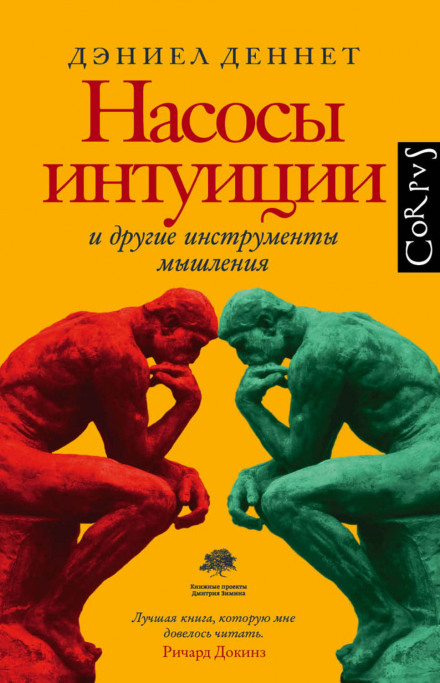
Насоси інтуїції та інші інструменти мислення
16 год. 47 хв.
Опис
Як за допомогою прийомів мислення розв’язувати найскладніші задачі, вести важкі суперечки й не потрапляти на брудні трюки.
У аудіокнизі Деніел Клемент Деннет, один із провідних у світі фахівців з філософії свідомості та філософії науки, досліджує феномен інструментів мислення: «доведення до абсурду», правила Рапопорта, закон Старджона, бритва Оккама, «гулдинг», «виплигування», «глибокість», «риторичні запитання». Він не лише описує, як використовували ці інструменти найвидатніші вчені світу — від Платона й Ісаака Ньютона до Річарда Фейнмана та Річарда Докінза — а й наочно показує, як кожна людина може застосовувати їх у вирішенні найрізноманітніших завдань і веденні найрізноманітніших суперечок. Особливу увагу науковець приділяє інструменту, який сам він називає «насосами інтуїції» — мисленим експериментам, здатним стимулювати «інтуїтивне осяяння» і буквально творити чудеса.
Остання на даний момент аудіокнига легендарного вченого, одного з провідних спеціалістів із філософії свідомості та філософії науки, присвячена дослідженню інструментів мислення.
Що таке «глибокість» і чим вона небезпечна? Які прийоми в спорі можна вважати нечестними? Наскільки поблажливими треба бути, критикуючи погляди опонента? Як ми взагалі розуміємо одне одного? Чи існує істина й чи можна її осягнути? У цій книзі легендарний Деніел Деннет досліджує феномен інструментів мислення — прийомів, які здатні дуже допомогти в розв’язанні майже будь-якої задачі або змістити кут зору, дозволяючи подивитися на проблему з нової, несподіваної сторони, а потім знайти таку ж несподівану відповідь на питання, що давно мучило. Правила Рапопорта й закон Старджона, «т’юстеп» Гулда та бритва Оккама, доведення до абсурду й «виплигування», риторичні запитання та насоси інтуїції — Деннет не просто докладно розбирає найцікавіші інструменти мислення, він наочно показує, як їх використовували філософи давнини, провідні сучасні вчені, і як можемо використовувати їх ми. Сам учений каже, що, «озброївшись цими простими універсальними інструментами мислення, ви будете краще підготовлені до подальших досліджень: ви бачитимете можливості, чутимете попереджувальні сигнали, відчуватимете підступи й остерігатиметеся помилок, яких у іншому разі могли б припустити».
У аудіокнизі Деніел Клемент Деннет, один із провідних у світі фахівців з філософії свідомості та філософії науки, досліджує феномен інструментів мислення: «доведення до абсурду», правила Рапопорта, закон Старджона, бритва Оккама, «гулдинг», «виплигування», «глибокість», «риторичні запитання». Він не лише описує, як використовували ці інструменти найвидатніші вчені світу — від Платона й Ісаака Ньютона до Річарда Фейнмана та Річарда Докінза — а й наочно показує, як кожна людина може застосовувати їх у вирішенні найрізноманітніших завдань і веденні найрізноманітніших суперечок. Особливу увагу науковець приділяє інструменту, який сам він називає «насосами інтуїції» — мисленим експериментам, здатним стимулювати «інтуїтивне осяяння» і буквально творити чудеса.
Остання на даний момент аудіокнига легендарного вченого, одного з провідних спеціалістів із філософії свідомості та філософії науки, присвячена дослідженню інструментів мислення.
Що таке «глибокість» і чим вона небезпечна? Які прийоми в спорі можна вважати нечестними? Наскільки поблажливими треба бути, критикуючи погляди опонента? Як ми взагалі розуміємо одне одного? Чи існує істина й чи можна її осягнути? У цій книзі легендарний Деніел Деннет досліджує феномен інструментів мислення — прийомів, які здатні дуже допомогти в розв’язанні майже будь-якої задачі або змістити кут зору, дозволяючи подивитися на проблему з нової, несподіваної сторони, а потім знайти таку ж несподівану відповідь на питання, що давно мучило. Правила Рапопорта й закон Старджона, «т’юстеп» Гулда та бритва Оккама, доведення до абсурду й «виплигування», риторичні запитання та насоси інтуїції — Деннет не просто докладно розбирає найцікавіші інструменти мислення, він наочно показує, як їх використовували філософи давнини, провідні сучасні вчені, і як можемо використовувати їх ми. Сам учений каже, що, «озброївшись цими простими універсальними інструментами мислення, ви будете краще підготовлені до подальших досліджень: ви бачитимете можливості, чутимете попереджувальні сигнали, відчуватимете підступи й остерігатиметеся помилок, яких у іншому разі могли б припустити».
100%
04:17
00_00_Predislovie
39:53
01_00_Vvedenie. Chto takoe nasos intuitsii
00:37
02_00_Dyuzhina universalnyh instrumentov myshleniya
28:11
02_01_Sovershaya oshibki
11:54
02_02_«Na osnove parodii»- ispolzovanie reductio ad absurdum
05:19
02_03_Pravila Rapoporta
03:59
02_04_Zakon Stardzhona
04:31
02_05_Britva Okkama
04:23
02_06_Metla Okkama
05:58
02_07_Ispolzovanie obyvateley v kachestve lozhnoy auditorii
07:46
02_08_Vyprygivanie
09:53
02_09_Tri vida guldinga- skoreynost, nagromozhdeniya i tustep Gulda
04:23
02_10_Operator «bezuslovno»- mentalnyy blok
01:18
02_11_Ritoricheskie voprosy
04:12
02_12_Chto takoe glubokost
02:35
02_13_Rezyume
05:14
03_00_Instrumenty myshleniya o znachenii ili soderzhanii
10:07
03_13_Ubiystvo na Trafalgarskoy ploschadi
06:45
03_14_Starshiy brat iz Klivlenda
02:10
03_15_«Moy papa — vrach»
09:55
03_16_Manifestnaya i nauchnaya kartina mira
09:39
03_17_Narodnaya psihologiya
27:01
03_18_Intentsionalnaya ustanovka
13:02
03_19_Lichnostnoe i sublichnostnoe
13:11
03_20_Kaskad gomunkulov
04:59
03_21_Operator «vrode kak»
08:45
03_22_Chudo-tkan
11:44
03_23_V dispetcherskoy robota
02:43
04_00_Interlyudiya o kompyuterah
34:53
04_24_Sem sekretov sily kompyuterov
19:39
04_25_Virtualnye mashiny
05:37
04_26_Algoritmy
11:26
04_27_Avtomatizatsiya lifta
07:00
04_28_Rezyume
00:32
05_00_Dopolnitelnye instrumenty myshleniya o znachenii
10:00
05_28_Punktik naschet ryzhih
49:47
05_29_Stranstvuyuschiy chetvertachnik, Zemlya-Dvoynik i gigantskiy robot
06:52
05_30_Radikalnyy perevod i krossvord Kuayna
05:17
05_31_Semanticheskie i sintaksicheskie dvizhki
11:10
05_32_Bolotnyy chelovek i korovoakula
35:52
05_33_Dva chernyh yaschika
06:31
05_34_Rezyume
02:14
06_00_Instrumenty myshleniya ob evolyutsii
05:37
06_34_Universalnaya kislota
24:46
06_35_Biblioteka Mendelya- chrezvychayno bolshoe i ischezayusche maloe
05:44
06_36_Geny kak slova i kak podprogrammy
01:37
06_37_Drevo zhizni
39:19
06_38_Podem v proektnoe prostranstvo- nebesnye kryuki i podemnye krany
02:50
06_39_Kompetentnost bez ponimaniya
06:10
06_40_Plavayuschie osnovaniya
03:08
06_41_Ponimayut li tsikady prostye chisla
04:15
06_42_Kak obyasnit smotrovye pryzhki
08:57
06_43_Opasaytes pervogo mlekopitayuschego
07:25
06_44_Kogda proishodit vidoobrazovanie
14:18
06_45_Vdovodely, Mitohondrialnaya Eva i retrospektivnye koronatsii
10:11
06_46_Tsikly
06:11
06_47_Chto imenno glaz lyagushki soobschaet ee mozgu
04:33
06_48_Skachki v prostranstve Vavilonskoy biblioteki
19:07
06_49_Kto avtor «Spamleta»
08:28
06_50_Shum v virtualnom otele
07:10
06_51_Herb, Elis i malysh Hel
06:21
06_52_Memy
02:31
06_53_Rezyume
01:43
07_00_Instrumenty myshleniya o soznanii
03:08
07_53_Dva kontrobraza
11:30
07_54_Chute na zombi
18:19
07_55_Zombi i zimbo
08:32
07_56_Proklyatie tsvetnoy kapusty
07:55
07_57_Zhiznennaya sila- skolko eto v «nastoyaschih dengah»
21:36
07_58_Pechalnaya istoriya mistera Klapgra
21:06
07_59_Nastroennaya koloda
28:23
07_60_Kitayskaya komnata
06:33
07_61_Padenie teleklona s Marsa na Zemlyu
21:29
07_62_Samost kak tsentr narrativnoy gravitatsii
12:32
07_63_Geterofenomenologiya
11:14
07_64_Issledovatelnitsa tsveta Mariya- razoblachenie upornogo bashmaka
04:54
07_65_Rezyume
05:13
08_00_. Instrumenty myshleniya o svobode voli
03:57
08_65_Podlyy neyrohirurg
16:34
08_66_Deterministskaya model- igra «ZHizn»
13:31
08_67_Kamen, nozhnitsy, bumaga
06:24
08_68_Dve loterei
14:10
08_69_Inertnye istoricheskie fakty
25:15
08_70_Kompyuternyy shahmatnyy marafon
10:11
08_71_Konechnaya otvetstvennost
10:38
08_72_Sfeksovost
09:07
08_73_Malchiki iz Brazilii- esche odin upornyy bashmak
05:35
08_74_Rezyume
03:02
09_00_Chto znachit byt filosofom
07:07
09_74_Sdelka s dyavolom
08:36
09_75_Filosofiya kak naivnaya avtoantropologiya
14:19
09_76_Mahmatnye istiny vysshego poryadka
07:09
09_77_10 protsentov horoshego
03:08
10_00_Ispolzuyte instrumenty. Staraytes.
05:04
11_00_Chto ostalos za kadrom
