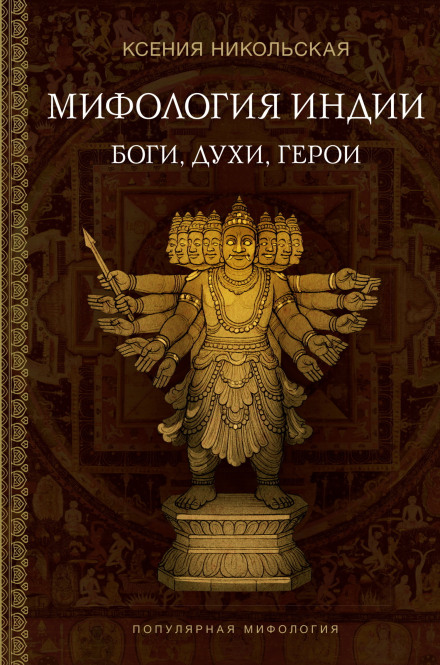
Indian Mythology: Gods, Spirits and Heroes
7 hrs. 35 min.
Language
Russian
Author
Ksenia Nikolskaya
Author
Ksenia Nikolskaya
Narrator
Veronika Raytsiz
Narrator
Veronika Raytsiz
Description
Written by a Candidate of Historical Sciences, this book introduces the foundations of Indian worldview and the distinctive features of India’s culture, which is breaking up into a multitude of traditions, beliefs, and customs.
The author leads the reader from ancient Vedic literature to the images of Classical Hinduism, clearly explaining key ideas—from myths of world creation and conceptions of the cyclicality of time to teachings on dharma and karma.
You will learn about the main gods and their companions, about spirits, demons, and the most revered heroes of India—based on primary sources and contemporary scholarly works.
Ksenia Nikolskaya is a Candidate of Historical Sciences and an Associate Professor; her fields of interest include the history and culture of Ancient India, as well as cultural and social anthropology. Today Hinduism is the religion of the majority of India’s residents, but for a scholar of religion it is less a single coherent system than a complex mosaic of schools and movements. At its core, it is an interweaving of beliefs from the Vedic period (late 2nd—early 1st millennium BCE) and numerous local traditions and cults. The author builds the narrative from the Vedic legacy to the plots and images of Classical Hinduism, accessiblely раскрывая the themes of the origin of the world, the roundabout of epochs, as well as teachings on dharma and karma. The reader will become acquainted with the most important deities and their spouses, with the world of spirits and demons, and with the beloved heroes of Indian mythology. The material draws on original texts and research by philologists, historians, and anthropologists. The book is designed for the widest range of readers interested in the culture and mythology of the East.
The author leads the reader from ancient Vedic literature to the images of Classical Hinduism, clearly explaining key ideas—from myths of world creation and conceptions of the cyclicality of time to teachings on dharma and karma.
You will learn about the main gods and their companions, about spirits, demons, and the most revered heroes of India—based on primary sources and contemporary scholarly works.
Ksenia Nikolskaya is a Candidate of Historical Sciences and an Associate Professor; her fields of interest include the history and culture of Ancient India, as well as cultural and social anthropology. Today Hinduism is the religion of the majority of India’s residents, but for a scholar of religion it is less a single coherent system than a complex mosaic of schools and movements. At its core, it is an interweaving of beliefs from the Vedic period (late 2nd—early 1st millennium BCE) and numerous local traditions and cults. The author builds the narrative from the Vedic legacy to the plots and images of Classical Hinduism, accessiblely раскрывая the themes of the origin of the world, the roundabout of epochs, as well as teachings on dharma and karma. The reader will become acquainted with the most important deities and their spouses, with the world of spirits and demons, and with the beloved heroes of Indian mythology. The material draws on original texts and research by philologists, historians, and anthropologists. The book is designed for the widest range of readers interested in the culture and mythology of the East.
100%
14:48
Мифология Индии. Боги, духи и герои 01
23:08
Мифология Индии. Боги, духи и герои 02
1:19:32
Мифология Индии. Боги, духи и герои 03
16:02
Мифология Индии. Боги, духи и герои 04
15:49
Мифология Индии. Боги, духи и герои 05
08:42
Мифология Индии. Боги, духи и герои 06
13:49
Мифология Индии. Боги, духи и герои 07
2:37:04
Мифология Индии. Боги, духи и герои 08
35:57
Мифология Индии. Боги, духи и герои 09
1:26:44
Мифология Индии. Боги, духи и герои 10
03:31
Мифология Индии. Боги, духи и герои 11
