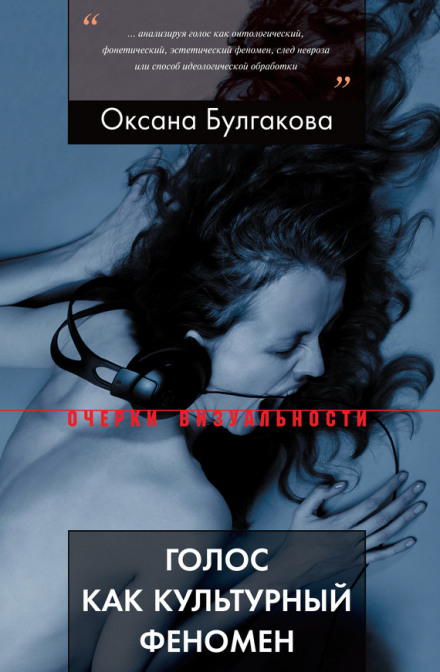
Голос як культурний феномен
20 год. 31 хв.
Мова
російська
Автор
Оксана Булгакова
Автор
Оксана Булгакова
Читець
Надія Винокурова
Читець
Надія Винокурова
Опис
Книга Оксани Булгакової «Голос як культурний феномен» присвячена аналізу сприйняття й культурного побутування голосів від середини XIX століття до кінця XX-го. Розглядаючи різні аспекти голосових практик (в оперному та драматичному театрі, на політичній сцені, в кінематографі тощо), а також історичні особливості сприйняття, автор досліджує динаміку стосунків між природним і штучним (механічним, електричним, електронним) голосом у культурах різних країн. Особливо докладно вона зупиняється на своєрідності російського розуміння голосу. Оксана Булгакова — кінознавиця, дослідниця візуальної культури, професор Університету Йоганнеса Гутенберга в Майнці, авторка книжок, що вийшли у видавництві «Новое литературное обозрение»: «Фабрика жестів» (2005), «Радянський слухоок — фільм і його органи чуття» (2010).
Зміст:
Передмова
Перше вступлення. Невловимий об’єкт, міфічні фігури та літературні мотиви
Живе/мертве
Внутрішнє/зовнішнє
Людське/божественне, індивідуальне/нормативне
Органічне/механічне, автентичне/ілюзорне
Природне/культурне
Друге вступлення. Знаки диференціації. Моделі вивчення. Проблеми опису
Медицина, фізіологія та мистецтво
Електроакустика і психологія. Індивідуальне та універсальне
Колективне як універсальне. Психоаналітик Пол Мозес, прочитаний Адорно
Метафори звуку
Прикметники російської прози
Перша глава. Голос як уявлення та зображення
Літературні фантазії, метафоричні сюжети
Опера: пристрасть, смерть і машини, що співають. Західноєвропейські романтики та декаденти
«Без італійських прикрас і в первісній простоті». Італійська опера й російська оперна критика
Природа без мистецтва. Російський голос і російський літературний слух
Сутінки ідолів: 1908
Російський бас і російський тенор — чужими вухами
Театральні колоратури
Канон. Чистота голосу й музика афектів
Московський говірок і театральні амплуа
Налаштування голосу та надбудови
МХТ: бурмотіння, діалекти, хрипіння, крик
Пошуки тиші. Голос ляльки
Перший акустичний російський роман
Іно-піння та мелодекламація
Пророки: політики й поети
Нові професійні голоси в театрі публічного життя
Фонограф. Мертве і живе
Чий голос найзнаменитіший
«Голос Блока»
Танцюючі поети
Кіносюжети. Мертве і живе ще раз
Фонограф і кінематограф: механічне і живе, смішне й жахливе
Не вдалася комедія, непомічена трагедія
Викрадення голосу
Друга глава. Електричні голоси 30-х років
Кіноехо
Російські утопії універсальної зрозумілості. Голос без слів
Історична пам’ять
Редукція — волання
Пошук канону
Голос у просторі чи у мікрофона
Штучні голоси. Як співають роботи і щуки
Ідеальний голос, національний стереотип: Голлівуд і Німеччина
Чоловіче й жіноче, еротичне й електричне
Внутрішній голос як чужий
Химери: природність, суб’єктивність, індивідуальність
Акценти й багатомовність
Ехо голосу. Природа й техніка, техніка як природа
Музика як медіум
Розмовний голос як музичний — ідеал, якого шукають, чи технічна необхідність?
Слова без голосу
Пісня на кожен день
Піння замість діалогу
Гучність і темп. Голос сцени. Інтимне і публічне
Радянський кіноголос
Вуха лінгвіста й культуролога
Радіоголос
Радіохвилі та радіопобут
Автентичність і перформативність
Ідеальний диктор. Голос безособистої індивідуальності
Голос із репродуктора. Гучний крик
Голос радянської історії
Оратори й диктатори
Природа і техніка. Гітлер
«Інтуїт» і «сомнамбула»: Керенський і Троцький
«Куди тут Шаляпін!» Ленін і його медіальне втілення
Природа «без техніки». Сталін і його медіальні двійники
Третя глава. Злам голосу
“Sound” 50-х
Кіно-голоси: Марлон Брандо й Іннокентій Смоктуновський
Стиль і ідеологія стилю
Нова норма електричного голосу. Перемога інтимності
Тіло голосу й манери
Гучні жінки, тихі чоловіки
Техніка як природа. Наслідки аберації
Відновлення. Збитий архів радянської вокальної пам’яті
Висновки
Техніка-природа: голос у режимі цифрової обробки
Театр і перформанс. Машина-людина, людина-машина
Своє як чуже, чуже як своє
Перше вступлення. Невловимий об’єкт, міфічні фігури та літературні мотиви
Живе/мертве
Внутрішнє/зовнішнє
Людське/божественне, індивідуальне/нормативне
Органічне/механічне, автентичне/ілюзорне
Природне/культурне
Друге вступлення. Знаки диференціації. Моделі вивчення. Проблеми опису
Медицина, фізіологія та мистецтво
Електроакустика і психологія. Індивідуальне та універсальне
Колективне як універсальне. Психоаналітик Пол Мозес, прочитаний Адорно
Метафори звуку
Прикметники російської прози
Перша глава. Голос як уявлення та зображення
Літературні фантазії, метафоричні сюжети
Опера: пристрасть, смерть і машини, що співають. Західноєвропейські романтики та декаденти
«Без італійських прикрас і в первісній простоті». Італійська опера й російська оперна критика
Природа без мистецтва. Російський голос і російський літературний слух
Сутінки ідолів: 1908
Російський бас і російський тенор — чужими вухами
Театральні колоратури
Канон. Чистота голосу й музика афектів
Московський говірок і театральні амплуа
Налаштування голосу та надбудови
МХТ: бурмотіння, діалекти, хрипіння, крик
Пошуки тиші. Голос ляльки
Перший акустичний російський роман
Іно-піння та мелодекламація
Пророки: політики й поети
Нові професійні голоси в театрі публічного життя
Фонограф. Мертве і живе
Чий голос найзнаменитіший
«Голос Блока»
Танцюючі поети
Кіносюжети. Мертве і живе ще раз
Фонограф і кінематограф: механічне і живе, смішне й жахливе
Не вдалася комедія, непомічена трагедія
Викрадення голосу
Друга глава. Електричні голоси 30-х років
Кіноехо
Російські утопії універсальної зрозумілості. Голос без слів
Історична пам’ять
Редукція — волання
Пошук канону
Голос у просторі чи у мікрофона
Штучні голоси. Як співають роботи і щуки
Ідеальний голос, національний стереотип: Голлівуд і Німеччина
Чоловіче й жіноче, еротичне й електричне
Внутрішній голос як чужий
Химери: природність, суб’єктивність, індивідуальність
Акценти й багатомовність
Ехо голосу. Природа й техніка, техніка як природа
Музика як медіум
Розмовний голос як музичний — ідеал, якого шукають, чи технічна необхідність?
Слова без голосу
Пісня на кожен день
Піння замість діалогу
Гучність і темп. Голос сцени. Інтимне і публічне
Радянський кіноголос
Вуха лінгвіста й культуролога
Радіоголос
Радіохвилі та радіопобут
Автентичність і перформативність
Ідеальний диктор. Голос безособистої індивідуальності
Голос із репродуктора. Гучний крик
Голос радянської історії
Оратори й диктатори
Природа і техніка. Гітлер
«Інтуїт» і «сомнамбула»: Керенський і Троцький
«Куди тут Шаляпін!» Ленін і його медіальне втілення
Природа «без техніки». Сталін і його медіальні двійники
Третя глава. Злам голосу
“Sound” 50-х
Кіно-голоси: Марлон Брандо й Іннокентій Смоктуновський
Стиль і ідеологія стилю
Нова норма електричного голосу. Перемога інтимності
Тіло голосу й манери
Гучні жінки, тихі чоловіки
Техніка як природа. Наслідки аберації
Відновлення. Збитий архів радянської вокальної пам’яті
Висновки
Техніка-природа: голос у режимі цифрової обробки
Театр і перформанс. Машина-людина, людина-машина
Своє як чуже, чуже як своє
100%
01:07
00-00-01-annotatsiya
05:46
00-00-02-soderzhanie
27:23
00-00-03-predislovie
01:23
00-01-01-pervoe-vstuplenie-neulovimyy-obekt-mificheskie-figury-i-literaturnye-motivy
01:27
00-01-02-zhivoe-mertvoe
04:52
00-01-03-vnutrennee-vneshnee
03:19
00-01-04-chelovecheskoe-bozhestvennoe-individualnoe-normativnoe
03:42
00-01-05-organicheskoe-mehanicheskoe-autentichnoe-illyuzornoe
04:09
00-01-06-prirodnoe-kulturnoe
17:18
00-02-01-vtoroe-vstuplenie-znaki-differentsiatsii-modeli-izucheniya-problemy-opisaniya
13:03
00-02-02-meditsina-fiziologiya-i-iskusstvo
07:41
00-02-03-elektroakustika-i-psihologiya-individualnoe-i-universalnoe
07:25
00-02-04-kollektivnoe-kak-universalnoe-psihoanalitik-pol-mozes-prochitannyy-adorno
24:50
00-02-05-metafory-zvuka
19:47
00-02-06-prilagatelnye-russkoy-prozy
31:09
01-01-opera-strast-smert-i-poyuschie-mashiny-zapadnoevropeyskie-romantiki-i-dekadenty
20:28
01-02-bez-italyanskih-ukrasheniy-i-v-pervobytnoy-prostote-italyanskaya-opera-i-russkaya-opernaya-kritika
31:29
01-03-priroda-bez-iskusstva-russkiy-golos-i-russkiy-literaturnyy-sluh
20:44
01-04-sumerki-bozhkov-1908
13:02
01-05-russkiy-bas-i-russkiy-tenor-chuzhimi-ushami
07:42
01-06-teatralnye-koloratury
14:13
01-07-kanon-chistota-golosa-i-muzyka-affektov
19:07
01-08-moskovskiy-govorok-i-teatralnye-amplua
11:42
01-09-golosovye-nastroyki-i-nadstroyki
13:06
01-10-mht-bormotanie-dialekty-hripenie-krik
05:57
01-11-poiski-molchaniya-golos-kukly
02:59
01-12-pervyy-akusticheskiy-russkiy-roman
11:51
01-13-ino-penie-i-melodeklamatsiya
01:47
01-14-proroki-politiki-i-poety
15:42
01-15-novye-professionalnye-golosa-v-teatre-publichnoy-zhizni
10:13
01-16-fonograf-mertvoe-i-zhivoe
22:22
01-17-chey-golos-samyy-znamenityy
17:50
01-18-golos-bloka
24:27
01-19-tantsuyuschie-poety
05:47
01-20-kinosyuzhety-mertvoe-i-zhivoe-esche-raz
09:37
01-21-fonograf-i-kinematograf-mehanicheskoe-i-zhivoe-smeshnoe-i-uzhasnoe
08:51
01-22-neudavshayasya-komediya-nezamechennaya-tragediya
25:18
01-23-krazha-golosa
07:59
02-01-kinoeho
13:59
02-02-russkie-utopii-universalnoy-ponyatnosti-golos-bez-slov
22:12
02-03-istoricheskaya-pamyat
22:22
02-04-reduktsiya-vopl
07:39
02-05-poisk-kanona
18:23
02-06-golos-v-prostranstve-ili-u-mikrofona
07:41
02-07-iskusstvennye-golosa-kak-poyut-roboty-i-schuki
24:50
02-08-idealnyy-golos-natsionalnyy-stereotip-gollivud-i-germaniya
10:00
02-09-muzhskoe-i-zhenskoe-eroticheskoe-i-elektricheskoe
13:06
02-10-vnutrenniy-golos-kak-chuzhoy
14:49
02-11-himery-estestvennost-subektivnost-individualnost
21:25
02-12-aktsenty-i-mnogoyazychie
23:02
02-13-eho-golosa-priroda-i-tehnika-tehnika-kak-priroda
00:46
02-14-muzyka-kak-medium
33:41
02-15-razgovornyy-golos-kak-muzykalnyy-iskomyy-ideal-ili-tehnicheskaya-neobhodimost
07:23
02-16-slova-bez-golosa
05:56
02-17-pesnya-na-kazhdyy-den
36:15
02-18-penie-vmesto-dialoga
12:48
02-19-gromkost-i-temp-golos-stseny-intimnoe-i-publichnoe
11:14
02-20-sovetskiy-kinogolos
14:34
02-21-ushi-lingvista-i-kulturologa
14:48
02-22-radiogolos
12:31
02-23-radiovolny-i-radiobyt
17:49
02-24-autentichnost-i-performativnost
18:56
02-25-idealnyy-diktor-golos-bezlichnoy-individualnosti
17:29
02-26-golos-iz-reproduktora-gromkiy-krik
08:43
02-27-golos-sovetskoy-istorii
22:34
02-28-oratory-i-diktatory-priroda-i-tehnika-gitler
15:39
02-29-intuit-i-somnambula-kerenskiy-i-trotskiy
13:45
02-30-kuda-tut-shalyapin-lenin-i-ego-medialnoe-voploschenie
31:05
02-31-priroda-bez-tehniki-stalin-i-ego-medialnye-dvoyniki
15:42
03-01-sound-50-h
49:48
03-02-kinogolosa-marlon-brando-i-innokentiy-smoktunovskiy
20:45
03-03-stil-i-ideologiya-stilya
16:31
03-04-novaya-norma-elektricheskogo-golosa-pobeda-intimnosti
33:27
03-05-telo-golosa-i-manery
23:52
03-06-gromkie-zhenschiny-tihie-muzhchiny
06:13
03-07-tehnika-kak-priroda-posledstviya-aberratsii
26:47
03-08-vosstanovlenie-sbityy-arhiv-sovetskoy-vokalnoy-pamyati
06:34
03-09-tehnika-priroda-golos-v-rezhime-tsifrovoy-obrabotki
08:29
03-10-teatr-i-performans-mashina-chelovek-chelovek-mashina
11:32
03-11-svoe-kak-chuzhoe-chuzhoe-kak-svoe
19:44
04-ukazatel-filmov
