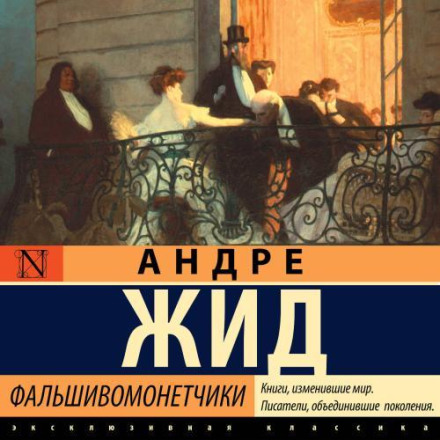
The Counterfeiters
12 hrs. 13 min.
Language
Russian
Author
André Gide
Author
André Gide
Narrator
Pavel Maslakov
Narrator
Pavel Maslakov
Description
«Les Faux-Monnayeurs» (1925) is a work that is significant both for the oeuvre of André Gide and for French literature of the first half of the 20th century as a whole. A novel that, in many ways, anticipated the motifs that later became central in the writings of the existentialists. The tangled relationships of three families—representatives of the high bourgeoisie brought together by crime, vice, and a labyrinth of self-destructive passions—form the backdrop for the coming-of-age story of two young men—two childhood friends, each of whom will have to go through their own, very difficult, school of “education of the feelings.”
100%
11:52
01_01
29:00
01_02
17:05
01_03
17:53
01_04
17:01
01_05
07:04
01_06
11:53
01_07
20:33
01_08
07:08
01_09
06:57
01_10
18:05
01_11
43:45
01_12
18:28
01_13
19:26
01_14
10:38
01_15
12:44
01_16
15:47
01_17
17:56
01_18
10:28
02_01
13:02
02_02
28:47
02_03
19:32
02_04
13:10
02_05
15:13
02_06
07:32
02_07
19:32
03_01
19:46
03_02
14:13
03_03
13:09
03_04
28:25
03_05
13:23
03_06
14:21
03_07
29:07
03_08
11:02
03_09
20:23
03_10
23:24
03_11
19:27
03_12
11:53
03_13
08:24
03_14
22:00
03_15
21:05
03_16
18:03
03_17
14:33
03_18
