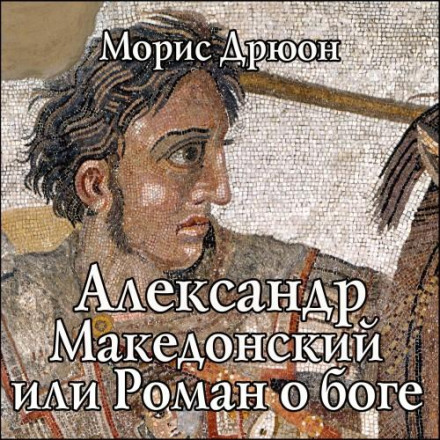
Alexander the God
14 hrs. 2 min.
Language
Russian
Author
Maurice Druon
Author
Maurice Druon
Narrator
Kirill Petrov
Narrator
Kirill Petrov
Description
The reading public knows Maurice Druon primarily from his saga “The Accursed Kings,” which reveals the dark secrets of the Middle Ages, and from the trilogy “The End of the People,” which tells about the backroom workings of European society in the first decades of the 20th century—about the decline of the dynasty of financiers and industrialists.
Alexander the Great, who lived for thirty-three years, was, by some priests on both sides of the Mediterranean, considered the son of Zeus-Ammon. The Egyptians crowned him as Pharaoh, and the Babylonians with a royal diadem. The Jews saw in him one of the rulers of the world, a harbinger of the Messiah. Some peoples of India embodied his features in the image of Buddha. The ancient Christians counted Alexander among the host of saints. Islam placed him among the pantheon of its heroes under the name Iskander. Alexander’s contemporaries constantly asked: “Was he a man or a god?” In his novel, Maurice Druon tries to recreate the image of the conqueror’s closest adviser, restore the favorite’s line of thought, and wrote memoirs that could have belonged to a great ruler.
Alexander the Great, who lived for thirty-three years, was, by some priests on both sides of the Mediterranean, considered the son of Zeus-Ammon. The Egyptians crowned him as Pharaoh, and the Babylonians with a royal diadem. The Jews saw in him one of the rulers of the world, a harbinger of the Messiah. Some peoples of India embodied his features in the image of Buddha. The ancient Christians counted Alexander among the host of saints. Islam placed him among the pantheon of its heroes under the name Iskander. Alexander’s contemporaries constantly asked: “Was he a man or a god?” In his novel, Maurice Druon tries to recreate the image of the conqueror’s closest adviser, restore the favorite’s line of thought, and wrote memoirs that could have belonged to a great ruler.
100%
01:34
0001
23:03
0002
03:15
0003
17:02
0004
02:30
0005
08:15
0006
10:29
0007
18:46
0008
05:55
0009
15:30
0010
08:30
0011
11:39
0012
03:58
0013
13:02
0014
01:40
0015
18:27
0016
01:08
0017
12:39
0018
02:49
0019
21:17
0020
04:22
0021
26:47
0022
01:25
0023
19:13
0024
01:42
0025
06:34
0026
01:01
0027
17:59
0028
00:36
0029
07:54
0030
02:34
0031
15:27
0032
01:53
0033
17:16
0034
00:10
0035
19:43
0036
03:41
0037
18:48
0038
00:58
0039
10:51
0040
06:31
0041
13:07
0042
01:42
0043
24:02
0044
00:28
0045
19:08
0046
01:18
0047
11:55
0048
01:09
0049
20:46
0050
06:37
0051
05:39
0052
08:44
0053
10:57
0054
04:15
0055
11:28
0056
07:24
0057
28:13
0058
07:39
0059
21:47
0060
00:21
0061
14:32
0062
20:09
0063
00:22
0064
30:01
0065
06:40
0066
14:04
0067
00:31
0068
11:42
0069
22:05
0070
09:35
0071
10:40
0072
07:58
0073
16:30
0074
04:33
0075
25:05
0076
13:04
0077
05:44
0078
26:10
0079
01:44
0080
08:11
0081
