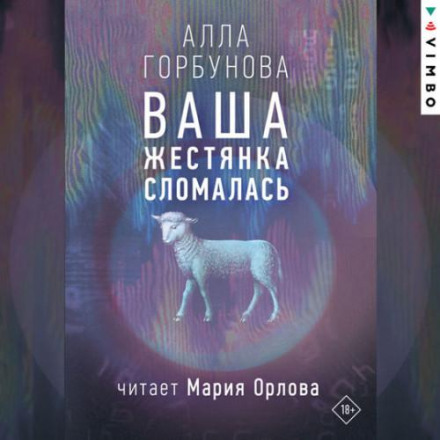
Ваша бляшанка зламалася
4 год. 59 хв.
Опис
Фантастичний роман про влаштування реальності, неймовірні горизонти утопії — і, звісно ж, про любов.
Аліну, у минулому перспективну науковицю в галузі штучного інтелекту, раптово запрошують узяти участь у дивному експерименті: їй доведеться вступити в контакт із створінням найвищого розуму на ім’я Єлена. Дослідницька взаємодія обертається чимось безмірно більшим. Для тих, хто здатен витримати її «нейроштурм», машина Єлена змінює свідомість і відкриває зовсім нову картину всесвіту.
Роман, який починається як наукова фантастика, дуже швидко перетинає межі жанру та літературних норм, перетворюючись на новаторський, вибуховий, проникливий текст про життя, всесвіт, людське сприйняття, розум і почуття.
Цю складносурядну, що розширює межі свідомості історію відчутно й майстерно переказала актриса Марія Орлова.
Алла Горбунова — поет, прозаїк, критик, автор книг «Речі й уші», «Кінець світу, моя любов» та ін. Лауреатка премій «НОС», «Дебют» і Премії Андрія Білого.
Преса про книгу:
«"Вашу бляшанку зламало" — це гімн складності й різноманіттю, світу й війні, вічному життю та вогненному всесожженню, невразливості й мукаючій беззахисності всього сущого», — Галина Юзефович.
«У Алли Горбунової вийшов справді психоделічний роман — у тому сенсі, що в щільному потоці версій, теорій і образів, у просторі абсолютної творчої свободи читачеві в будь-якому разі доводиться складати власний пазл. І це вже по-своєму унікальне літературне явище, частково споріднене з романами-пазлами Хуліо Кортасара», — Артем Роганов.
«Феномен Горбунової в тому, що їй вдається писати складно й просто водночас: її складність полягає не стільки в мові, скільки в прихованих за нею смислах. «Бляшанку» можна сприймати як зразок інтерактивної прози, у якій читач грає роль повноправного учасника того, що відбувається, а можна — як справжній літературно-езотеричний досвід, що вивільняє і автора, і читача», — Ксенія Гриценко.
Аліну, у минулому перспективну науковицю в галузі штучного інтелекту, раптово запрошують узяти участь у дивному експерименті: їй доведеться вступити в контакт із створінням найвищого розуму на ім’я Єлена. Дослідницька взаємодія обертається чимось безмірно більшим. Для тих, хто здатен витримати її «нейроштурм», машина Єлена змінює свідомість і відкриває зовсім нову картину всесвіту.
Роман, який починається як наукова фантастика, дуже швидко перетинає межі жанру та літературних норм, перетворюючись на новаторський, вибуховий, проникливий текст про життя, всесвіт, людське сприйняття, розум і почуття.
Цю складносурядну, що розширює межі свідомості історію відчутно й майстерно переказала актриса Марія Орлова.
Алла Горбунова — поет, прозаїк, критик, автор книг «Речі й уші», «Кінець світу, моя любов» та ін. Лауреатка премій «НОС», «Дебют» і Премії Андрія Білого.
Преса про книгу:
«"Вашу бляшанку зламало" — це гімн складності й різноманіттю, світу й війні, вічному життю та вогненному всесожженню, невразливості й мукаючій беззахисності всього сущого», — Галина Юзефович.
«У Алли Горбунової вийшов справді психоделічний роман — у тому сенсі, що в щільному потоці версій, теорій і образів, у просторі абсолютної творчої свободи читачеві в будь-якому разі доводиться складати власний пазл. І це вже по-своєму унікальне літературне явище, частково споріднене з романами-пазлами Хуліо Кортасара», — Артем Роганов.
«Феномен Горбунової в тому, що їй вдається писати складно й просто водночас: її складність полягає не стільки в мові, скільки в прихованих за нею смислах. «Бляшанку» можна сприймати як зразок інтерактивної прози, у якій читач грає роль повноправного учасника того, що відбувається, а можна — як справжній літературно-езотеричний досвід, що вивільняє і автора, і читача», — Ксенія Гриценко.
