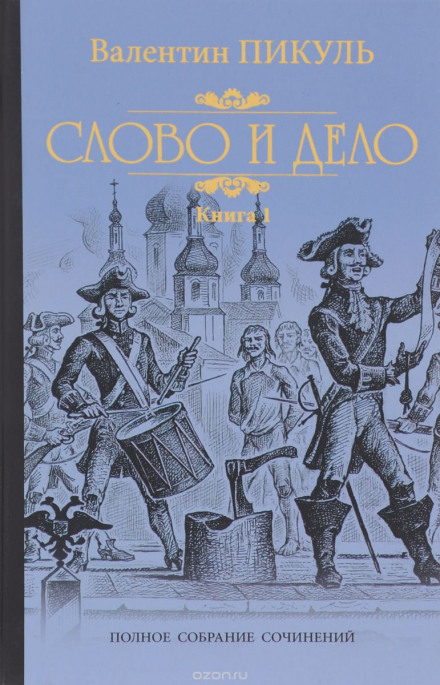
Слово і діло
56 год. 49 хв.
Мова
російська
Автор
Валентин Пікуль
Автор
Валентин Пікуль
Читець
Олександр Бордуков
Читець
Олександр Бордуков
Опис
Знаменитий роман-хроніка Валентина Пікуля «Слово і справа» складається з двох томів. Це доволі жорстокий твір — як і сама Росія періоду царювання імператриці Анни Іоанівни. Автор книги «Слово і справа» занурює читача в боротьбу аристократії за владу, у світ придворних інтриг і переворотів. Країну буквально заселили та скували іноземці — Бірони, Остермани й Лейбмани, які почали відчувати себе господарями та жити в розкішних резиденціях. А простий народ — животіти в злиднях, страху й повному безправ’ї.
На тлі трагічних подій, описаних у романі, автор розкриває долі своїх героїв — князя Михайла Голіцина, Наташі Шереметьєвої, Потапа Сурядова та інших. Героїв, чиї долі стали жахливими, зламаними й перекрученими.
Та попри все «Слово і справа» не викликає відчуття безвиході. У ньому потужно й гнівно звучить голос російської людини проти іноземців і поневолювачів. Роман пробуджує почуття гордості за російську націю, її непохитний дух і віру в себе.
Валентин Савич Пікуль любив піднімати цілинні й поклади вітчизняної історії — і саме це визначило вибір теми. Він вважав, що середина XVIII століття була несправедливо обділена увагою наших істориків і письменників-романістів. Робота над романом-хронікою «Слово і справа» тривала близько десяти років. «Жені Вероніці — за все, все…» — таку присвяту своїй помічниці й вірній супутниці, що пішла з життя в 1980 році, Пікуль накреслив на рукописі роману.
Договір із Леніздатом на випуск книги датувався 1965 роком, але роман після довгих злоключінь побачив світ набагато пізніше: перший том вийшов у 1974 році, а другий — у 1975. Роман пройшов тернистий шлях всіляких погоджень, рецензувань і консультацій. У 1988 році, коли книга вже стала бібліографічною рідкістю, видавництво «Современник» випустило накладом 250 000 примірників чотиритомника, куди ввійшов роман «Слово і справа».
На тлі трагічних подій, описаних у романі, автор розкриває долі своїх героїв — князя Михайла Голіцина, Наташі Шереметьєвої, Потапа Сурядова та інших. Героїв, чиї долі стали жахливими, зламаними й перекрученими.
Та попри все «Слово і справа» не викликає відчуття безвиході. У ньому потужно й гнівно звучить голос російської людини проти іноземців і поневолювачів. Роман пробуджує почуття гордості за російську націю, її непохитний дух і віру в себе.
Валентин Савич Пікуль любив піднімати цілинні й поклади вітчизняної історії — і саме це визначило вибір теми. Він вважав, що середина XVIII століття була несправедливо обділена увагою наших істориків і письменників-романістів. Робота над романом-хронікою «Слово і справа» тривала близько десяти років. «Жені Вероніці — за все, все…» — таку присвяту своїй помічниці й вірній супутниці, що пішла з життя в 1980 році, Пікуль накреслив на рукописі роману.
Договір із Леніздатом на випуск книги датувався 1965 роком, але роман після довгих злоключінь побачив світ набагато пізніше: перший том вийшов у 1974 році, а другий — у 1975. Роман пройшов тернистий шлях всіляких погоджень, рецензувань і консультацій. У 1988 році, коли книга вже стала бібліографічною рідкістю, видавництво «Современник» випустило накладом 250 000 примірників чотиритомника, куди ввійшов роман «Слово і справа».
100%
20:28
SD_01_001
19:39
SD_01_002
24:18
SD_01_003
24:10
SD_01_004
24:43
SD_01_005
27:09
SD_01_006
18:45
SD_01_007
19:16
SD_01_008
25:18
SD_01_009
28:08
SD_01_010
26:18
SD_01_011
10:12
SD_01_012
00:52
SD_01_013
18:18
SD_01_014
23:34
SD_01_015
16:42
SD_01_016
27:17
SD_01_017
29:35
SD_01_018
17:54
SD_01_019
23:17
SD_01_020
19:12
SD_01_021
20:30
SD_01_022
27:58
SD_01_023
24:17
SD_01_024
18:19
SD_01_025
22:58
SD_01_026
30:06
SD_02_001
31:12
SD_02_002
22:59
SD_02_003
24:08
SD_02_004
24:15
SD_02_005
23:41
SD_02_006
28:20
SD_02_007
30:38
SD_02_008
26:20
SD_02_009
28:44
SD_02_010
30:24
SD_02_011
28:57
SD_02_012
01:57
SD_02_013
34:55
SD_02_014
24:30
SD_02_015
25:43
SD_02_016
29:51
SD_02_017
10:22
SD_02_018
32:03
SD_02_019
20:11
SD_02_020
23:22
SD_02_021
24:27
SD_02_022
22:04
SD_02_023
32:13
SD_02_024
25:45
SD_02_025
21:27
SD_02_026
32:53
SD_02_027
20:59
SD_02_028
01:48
SD_02_029
27:13
SD_02_030
29:39
SD_02_031
31:09
SD_02_032
27:16
SD_02_033
20:20
SD_02_034
33:42
SD_02_035
24:44
SD_02_036
29:37
SD_02_037
30:15
SD_02_038
32:26
SD_02_039
22:25
SD_02_040
30:45
SD_02_041
02:37
SD_02_042
21:41
SD_03_001
15:25
SD_03_002
22:33
SD_03_003
23:10
SD_03_004
18:30
SD_03_005
17:57
SD_03_006
18:04
SD_03_007
26:54
SD_03_008
21:43
SD_03_009
21:02
SD_03_010
23:03
SD_03_011
28:07
SD_03_012
24:44
SD_03_013
17:11
SD_03_014
20:25
SD_03_015
20:38
SD_03_016
21:39
SD_03_017
20:11
SD_03_018
25:04
SD_03_019
22:20
SD_03_020
24:59
SD_03_021
20:05
SD_03_022
19:39
SD_03_023
20:20
SD_03_024
21:35
SD_03_025
09:41
SD_03_026
21:34
SD_03_027
24:15
SD_03_028
20:05
SD_03_029
20:40
SD_03_030
16:22
SD_03_031
16:03
SD_03_032
07:13
SD_03_033
08:54
SD_03_034
22:36
SD_03_035
22:47
SD_03_036
14:32
SD_03_037
23:02
SD_03_038
21:40
SD_03_039
19:28
SD_03_040
14:41
SD_03_041
11:45
SD_03_042
27:37
SD_03_043
25:03
SD_03_044
24:15
SD_03_045
19:51
SD_03_046
21:22
SD_03_047
22:16
SD_03_048
20:23
SD_03_049
04:34
SD_03_050
16:41
SD_04_001
18:00
SD_04_002
18:21
SD_04_003
25:32
SD_04_004
13:54
SD_04_005
22:52
SD_04_006
29:01
SD_04_007
14:42
SD_04_008
19:30
SD_04_009
26:00
SD_04_010
24:56
SD_04_011
22:29
SD_04_012
20:07
SD_04_013
21:09
SD_04_014
05:53
SD_04_015
19:15
SD_04_016
16:11
SD_04_017
17:35
SD_04_018
16:54
SD_04_019
25:16
SD_04_020
16:37
SD_04_021
17:31
SD_04_022
21:09
SD_04_023
17:42
SD_04_024
20:51
SD_04_025
13:24
SD_04_026
19:20
SD_04_027
21:23
SD_04_028
20:26
SD_04_029
19:39
SD_04_030
15:13
SD_04_031
07:01
SD_04_032
05:35
SD_04_033
07:39
SD_04_034
10:03
SD_04_035
13:01
SD_04_036
11:22
SD_04_037
13:02
SD_04_038
20:33
SD_04_039
09:58
SD_04_040
11:32
SD_04_041
15:29
SD_04_042
12:54
SD_04_043
06:28
SD_04_044
13:01
SD_04_045
11:35
SD_04_046
07:55
SD_04_047
11:30
SD_04_048
10:13
SD_04_049
