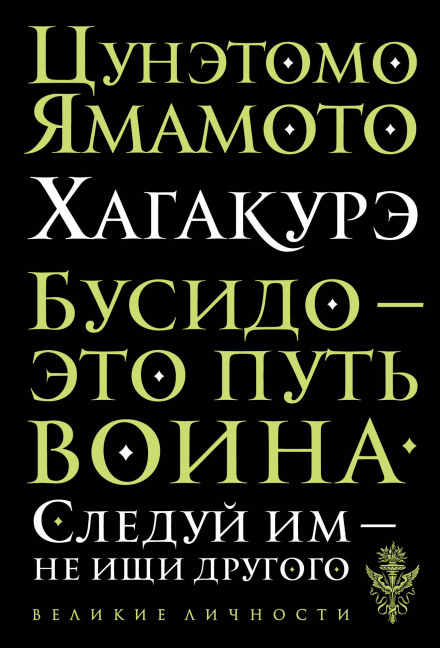
Хаґакуре
4 год. 1 хв.
Опис
Хагакурэ (яп. 葉隠 (葉隠) «Сховане в листі»), або Хагакурэ кикигаки (яп. 葉隠聞書 «Записи про сховане в листі») — це практичний і духовний посібник воїна, що є зібранням коментарів самурая Ямамото Цунетомо (Дзьотё Дзін’емοн Ямамото, 1659—1719), васала Набесіми Міцусіґе, третього правителя земель Хідзэн (у наші дні це частина префектур Сага та Нагасакі в Японії). Цурамото Тасіро вибрав ці коментарі з його особистих бесід із Цунетомо в період з 1709 по 1716 роки. Хагакурэ також відоме як «Збірник Набесіми» або «Збірник Хагакурэ»; версія, що дійшла до нас, складається з 11 книг.
«Хагакурэ» — трактат про бусідо — кодекс честі самурая. Він проголошує бусідо як «Шлях смерті», або «життя так, ніби ти вже мертвий». Згідно з «Хагакурэ», самурай готовий померти будь-якої миті заради збереження честі (військової честі).
На думку Юкіо Місіми, всі настанови Дзьотё Ямамото виникли на тлі перебільшених, до край звабливих смаків японців, що жили в епохи Ґенроку (1688—1704) та Хоей (1704—1709), як заперечення цінностей, що існували. Наприклад, там сказано: «Якщо все у світі лише удавання, щиро лише смерть».
Як і інші подібні твори, вислови написані під впливом трактату Сунь-Цзи «Мистецтво війни» і витримані в канонах дзен-буддизму, синтоїзму, вченнях Конфуція та Мен-Цзи. Водночас Цунетомо рішуче відкидає позицію безвідповідального стороннього спостерігача, притаманну ченцям того часу,—пасивного прийняття існуючого порядку речей, безпринципного та некритичного слідування думці більшості. Також він засуджує надмірно старанне вивчення книг із філософії, стратегії та тактики, бо, на його думку, це розвиває в самурая звичку під час ухвалення рішень вдаватися до тривалих роздумів, викликає сумніви й нерішучість: «Якщо на полі бою почати міркувати, цим міркуванням не буде кінця… Прочитавши книгу чи сувій, найкраще спалити їх або викинути геть».
Історії з «Хагакурэ» оповідають про бойову доблесть, воїнський обов’язок, совість, відповідальність, співчуття, толерантність, прагнення до самовдосконалення в духовній та професійній сферах.
«Хагакурэ» — трактат про бусідо — кодекс честі самурая. Він проголошує бусідо як «Шлях смерті», або «життя так, ніби ти вже мертвий». Згідно з «Хагакурэ», самурай готовий померти будь-якої миті заради збереження честі (військової честі).
На думку Юкіо Місіми, всі настанови Дзьотё Ямамото виникли на тлі перебільшених, до край звабливих смаків японців, що жили в епохи Ґенроку (1688—1704) та Хоей (1704—1709), як заперечення цінностей, що існували. Наприклад, там сказано: «Якщо все у світі лише удавання, щиро лише смерть».
Як і інші подібні твори, вислови написані під впливом трактату Сунь-Цзи «Мистецтво війни» і витримані в канонах дзен-буддизму, синтоїзму, вченнях Конфуція та Мен-Цзи. Водночас Цунетомо рішуче відкидає позицію безвідповідального стороннього спостерігача, притаманну ченцям того часу,—пасивного прийняття існуючого порядку речей, безпринципного та некритичного слідування думці більшості. Також він засуджує надмірно старанне вивчення книг із філософії, стратегії та тактики, бо, на його думку, це розвиває в самурая звичку під час ухвалення рішень вдаватися до тривалих роздумів, викликає сумніви й нерішучість: «Якщо на полі бою почати міркувати, цим міркуванням не буде кінця… Прочитавши книгу чи сувій, найкраще спалити їх або викинути геть».
Історії з «Хагакурэ» оповідають про бойову доблесть, воїнський обов’язок, совість, відповідальність, співчуття, толерантність, прагнення до самовдосконалення в духовній та професійній сферах.
100%
49:03
Хагакурэ (Часть 1)
1:00:10
Хагакурэ (Часть 2)
1:07:52
Хагакурэ (Часть 3)
1:04:29
Хагакурэ (Часть 4)
