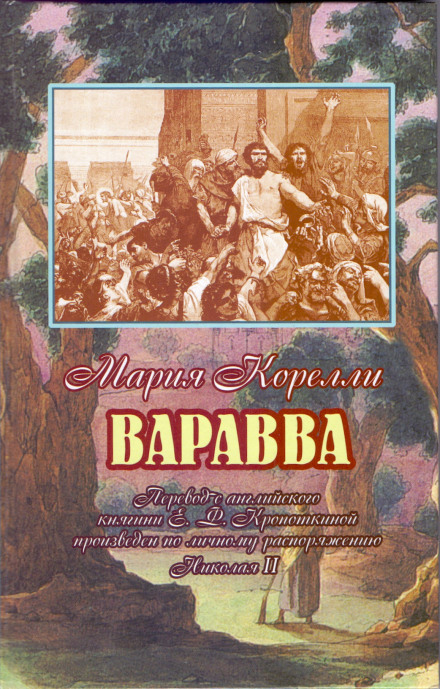
Варавва. Повесть времен Христа
7 ч. 2 мин.
Описание
Мария Корелли (настоящее имя - Мэри Маккей) – английская писательница 19 века, работавшая в жанрах фантастики и готики. Была увлечена Италией, в связи с чем и приняла благозвучный итальянский псевдоним Корелли.
Корелли во многом поспособствовала созданию легенды о проклятии фараонов. В начале апреля 1923 года она опубликовала предупреждение о том, что «самое жестокое наказание ждет незваного гостя вошедшего в гробницу», через несколько дней после публикации которого скончался слегший лорд Карнарвон. Её статья была подхвачена газетами и благодаря интересу к обнаружению гробницы Тутанхамона и обстоятельствам гибели участников экспедиции феномен проклятие фараонов стал расхожим медийным образом.
Вторая по счету книга, что написала Мария Корелли. «Варавва» представляет собой художественный пересказ жизни разбойника Вараввы, упомянутого в Евангелии, после того как Пилат даровал ему свободу вместо Христа. Писательница сначала изображает трагедию, которая изменила жизнь человечества, а затем невероятную радость для всех верующих Палестины и великих апостолов. Повествование построено так, что кажется, будто все происходит в настоящее время и не прошло тех двух тысяч лет, отделяющих читателя от событий.
Корелли во многом поспособствовала созданию легенды о проклятии фараонов. В начале апреля 1923 года она опубликовала предупреждение о том, что «самое жестокое наказание ждет незваного гостя вошедшего в гробницу», через несколько дней после публикации которого скончался слегший лорд Карнарвон. Её статья была подхвачена газетами и благодаря интересу к обнаружению гробницы Тутанхамона и обстоятельствам гибели участников экспедиции феномен проклятие фараонов стал расхожим медийным образом.
Вторая по счету книга, что написала Мария Корелли. «Варавва» представляет собой художественный пересказ жизни разбойника Вараввы, упомянутого в Евангелии, после того как Пилат даровал ему свободу вместо Христа. Писательница сначала изображает трагедию, которая изменила жизнь человечества, а затем невероятную радость для всех верующих Палестины и великих апостолов. Повествование построено так, что кажется, будто все происходит в настоящее время и не прошло тех двух тысяч лет, отделяющих читателя от событий.
100%
08:30
1-01mp3
07:16
1-02mp3
40:33
1-03mp3
15:51
1-04mp3
07:28
1-05mp3
11:07
1-06mp3
08:57
1-07mp3
08:15
1-08mp3
14:06
1-09mp3
10:27
1-10mp3
10:17
1-11mp3
10:20
1-12mp3
10:50
1-13mp3
07:23
1-14mp3
08:06
1-15mp3
11:06
1-16mp3
06:21
1-17mp3
10:24
1-18mp3
11:43
1-19mp3
16:38
1-20mp3
11:01
1-21mp3
07:36
1-22mp3
14:02
2-01mp3
14:00
2-02mp3
11:01
2-03mp3
07:53
2-04mp3
11:04
2-05mp3
13:22
2-06mp3
05:16
2-07mp3
05:21
2-08mp3
05:43
2-09mp3
10:41
2-10mp3
06:18
2-11mp3
05:31
2-12mp3
03:15
2-13mp3
07:38
2-14mp3
05:40
2-15mp3
06:21
2-16mp3
07:07
2-17mp3
04:57
2-18mp3
10:04
2-19mp3
03:30
2-20mp3
06:25
2-21mp3
03:09
2-poslesloviemp3
