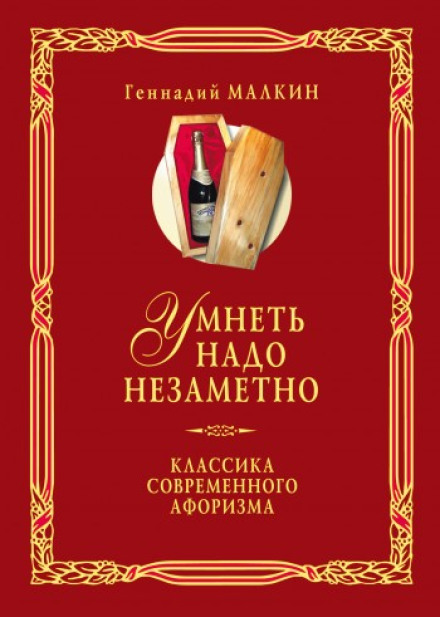
Умнеть надо незаметно
4 ч. 19 мин.
Описание
Афоризмы на светлый день
Афористы – удивительный народ! В то время как многие писатели на протяжении всей истории литературы ищут (и порой небезуспешно) признания у человечества через создание огромных романов, эпопей и поэм, афористы пытаются достигнуть той же цели посредством малюсеньких предложений, которые они называют то афоризмами, то фразами, то лаконизмами, полагая (и тоже небезосновательно), что сквозная идея иных пухлых произведений вполне может уместиться в размер такого предложения. Самое смешное в том, что афористы, быть может, и правы.
Действительно, в скольких фолиантах, жизненных историях, а то и в самих жизнях людским спросом пользовались именно такие предложения! «После нас – хоть потоп», «Государство – это я», «Деньги не пахнут», «Человек – это звучит гордо», «Если нельзя, но очень хочется, то можно», «Если хотите дольше жить, то умирайте со смеху». Это всё или почти всё, что остается от императоров, бродяг, романов, песен и стихов. Но если из огромного количества создаваемой людьми пустой породы будут востребованы только попадающиеся в ней золотые крупицы афористической мысли, то зачем тратить ум, честь, совесть и, главное, время на создание самой породы? Насколько продуктивнее будет протекать творческий процесс, если творец будет создавать только так необходимые всем золотые крупицы!
Правда, поскольку «краткость – сестра таланта, но мачеха гонорара», творец афоризмов может спокойно идти в кассу без большого мешка для денег, но зато в признании он явно выигрывает: благодарный читатель, которому не нужно читать многопудовые тома, для того чтобы испытать, говоря красиво, катарсис, любит афориста, ценит его и помнит лаконичные, легко запоминающиеся произведения.
Чтобы достигнуть совершенства в творчестве, «нужно отсекать все лишнее». Эту общедоступную истину афористы усвоили лучше других творцов – прозаиков и художников, даже лучше поэтов, традиционно тяготеющих к афористичности. «В моей смерти прошу винить мою жизнь», «Живым из жизни не уйти», «Окружение пешек рождает иллюзию, что ты – король», «В честной борьбе побеждает жулик», «Любовь – это падение вверх» – присмотритесь, прислушайтесь к этим словосочетаниям. Ни одного лишнего слова! Ни одного лишнего звука! Ни одного лишнего мазка!
Это все написано кистью Геннадия Малкина, прекрасного художника афористической мысли, члена Союза писателей Москвы, лауреата «Золотого теленка», «Клуба 12 стульев» «Литературной газеты» и вообще хорошего человека. Разве в этих перлах меньше философии, публицистики, ума, мастерства и даже поэзии, чем в самых объемных произведениях? Нет, не меньше! И всё в одном флаконе!
Предваряя очередную книгу Геннадия Малкина этими досужими, но нелишними, как мне кажется, рассуждениями, я предвижу удовольствие, которое испытает читатель, путешествуя по ее мудрым, веселым и саркастическим страницам. Такое путешествие из числа запоминающихся! В путь, читатель! Равнодушным из этой книги тебе не уйти!
Афористы – удивительный народ! В то время как многие писатели на протяжении всей истории литературы ищут (и порой небезуспешно) признания у человечества через создание огромных романов, эпопей и поэм, афористы пытаются достигнуть той же цели посредством малюсеньких предложений, которые они называют то афоризмами, то фразами, то лаконизмами, полагая (и тоже небезосновательно), что сквозная идея иных пухлых произведений вполне может уместиться в размер такого предложения. Самое смешное в том, что афористы, быть может, и правы.
Действительно, в скольких фолиантах, жизненных историях, а то и в самих жизнях людским спросом пользовались именно такие предложения! «После нас – хоть потоп», «Государство – это я», «Деньги не пахнут», «Человек – это звучит гордо», «Если нельзя, но очень хочется, то можно», «Если хотите дольше жить, то умирайте со смеху». Это всё или почти всё, что остается от императоров, бродяг, романов, песен и стихов. Но если из огромного количества создаваемой людьми пустой породы будут востребованы только попадающиеся в ней золотые крупицы афористической мысли, то зачем тратить ум, честь, совесть и, главное, время на создание самой породы? Насколько продуктивнее будет протекать творческий процесс, если творец будет создавать только так необходимые всем золотые крупицы!
Правда, поскольку «краткость – сестра таланта, но мачеха гонорара», творец афоризмов может спокойно идти в кассу без большого мешка для денег, но зато в признании он явно выигрывает: благодарный читатель, которому не нужно читать многопудовые тома, для того чтобы испытать, говоря красиво, катарсис, любит афориста, ценит его и помнит лаконичные, легко запоминающиеся произведения.
Чтобы достигнуть совершенства в творчестве, «нужно отсекать все лишнее». Эту общедоступную истину афористы усвоили лучше других творцов – прозаиков и художников, даже лучше поэтов, традиционно тяготеющих к афористичности. «В моей смерти прошу винить мою жизнь», «Живым из жизни не уйти», «Окружение пешек рождает иллюзию, что ты – король», «В честной борьбе побеждает жулик», «Любовь – это падение вверх» – присмотритесь, прислушайтесь к этим словосочетаниям. Ни одного лишнего слова! Ни одного лишнего звука! Ни одного лишнего мазка!
Это все написано кистью Геннадия Малкина, прекрасного художника афористической мысли, члена Союза писателей Москвы, лауреата «Золотого теленка», «Клуба 12 стульев» «Литературной газеты» и вообще хорошего человека. Разве в этих перлах меньше философии, публицистики, ума, мастерства и даже поэзии, чем в самых объемных произведениях? Нет, не меньше! И всё в одном флаконе!
Предваряя очередную книгу Геннадия Малкина этими досужими, но нелишними, как мне кажется, рассуждениями, я предвижу удовольствие, которое испытает читатель, путешествуя по ее мудрым, веселым и саркастическим страницам. Такое путешествие из числа запоминающихся! В путь, читатель! Равнодушным из этой книги тебе не уйти!
100%
00:27
00-00-malkin-g-umnet-nado-nezametno
03:26
00-01-soderzhanie
01:13
00-02-annotatsiya
05:51
01-redkaya-mysl-dozhivaet-do-starosti
25:19
02-interesnoe-vidit-tot-kto-umeet-rasskazyvat
08:35
03-rozhdaemost-mysley-snizhaetsya-pogolovno
06:39
04-kamen-za-pazuhoy-pridaet-vesa-v-obschestve
05:53
05-nosite-schaste-po-razmeru
08:53
06-chto-mozhet-byt-izvestney-neznakomok
06:32
07-esli-vy-ne-dzhentlmen-to-vy-vozmozhno-ledi
05:51
08-lyubov-eto-kogda-zabyvaesh-zachem
09:48
09-semya-eto-nedvizhimost-lyubvi
05:49
10-kogda-seks-v-golove-ona-tolko-meshaet
05:05
11-roga-nastavlyayut-dlya-polnogo-izobiliya
03:08
12-rebenok-raboty-neizvestnogo-mastera
03:24
13-po-dnyam-rozhdeniya-proshlis-goda
02:51
14-lechenie-eto-remont-organizma-bez-instruktsii-izgotovitelya
03:28
15-byt-ili-ne-byt-y-reshaet-byt
02:13
16-kogda-grezyat-ne-hrapyat
02:42
17-eda-bez-skaterti-eto-pitanie
04:55
18-pesh-s-umom-a-zakanchivaesh-odin
05:02
19-v-moey-smerti-proshu-vinit-moyu-zhizn
14:53
20-vse-lyudi-bratya-a-nekotorye-esche-huzhe
03:55
21-hotelos-by-vechno-pozhit-hot-nemnozhko
07:15
22-byloe-dom-prestarelyh-dney
02:03
23-ne-vsyo-tak-ploho-kak-na-samom-dele
06:49
24-u-angelov-avtografov-ne-prosyat
08:17
25-segodnya-redko-v-kakoy-bochke-vstretish-diogena
10:15
26-moralnye-kodeksy-vypuskayutsya-v-myagkih-oblozhkah
02:33
27-pravdy-hvataet-tolko-na-obraztsy
01:20
28-net-sobaki-zavedite-druga
03:02
29-svet-znaniy-vytesnyaet-mrak-nadezhd
02:50
30-kazhdaya-barrikada-delit-ulitsu-na-dva-tupika
07:32
31-byvayut-strany-gde-narod-ne-prizhivaetsya
02:28
32-idei-ne-opasny-opasny-ih-provodniki
02:37
33-taktichnye-strategi-bolshaya-redkost
04:36
34-odnako-kak-prokuratura-vozbuzhdaet
02:29
35-kazhdomu-tupiku-zelenuyu-ulitsu
01:40
36-posledovav-svoim-sovetam-stanovishsya-neuznavaemym
05:32
37-pri-slove-kultura-kazhdyy-hvataetsya-za-svoe
02:48
38-zlodeystvo-i-geniy-nesovmestimy-tut-nuzhen-talant
02:19
39-smeh-distsipliniruet-durakov
11:46
40-schitaya-dengi-uznaesh-tak-mnogo-interesnogo
01:57
41-trud-sozdaet-iz-cheloveka-pokupatelya
13:34
42-kameshki-pretknoveniya
01:52
43-stroitelnye-kameshki-pretknoveniya
01:00
44-01-gennadiy-malkin-blestyaschiy-pisatel
01:51
44-02-dlya-togo-chtoby-dostigat-sovershenstvo-v-tvorchestve
00:43
44-03-luchshiy-podarok
04:18
44-04-roman-v-odnu-stroku
