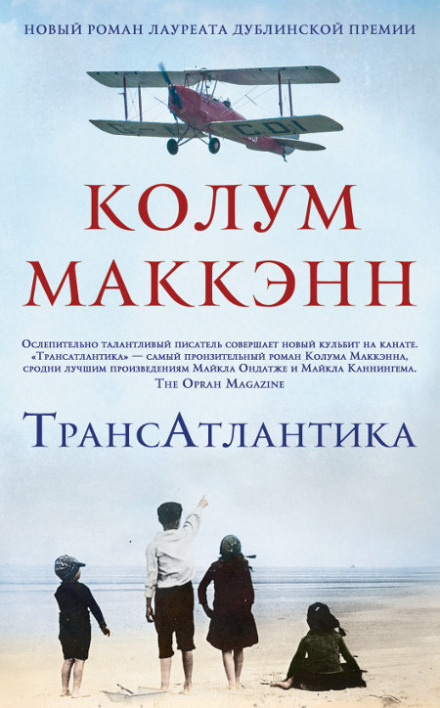
ТрансАтлантика
12 год. 3 хв.
Мова
російська
Автор
Колум Маккенн
Автор
Колум Маккенн
Читець
Михайло Росляков
Читець
Михайло Росляков
Опис
Новим романом Колум Маккeнн переконливо демонструє, чому його вважають одним із найзначніших і найцікавіших письменників свого покоління. Роман, що охоплює континенти й століття, з’єднує в одну історію вигаданих персонажів і реальних людей.
Ньюфаундленд, 1919 рік. Льотчики Джек і Алкок задумали епохальну авантюру — здійснити перший безпосадковий трансатлантичний переліт. Дублін, 1845 рік. Втікач-раб Фредерік Дуглас подорожує морем із Бостона до Дубліна, щоб розповісти ірландцям, яково це бути чужою власністю, закутою в кайдани. Нью-Йорк, 1998 рік. Сенатор Джордж Мітчелл летить до Белфаста як посередник у переговорах про перемир’я між ІРА та британською владою. Чоловіки поспішають із Америки до Ірландії, щоб перемогти несправедливість і покласти край кривавим зіткненням. Три покоління жінок перетинають Атлантику, щоб життя тривало. Втікають від голоду або повільно перепливають океан у пошуках себе.
Усі лінії сходяться в одній точці, повторюючи вигини всесвітніх трагедій. «Трансатлантика» — найзріліший роман Колума Маккeнна: глибоке роздумування про те, як Історія поводиться з людьми і як люди змінюють Історію. У книзі багатолика й неоднозначна Історія виливається через особисті долі персонажів—справжніх і уявних — у щільну оповідь про життя, які були, є або могли б бути — а в загальному, це одне й те саме.
Ньюфаундленд, 1919 рік. Льотчики Джек і Алкок задумали епохальну авантюру — здійснити перший безпосадковий трансатлантичний переліт. Дублін, 1845 рік. Втікач-раб Фредерік Дуглас подорожує морем із Бостона до Дубліна, щоб розповісти ірландцям, яково це бути чужою власністю, закутою в кайдани. Нью-Йорк, 1998 рік. Сенатор Джордж Мітчелл летить до Белфаста як посередник у переговорах про перемир’я між ІРА та британською владою. Чоловіки поспішають із Америки до Ірландії, щоб перемогти несправедливість і покласти край кривавим зіткненням. Три покоління жінок перетинають Атлантику, щоб життя тривало. Втікають від голоду або повільно перепливають океан у пошуках себе.
Усі лінії сходяться в одній точці, повторюючи вигини всесвітніх трагедій. «Трансатлантика» — найзріліший роман Колума Маккeнна: глибоке роздумування про те, як Історія поводиться з людьми і як люди змінюють Історію. У книзі багатолика й неоднозначна Історія виливається через особисті долі персонажів—справжніх і уявних — у щільну оповідь про життя, які були, є або могли б бути — а в загальному, це одне й те саме.
100%
08:48
001
14:50
002
09:17
003
09:29
004
08:35
005
09:20
006
11:12
007
08:22
008
09:09
009
08:40
010
08:18
011
11:19
012
08:25
013
14:27
014
08:11
015
15:50
016
09:36
017
09:39
018
08:50
019
08:09
020
12:44
021
09:31
022
13:31
023
09:49
024
08:36
025
08:30
026
08:22
027
09:48
028
19:34
029
10:46
030
10:31
031
10:24
032
10:52
033
12:57
034
11:44
035
20:45
036
08:42
037
08:05
038
08:14
039
10:17
040
10:00
041
09:43
042
09:58
043
12:11
044
09:01
045
11:02
046
11:52
047
08:27
048
09:34
049
11:46
050
08:54
051
09:26
052
12:55
053
14:12
054
11:22
055
10:03
056
09:10
057
09:36
058
10:08
059
17:07
060
08:37
061
08:58
062
08:04
063
10:36
064
09:09
065
13:04
066
24:32
067
00:21
068
